72-hour kit: the list, item by item
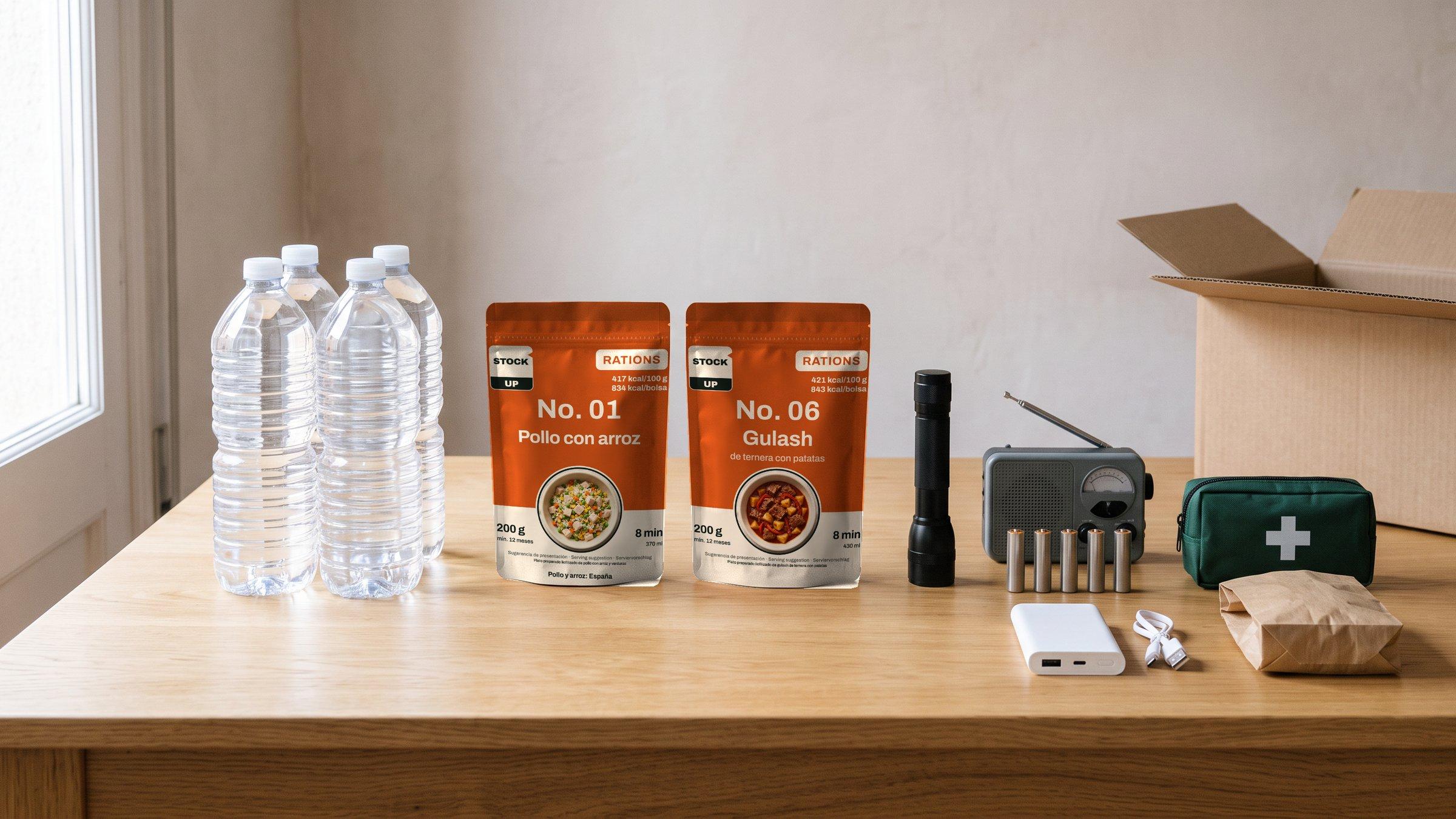
Most of a 72-hour kit is already somewhere in the flat: the torch in a drawer, the radio from the beach, the power bank in a bag. Here it is on one list, with the quantities where an authority gives them.
By STOCKUP · Updated
In this guide (4)
Tick it off, one person at a time
The list is for one person and three days, the least that most official lists ask a household to cover, from the UK’s Be Ready campaign to Canada’s.112 Multiply the water and the food by the people at home; the rest is mostly one of each. It prints, so it can live on the inside of a cupboard door.
Three days at home, per person
0 of 23 ticked
Your ticks stay in this browser only.
How much cash, and which papers to copy, is worked out in how much cash to keep at home; and when the water is off, the rubbish bags and wipes turn into a toilet, as emergency toilet and hygiene when the water’s off explains.
This list is for sitting it out at home. A bag to grab when you have to leave is a shorter list of its own, and fifteen official ones, from Ready.gov to Mexico’s CENAPRED, agree on less than you’d think: only cash and hygiene items are on all of them. Water, food, your own medicines, and ID or copies of documents are each on 14 of the 15. A radio, a phone charger, and clothes with sturdy shoes follow on 13, a torch on 12, spare batteries and a first-aid kit on 11, and rain gear on 10. The full comparison is the go bag list, and a wildfire evacuation bag packs one for a fire in Spain; Protección Civil, the Spanish government’s civil protection directorate, frames its 72-hour kit for that case, a family that has to spend several days away from home.5
Water is the line that needs a number
The official figures run from 1.5 litres a person a day to 3.8 litres (1 US gallon), partly because some count cooking and washing in it and some don’t. Plan towards the top of the range: it costs only shelf space. Water is the one item you can’t improvise when the taps stop.
| Days asked | Water per person per day | What it covers | |
|---|---|---|---|
| United States, CDC | 3, and two weeks if possible13 | 3.8 litres (1 US gallon)13 | Drinking, cooking, brushing teeth and other uses13 |
| United Kingdom, Be Ready | 31 | 3 litres1 | Drinking; more for cooking and washing1 |
| Canada, Public Safety Canada | At least 3 (72 hours)12 | 2 litres12 | Drinking, cooking and hygiene12 |
| New Zealand, Get Ready | 3 or more14 | At least 3 litres14 | Drinking and basic hygiene14 |
| Germany, BBK | Ideally 10, at least 36 | Ideally 2 litres15 | Drinking, with 0.5 litres of it for cooking15 |
| Spain, Protección Civil | 38 | At least 1.5 litres8 | Drinking water8 |
Days and water per person, by country, as on each authority’s page on the date under the sources
United States, CDC
United Kingdom, Be Ready
Canada, Public Safety Canada
New Zealand, Get Ready
Germany, BBK
Spain, Protección Civil
The list above goes by the British 3 litres, which is drinking water only. More countries, and the sums for a week or two, are in how much water to store per person.
The food, worked out for three days
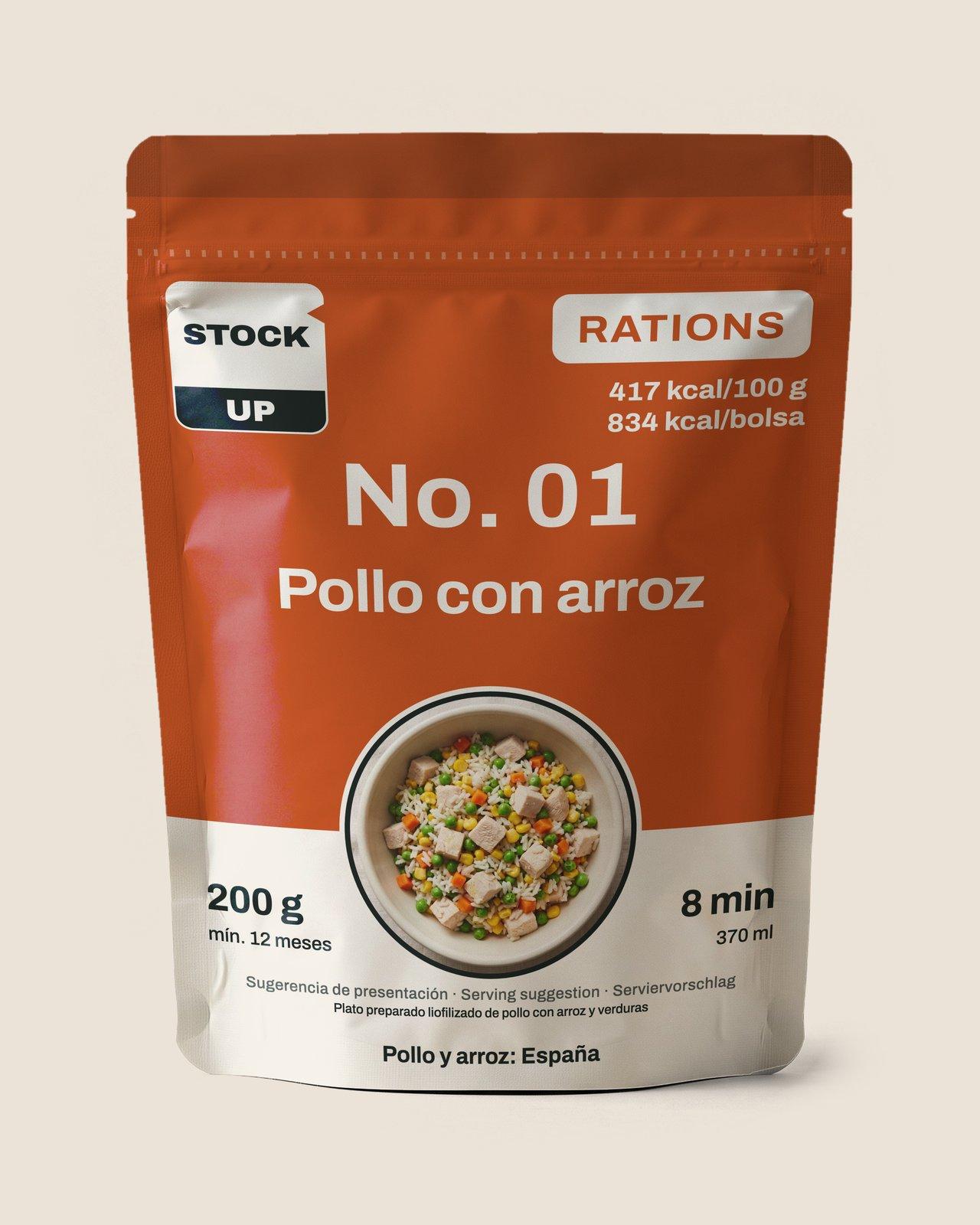
The food line is the one most lists leave vague. Here’s one way to fill it: the 72-Hour Food Reserve, a breakfast and two main meals a day.
Day 1
- Porridge & Fruit
- Chicken & Rice · Large
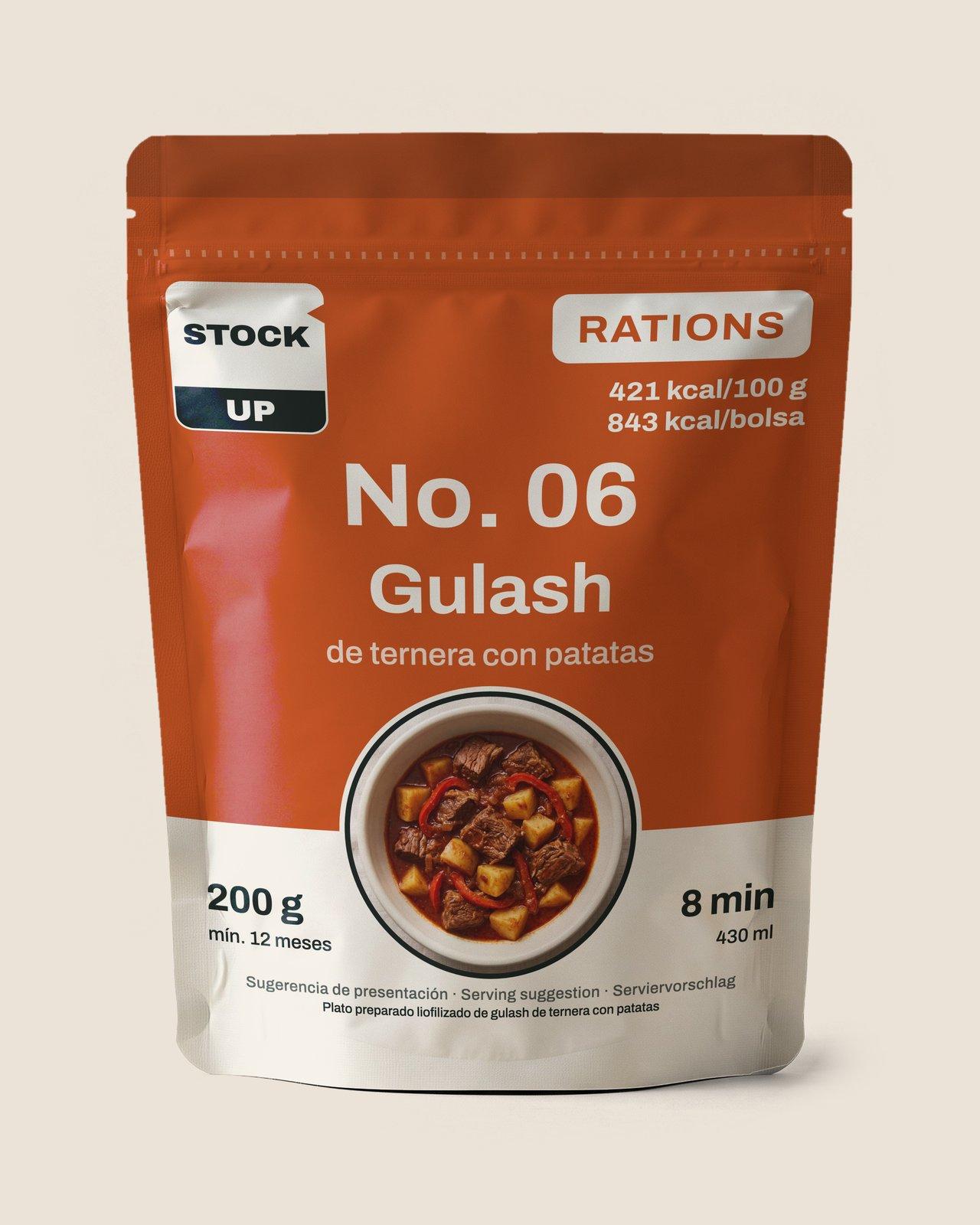
- Beef Goulash with Potatoes · Large
1.1 l of water2,018 kcal
Day 2
- Porridge & Fruit
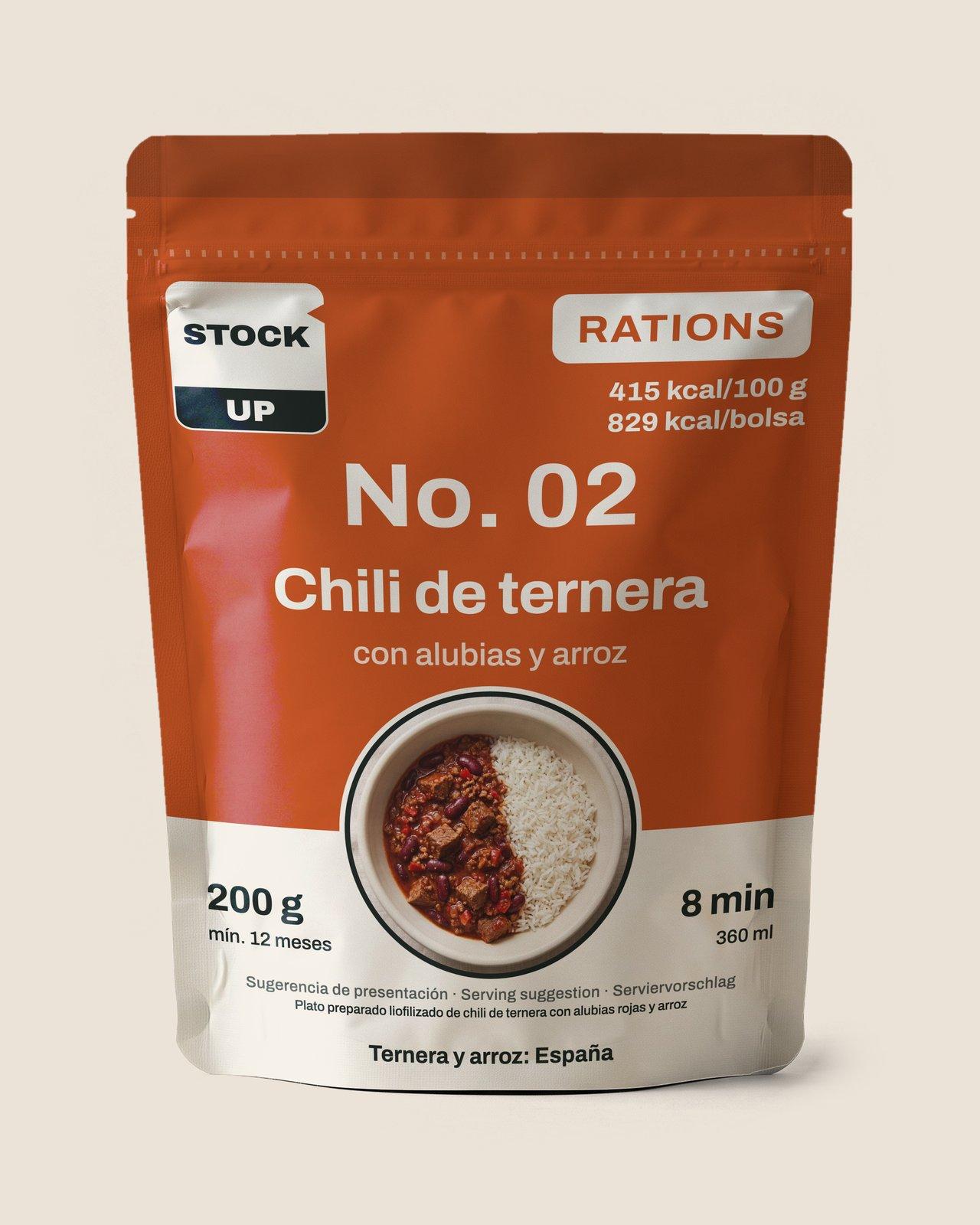
- Smoky Beef Chilli & Rice · Large
- Pabellón Criollo · Large
950 ml of water2,005 kcal
Day 3
- Porridge & Fruit
- Chicken & Rice · Large
- Lentil & Vegetable Stew · Large
1.1 l of water1,906 kcal
The kcal are calculated from the recipes, and the water is only what the pouches take: drinking water comes on top. This box is the food for a kit, not the whole kit, and not a complete diet. Three days of hard physical work need more than this.
The pouches in it can also be made with cold water, 20–30 minutes depending on the meal, so the menu doesn’t depend on a flame. Chicken & Rice takes 370 ml and about 20 minutes that way; Porridge & Fruit takes 250 ml and about 20 minutes. Made cold, meat and potato stay a little firmer and a little liquid may be left; stir it in. One of the mains, Lentil & Vegetable Stew, is vegan; the box isn’t.
Add something to eat between meals: the list’s nuts and dried fruit do that job. Tins, bars and rations fill the same line at other prices and weights, set side by side in emergency food compared, and the whole kit is priced in what a 72-hour kit costs in Spain. Once water goes into a pouch it’s prepared food, and you eat it then. Don’t use a barbecue or a camping stove indoors, says the NHS;16 what each authority allows you to cook on is in how to cook without power.
Keep it where everyone can find it
The Spanish Red Cross asks for the kit to sit somewhere easy to reach that everyone at home knows about.3 In a flat that’s usually the bottom of the hall cupboard, not the storeroom two floors down.
Then let it turn over. Eroski Consumer, the food pages of a Spanish consumer foundation, describes first in, first out: new stock behind, older stock in front.7 Germany’s civil protection office suggests checking the dates once a year on a fixed day.6 Pick a date you won’t forget, swap the batteries, recharge the power bank, and eat the oldest food in an ordinary week. For a larder that lasts longer than three days, start from the non-perishable food list; where the three days come from is in what the EU and Spain ask for in an emergency kit.
From our range
72-Hour Food Reserve
Sources
Accessed 10 November 2026
- Be ready for emergencies (opens an external website)
- Kit d’emergències (opens an external website)
- Checklist kit (opens an external website)
- Sufficiency of at least 72 hours under the EU Preparedness Union Strategy (opens an external website)
- Plan Familiar de Emergencias (opens an external website)
- Essen und Trinken bevorraten (opens an external website)
- Cómo guardar los alimentos en la despensa (opens an external website)
- Guía para las familias. Prevención y autoprotección ante riesgos en el entorno (opens an external website)
- Build a kit (opens an external website)
- Survival kit supplies (opens an external website)
- Home preparedness (opens an external website)
- Emergency kit checklist (opens an external website)
- How to create an emergency water supply (opens an external website)
- Storing water (opens an external website)
- Vorsorgen für Krisen und Katastrophen (opens an external website)
- Carbon monoxide poisoning (opens an external website)
Hear from us before the shop opens
Leave your email. After a quick confirmation you get a welcome, a couple of short notes about our food and one email the day ordering opens. Nothing else.