Emergency toilet and hygiene when the water’s off
When the water stops, the toilet works for one more flush. After that you need a plan, and the authorities that have one disagree on the basics, starting with whether to use the toilet bowl at all.
By STOCKUP · Updated

In this guide (5)
The two-bucket method, step by step
When the water is off, the toilet still works once: after that the cistern stays empty. The best-documented answer is the twin-bucket toilet, written up by Oregon State University Extension from the method of the Portland area’s Regional Disaster Preparedness Organization, which adapted it from New Zealand’s “twin no-mix” emergency toilet.1 No-mix means urine and faeces go into separate buckets, because urine, OSU explains, is what makes a mixed toilet smell.1
Step by step
Two buckets
Get two buckets of about 19 litres (5 US gallons) each, with lids, and mark them for urine and for poo.1Line the poo bucket
Line it with a heavy-duty black bin bag of about 50 litres (13 gallons), 3–5 mil thick (0.08–0.13 mm). The urine bucket stays unlined.1Add a seat
A bought seat, or a pool noodle cut in half and slit along its length to pad the rim.1Keep them apart
Try not to pee in the poo bucket. Toilet paper goes into the poo bag or a separate bag, never into the urine bucket.1Cover each time
After using the poo bucket, sprinkle about half a cup (about 120 ml) of sawdust, wood shavings, shredded paper, bark chips or peat moss so it covers the surface completely, then put the seat back down without sealing it airtight.1
Set the buckets up somewhere private, in the bathroom if you can, and keep the gloves, bags, paper and sawdust inside them until the day they’re needed.1
What to do, by what has failed: water or sewer
The authorities disagree on the one thing everyone wants to know: whether to keep using the toilet bowl. The answer turns on the pipes. Sweden’s civil defence agency, the MCF, warns that using a toilet without water can quickly block the drain, especially in blocks of flats;3 OSU, writing for an earthquake, says to avoid the toilet even if your own pipes are fine, because those in the street may be broken, and to listen for the local authority’s word on when it’s usable again.1
| The toilet bowl | Where it goes instead | What goes on top | |
|---|---|---|---|
| Oregon, OSU Extension | Avoid it, even if your own pipes are fine | Two buckets, urine and poo apart1 | About half a cup of sawdust, shavings or shredded paper |
| United Kingdom, Chief Medical Officers | Don’t try to flush it in any way: in a national power cut the sewage system isn’t working | Plastic bags, sealed14 | Doesn’t say |
| New Zealand, Get Ready | Doesn’t say | One lined container of 15–20 litres with a snug lid2 | A little household disinfectant, or dirt and dry material |
| Sweden, MCF | Pee in it without flushing; paper in a lidded bucket | Poo into a bag hung in the bowl3 | Cat litter, compost bedding or sawdust |
| Germany, BBK | Strong bin bags to hang in the toilet | A camping toilet4 | Doesn’t say |
The toilet without water, five authorities, on the date under the sources
Oregon, OSU Extension
- The toilet bowl
- Avoid it, even if your own pipes are fine
- Where it goes instead
- Two buckets, urine and poo apart1
- What goes on top
- About half a cup of sawdust, shavings or shredded paper
United Kingdom, Chief Medical Officers
- The toilet bowl
- Don’t try to flush it in any way: in a national power cut the sewage system isn’t working
- Where it goes instead
- Plastic bags, sealed14
- What goes on top
- Doesn’t say
New Zealand, Get Ready
- The toilet bowl
- Doesn’t say
- Where it goes instead
- One lined container of 15–20 litres with a snug lid2
- What goes on top
- A little household disinfectant, or dirt and dry material
Sweden, MCF
- The toilet bowl
- Pee in it without flushing; paper in a lidded bucket
- Where it goes instead
- Poo into a bag hung in the bowl3
- What goes on top
- Cat litter, compost bedding or sawdust
Germany, BBK
- The toilet bowl
- Strong bin bags to hang in the toilet
- Where it goes instead
- A camping toilet4
- What goes on top
- Doesn’t say
In a detached house with a garden, the MCF has one more option: dig a hole far from streams and paths, use it, and cover it well with soil or a large stone.3
Don’t look for a bleach dose for the bucket: New Zealand says only “a small amount” of household disinfectant after each use, while OSU and Sweden cover with dry material instead.213 If you have a septic tank, OSU says it may be fine to keep using it as long as nothing leaks or backs up into the house.1
Flushing with stored water is the tempting shortcut. The canton of Zurich allows that the cistern can be filled with bottled water “zur Not”, if need be;5 it only helps where the sewer works, and it is expensive in water. The WHO’s planning tables count 20 to 40 litres per user per day for a conventional flushing toilet connected to a sewer.6
What to stock
The national kit lists stop at the basics. Ready.gov asks for moist towelettes, bin bags (garbage bags) and plastic ties “for personal sanitation”;12 Britain’s Be Ready for hand sanitiser, wet wipes and bathroom products;9 Canada for toilet paper, hand sanitiser and bin bags.13 The fuller list below comes from OSU, Sweden, New Zealand and the BBK, with OSU’s quantities where it gives them.1324
The emergency toilet
0 of 14 ticked
Your ticks stay in this browser only.
The water hand-washing takes
The CDC’s rule is soap and water for at least 20 seconds.7 During a boil-water advisory, it says, it may be safe to wash hands with tap water; where local authorities or your doctor advise extra caution, use water that has been boiled or disinfected.7 OSU’s hand-washing station is a jug of clean water with an on/off tap, soap, towels and a bucket underneath, ideally one beside the toilet and one where food is made. The water in the catch bucket can dilute the urine before it goes out, and it isn’t to be treated and reused.1 The UK’s Chief Medical Officers, in the script they wrote for broadcasters to read out in a national power cut, make do with a washing-up bowl of water with some soap or household disinfectant in it, for hands after the toilet.14
With almost no water, Sweden’s MCF recommends a five-point wash: face, hands, armpits, intimate area and feet, with a little water or wet wipes.3
Some national figures already include washing: New Zealand’s 3 litres a day are for drinking and basic hygiene,10 while Switzerland’s 9 litres for three days leave hygiene and flushing out.11 The table for every country, and the water a food reserve needs to make up, is in how much water to store per person. A pouch such as Chicken & Rice takes 370 ml, a Porridge & Fruit breakfast 250 ml and a cup of Puchero Broth 250 ml; count them with the rest.
What happens to the waste
This is where local rules matter most, and the authorities say so.
- Urine (OSU): when the bucket is about a quarter full, dilute it with water if you can and pour it on the lawn or the ground, in a different place each time.1
- Poo (OSU): fill the bucket no more than half full. Wear gloves, double-bag it, seal it, and store it apart from other rubbish and far from food and water, out of reach of pets, flies and rats, until collection. Don’t put human waste in the normal rubbish.1 Nappies and period products go the same way.1
- Burying: OSU mentions a latrine in rural areas, never within 100 feet (about 30 m) of a water source;1 the CDC, for the backcountry, says at least 8 inches (about 20 cm) deep and at least 200 feet (about 60 m) from lakes, rivers and other natural waters.8
- United Kingdom: the Chief Medical Officers’ script for a national power cut goes the other way from Oregon: collect it in plastic bags, seal them and put them out with the normal household waste, ideally in an outside bin.14
- Sweden: the municipality tells you how to get rid of it, whether in containers it sets out, portable toilets or collected latrine barrels.3
- New Zealand: dispose of it following public health advice.2
OSU writes for Oregon and the Chief Medical Officers for a national power cut in the UK; Sweden and New Zealand leave the waste to the local authority. Ask yours before the day comes, and keep the buckets with the rest of the 72-hour kit list. In prepping for beginners the toilet comes in the second month, after water and food; and once the stored water is gone, how to make water safe to drink has the boiling times and the doses.
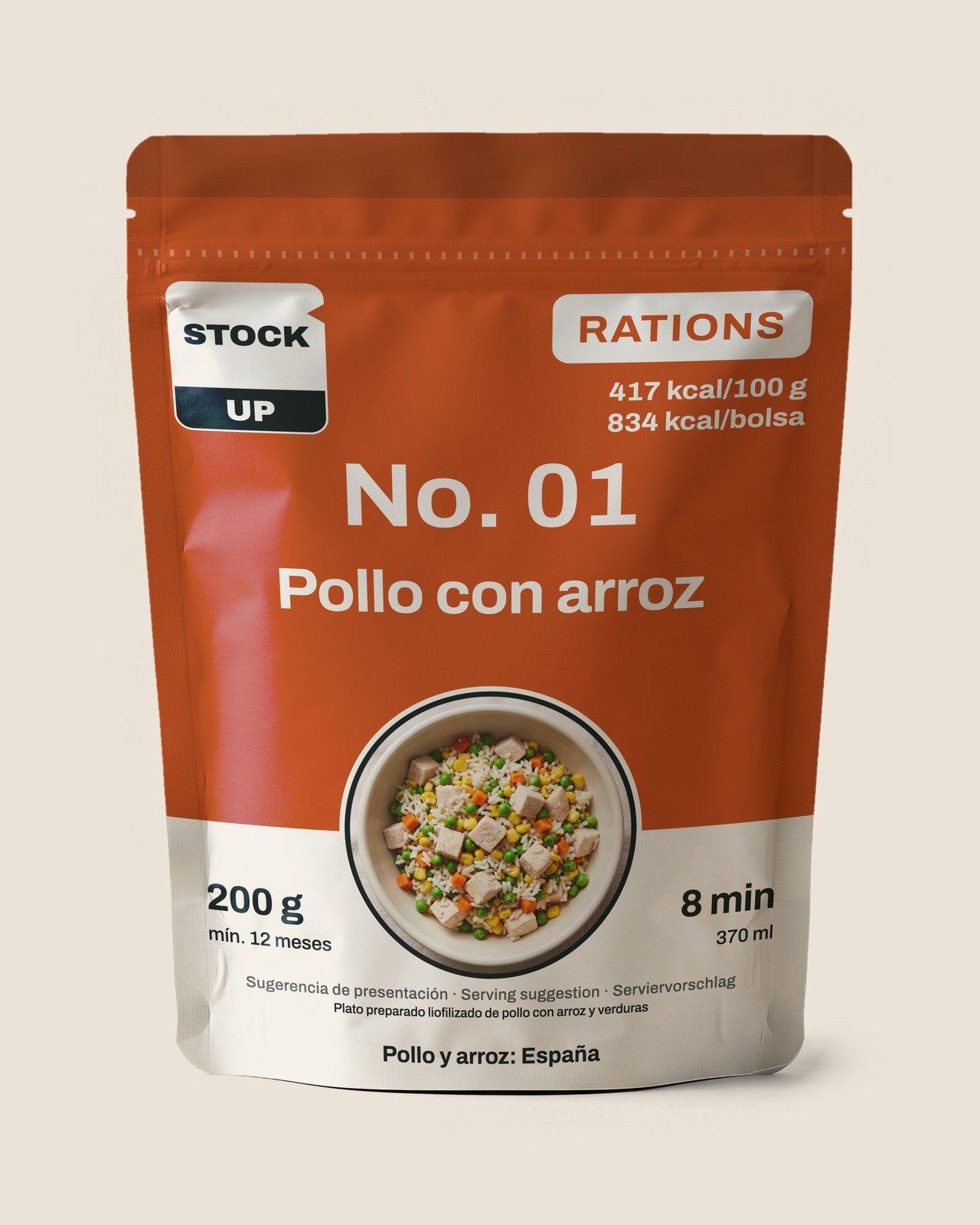
From our range
72-Hour Food Reserve
Sources
Accessed 10 November 2026
- Survival Basics: Sanitation and Waste Management. Twin-bucket System is the Way to Go When Disaster Strikes (opens an external website)
- Work out what supplies you need (opens an external website)
- Tvätt och toalett i kris (opens an external website)
- Vorsorgen für Krisen und Katastrophen (opens an external website)
- Wasser und Getränke (opens an external website)
- Technical notes on drinking-water, sanitation and hygiene in emergencies: how much water is needed in emergencies (opens an external website)
- Guidelines for Personal Hygiene During an Emergency (opens an external website)
- About Water Treatment Options When Hiking, Camping, or Traveling (opens an external website)
- Get prepared for emergencies (opens an external website)
- Storing water (opens an external website)
- Kluger Rat – Notvorrat (opens an external website)
- Build A Kit (opens an external website)
- Emergency kit checklist (opens an external website)
- Water and sanitation: scripts for broadcast media (opens an external website)
Hear from us before the shop opens
Leave your email. After a quick confirmation you get a welcome, a couple of short notes about our food and one email the day ordering opens. Nothing else.