How to make water safe to drink: boil, bleach, tablets, filter, UV
Boil it, bleach it, filter it or shine a light through it: each method stops some germs and not others, and the agencies that print the doses don’t agree on the minutes, the altitude or even the size of a drop.
By STOCKUP · Updated
In this guide (6)
Which method for which water
The CDC ranks them plainly: boiling is the best way to kill germs in water, and the next best is to filter it and then disinfect what comes through.2 What you start with decides the rest.
- Tap water under a boil notice: boil it, and use the boiled water for everything Health Canada lists: drinking, preparing food, brushing teeth, ice cubes, washing fruit and vegetables, hot and cold drinks.6
- A stream or lake on the trail: the CDC says drinking straight from even a clear mountain stream is generally not safe.2 Boil it, or filter it and then disinfect it.
- No stove and no gas: bleach or tablets, by the dose and the wait below.
- Cloudy water: clear it first. Chemicals and UV work worse on cloudy water; boiling, the WHO says, works even on turbid water.14
- Water that may hold fuel or chemicals: none of these methods. See the last section.
Step by step
Clear it
Let cloudy water settle, or strain it through a clean cloth, paper towel or coffee filter, then draw off the clear water.1Treat it
Boil it for the time your authority gives, or add bleach or tablets at the dose it or the label gives.1Wait
Let boiled water cool. After bleach, the CDC’s wait is at least 30 minutes before you drink it.1Store it
Keep it in clean, sanitised containers with tight covers.1
Boiling: how long, and at what altitude
Bring clear water to a rolling boil for 1 minute (at elevations above 6,500 feet, boil for 3 minutes).
That is the American rule, and Ready.gov asks for the same “one full minute”.5 Ireland’s water utility asks for a minute too.13 Germany, Sweden and the drinking water regulator for England and Wales count no minutes at all,11 while Argentina’s medicines and food agency says 3 minutes16 and Mexico’s health ministry 5.15 The tables under “Where you live” set them side by side. Germany’s federal environment agency, the UBA, tells households to bring the water to a rolling boil once and let it cool slowly for at least 10 minutes, a kettle being the practical way to do it;7 Sweden says to boil until it bubbles vigorously with large bubbles.8
Boiling leaves nothing in the water to protect it afterwards, the WHO notes, so it can be contaminated again in a dirty jug.4 It also tastes flat. The CDC’s fix is to pour it from one container to another and let it stand for a few hours, or to add a pinch of salt per litre.1
Bleach: the official dose, per litre and per gallon
Household bleach works where there’s no flame, if it’s the right bleach. The CDC says to follow the label’s instructions for drinking water first; if there are none, read the sodium hypochlorite strength under “active ingredient”, typically 5–9% in the United States.1 It has to be plain bleach, with no scent, no colour-safe formula and no added cleaners,35 and the EPA wants it fresh: kept at room temperature for less than a year.3
| Per litre (or US quart) | Per US gallon (3.8 litres) | Then wait | |
|---|---|---|---|
| CDC, 5–9% bleach | 2 drops, or 0.1 ml1 | 8 drops, or ½ ml | At least 30 minutes |
| CDC, 1% bleach | 10 drops, or ½ ml1 | 40 drops, or 2½ ml | At least 30 minutes |
| EPA, 6% bleach | 2 drops3 | 8 drops | 30 minutes, 15 more if it doesn’t smell of chlorine |
| EPA, 8.25% bleach | 2 drops3 | 6 drops | 30 minutes, 15 more if it doesn’t smell of chlorine |
| Ready.gov, 5.25–6.0% bleach | No figure | ⅛ teaspoon (about 0.6 ml, converted)5 | 30 minutes, 15 more if it doesn’t smell of bleach |
| Health Canada, 5.25% bleach | About 2 drops (0.2 ml)6 | No figure | 30 minutes |
Bleach doses for clear water, as each authority printed them for the strength it names, on the date under the sources
CDC, 5–9% bleach
- Per litre (or US quart)
- 2 drops, or 0.1 ml1
- Per US gallon (3.8 litres)
- 8 drops, or ½ ml
- Then wait
- At least 30 minutes
CDC, 1% bleach
- Per litre (or US quart)
- 10 drops, or ½ ml1
- Per US gallon (3.8 litres)
- 40 drops, or 2½ ml
- Then wait
- At least 30 minutes
EPA, 6% bleach
- Per litre (or US quart)
- 2 drops3
- Per US gallon (3.8 litres)
- 8 drops
- Then wait
- 30 minutes, 15 more if it doesn’t smell of chlorine
EPA, 8.25% bleach
- Per litre (or US quart)
- 2 drops3
- Per US gallon (3.8 litres)
- 6 drops
- Then wait
- 30 minutes, 15 more if it doesn’t smell of chlorine
Ready.gov, 5.25–6.0% bleach
- Per litre (or US quart)
- No figure
- Per US gallon (3.8 litres)
- ⅛ teaspoon (about 0.6 ml, converted)5
- Then wait
- 30 minutes, 15 more if it doesn’t smell of bleach
Health Canada, 5.25% bleach
- Per litre (or US quart)
- About 2 drops (0.2 ml)6
- Per US gallon (3.8 litres)
- No figure
- Then wait
- 30 minutes
Double the dose for cloudy, coloured or very cold water, say the CDC and the EPA.13 After the wait the EPA expects a slight smell of chlorine; Ready.gov adds that if a second dose and 15 more minutes still give none, the water should be thrown away and another source found.35
The table hides a disagreement. For bleach of about the same strength, Health Canada puts about 0.2 ml into a litre and the CDC 0.1 ml.61 Even a drop isn’t a fixed amount: two drops are 0.1 ml to the CDC and 0.2 ml to Health Canada. Follow the authority where you live, and measure its millilitres with a clean medicine dropper, Health Canada’s tool for the job, rather than borrowing another country’s drop count.
Tablets, filters and UV: what each removes
| Parasites (Giardia, Cryptosporidium) | Bacteria | Viruses | What it doesn’t do | |
|---|---|---|---|---|
| Boiling | Kills them | Kills them | Kills them | Remove chemicals; protect the water afterwards (WHO)4 |
| Bleach | Doesn’t work well | Kills them | Kills them | Work as well in cloudy water3 |
| Iodine | Won’t kill Cryptosporidium1 | Kills them | Kills them | Suit pregnancy, thyroid problems, or weeks of use1 |
| Chlorine dioxide tablets | Can kill Giardia; “somewhat effective” on Cryptosporidium | Kill them1 | Kill them | Work at any dose but the packet’s1 |
| Filter, 1 micron absolute | Removes them | Not all of them | No | Remove viruses |
| Filter, 0.3 micron absolute | Removes them | Removes them | No | Remove viruses |
| Portable UV | Can kill them | Can kill them | Can kill them | Work well in cloudy water1 |
What each method does against germs, in the CDC’s terms, on the date under the sources2
Boiling
- Parasites (Giardia, Cryptosporidium)
- Kills them
- Bacteria
- Kills them
- Viruses
- Kills them
- What it doesn’t do
- Remove chemicals; protect the water afterwards (WHO)4
Bleach
- Parasites (Giardia, Cryptosporidium)
- Doesn’t work well
- Bacteria
- Kills them
- Viruses
- Kills them
- What it doesn’t do
- Work as well in cloudy water3
Iodine
Chlorine dioxide tablets
Filter, 1 micron absolute
- Parasites (Giardia, Cryptosporidium)
- Removes them
- Bacteria
- Not all of them
- Viruses
- No
- What it doesn’t do
- Remove viruses
Filter, 0.3 micron absolute
- Parasites (Giardia, Cryptosporidium)
- Removes them
- Bacteria
- Removes them
- Viruses
- No
- What it doesn’t do
- Remove viruses
Portable UV
- Parasites (Giardia, Cryptosporidium)
- Can kill them
- Bacteria
- Can kill them
- Viruses
- Can kill them
- What it doesn’t do
- Work well in cloudy water1
The CDC’s two pages don’t quite agree on chlorine dioxide: the emergency page says the tablets kill Cryptosporidium if you follow the instructions correctly, the hiking page calls them somewhat effective and says to filter first.12 Tablets of every kind are made for a set amount of water, so the packet’s dose is the dose.13
Iodine splits the American agencies. The EPA gives five drops of 2% tincture of iodine per quart or litre, ten if the water is cloudy or coloured, then at least 30 minutes;3 Ready.gov says iodine, and camping-shop treatments that aren’t plain 5.25–6.0% sodium hypochlorite, are not recommended and should not be used.5 The CDC says to avoid iodine-treated water if you’re pregnant, have thyroid problems or are hypersensitive to iodine, and that nobody should drink it for more than a few weeks at a time.1
In the shop, a “filter” strains out protozoa and bacteria and a “purifier” also deals with viruses: those are REI’s definitions.9 The CDC is stricter about what a filter does. Most portable filters remove parasites but not viruses or bacteria. One with an absolute pore size of 1 micron or less, or certified to NSF standard 53 or 58 for cysts, removes parasites; 0.3 micron or less removes bacteria too. Reverse osmosis filters remove viruses too, and salt with them.2 So read the pore size on the box, and after filtering add a chemical disinfectant, the CDC’s step for the viruses and bacteria that get through.1
A UV pen or bottle can kill parasites, bacteria and viruses in small amounts of clear water, the CDC says, and it says to filter the water first.2 The sun does a slower version, and the CDC’s instructions for it are clear plastic bottles of clear water laid on their side in the sun for 6 hours if it’s sunny, or 2 days if it’s cloudy. Its wording for the result is careful: it improves the water by reducing the number of germs.1
What no method fixes
The EPA adds heavy metals, salts and most other chemicals to what boiling and disinfection leave in. It says not to use water with floating material, a dark colour or a questionable smell, and that flowing water is generally better than still.3 And never use the water from radiators or a heating boiler for drinking, cooking or washing, the CDC says.1
Where you live: the minutes, the dose and the label
The rule changes at the border, so find your own row and leave the others alone.
| Boil | Bleach, if you can’t boil | Wait after bleach | |
|---|---|---|---|
| United States, CDC | A rolling boil for 1 minute; 3 minutes above 6,500 feet (about 2,000 m)1 | 2 drops per litre of 5–9% bleach; double if the water is cloudy, coloured or very cold | At least 30 minutes |
| United Kingdom | A rolling boil, no minutes given; then the fridge, and discard after 24 hours (Drinking Water Inspectorate, England and Wales)11 | By the teaspoon, no bleach strength given (Chief Medical Officers; see the note below)12 | 15 minutes (Chief Medical Officers) |
| Ireland, Uisce Éireann | A “vigorous boil for 1 minute”, for example in an electric kettle13 | Doesn’t say | Doesn’t say |
| Canada, Health Canada | Boil it; no minutes given6 | About 2 drops (0.2 ml) per litre of 5.25% bleach | 30 minutes |
| Australia, NSW Health | A rolling boil; a kettle that switches itself off does it14 | 2 drops per litre of unscented bleach with 4–5% available chlorine, 4 drops if the water is cloudy | 30 minutes at 25 °C, 1 hour at 15 °C, 2 hours at 5 °C |
Boiling and bleach in the English-speaking countries, each as its authority prints it, on the date under the sources
United States, CDC
- Boil
- A rolling boil for 1 minute; 3 minutes above 6,500 feet (about 2,000 m)1
- Bleach, if you can’t boil
- 2 drops per litre of 5–9% bleach; double if the water is cloudy, coloured or very cold
- Wait after bleach
- At least 30 minutes
United Kingdom
Ireland, Uisce Éireann
- Boil
- A “vigorous boil for 1 minute”, for example in an electric kettle13
- Bleach, if you can’t boil
- Doesn’t say
- Wait after bleach
- Doesn’t say
Canada, Health Canada
- Boil
- Boil it; no minutes given6
- Bleach, if you can’t boil
- About 2 drops (0.2 ml) per litre of 5.25% bleach
- Wait after bleach
- 30 minutes
Australia, NSW Health
- Boil
- A rolling boil; a kettle that switches itself off does it14
- Bleach, if you can’t boil
- 2 drops per litre of unscented bleach with 4–5% available chlorine, 4 drops if the water is cloudy
- Wait after bleach
- 30 minutes at 25 °C, 1 hour at 15 °C, 2 hours at 5 °C
| Boil | Bleach, if you can’t boil | Wait after bleach | |
|---|---|---|---|
| Germany, UBA | A rolling boil once, then at least 10 minutes’ slow cooling7 | Doesn’t say | Doesn’t say |
| Mexico, Secretaría de Salud | 5 minutes from the first boil15 | 2 drops per litre of household bleach with 6% sodium hypochlorite | 30 minutes |
| Argentina, ANMAT | 3 minutes16 | The drops printed on the bottle, and only bleach labelled apta para desinfectar agua (fit for disinfecting water) | 30 minutes |
The same in Germany and Latin America, each as its authority prints it, on the date under the sources
Germany, UBA
- Boil
- A rolling boil once, then at least 10 minutes’ slow cooling7
- Bleach, if you can’t boil
- Doesn’t say
- Wait after bleach
- Doesn’t say
Mexico, Secretaría de Salud
- Boil
- 5 minutes from the first boil15
- Bleach, if you can’t boil
- 2 drops per litre of household bleach with 6% sodium hypochlorite
- Wait after bleach
- 30 minutes
Argentina, ANMAT
- Boil
- 3 minutes16
- Bleach, if you can’t boil
- The drops printed on the bottle, and only bleach labelled apta para desinfectar agua (fit for disinfecting water)
- Wait after bleach
- 30 minutes
The UK’s bleach figure needs its note. It comes from a script the four Chief Medical Officers wrote for broadcasters to read out in a national power cut, which they present as their own advice, not government policy. If you can’t boil the water and have no in-date purification tablets, it says to add “approximately one-quarter of a teaspoon of unscented, household bleach for every 10 litres of water (approximately one bucket)” and leave it to stand for 15 minutes.12 The script doesn’t say how strong the bleach is, and strength is what every other dose in this article hangs on. It does say that it’s important not to use too much, and that water with a very strong chlorine smell should stand uncovered for 2 hours before you drink it.12
Bleach isn’t one product worldwide, so a dose only works for the bottle it was written for.
- United States: 5–9% sodium hypochlorite in the CDC’s table, 6 or 8.25% in the EPA’s.13
- Spain: lejía is graded by grams of active chlorine per litre, not by a percentage. Only a bottle labelled apta para la desinfección del agua de bebida (fit for disinfecting drinking water) is meant for it, and its maker must print how much to add to reach 3 mg of active chlorine per litre of water. Bottles marked no apta are not.10
- Anywhere else: the CDC’s first instruction works for any bottle: follow the label’s own directions for drinking water, and if it has none, find the sodium hypochlorite strength before you use anybody’s table.1
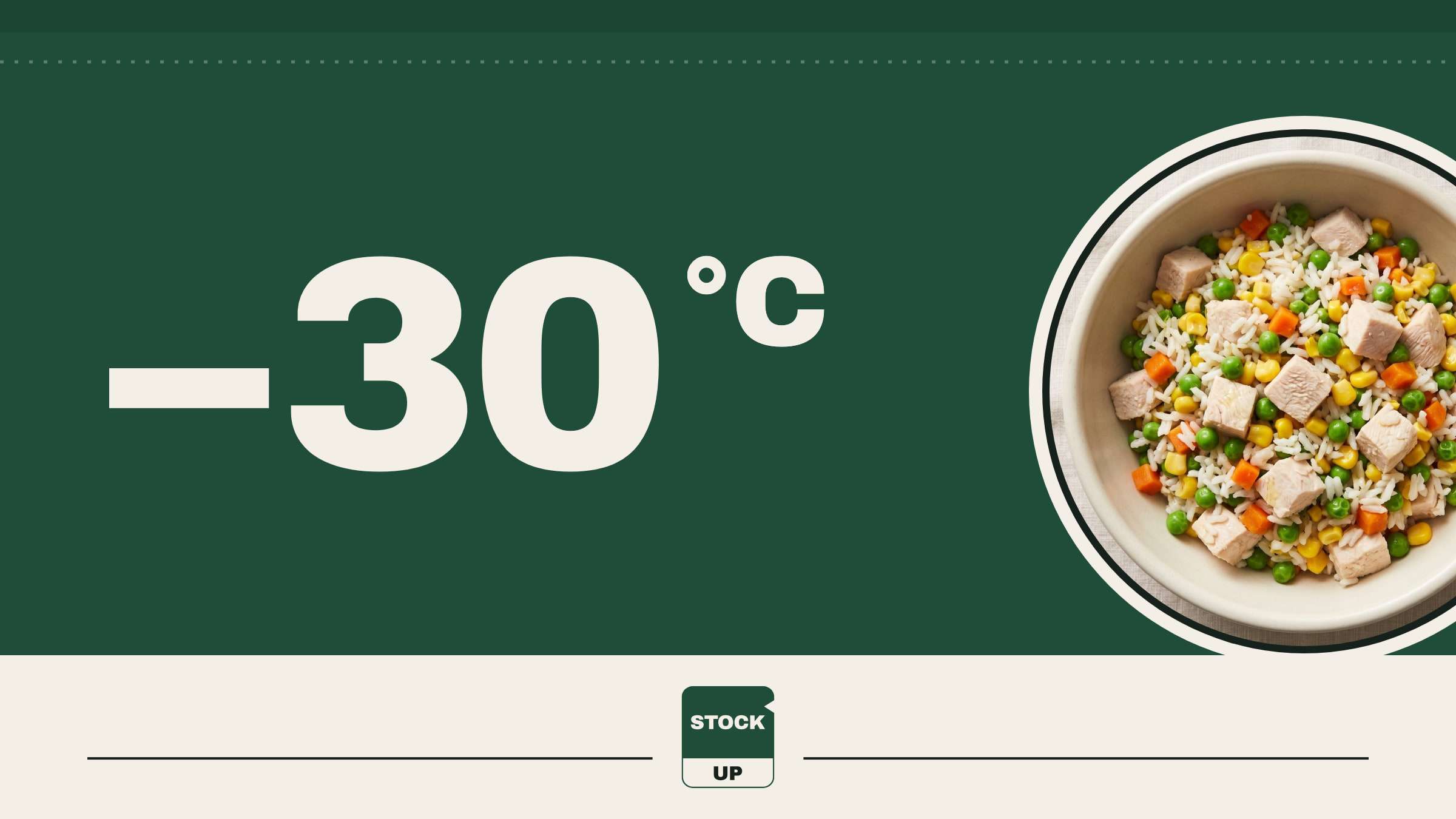
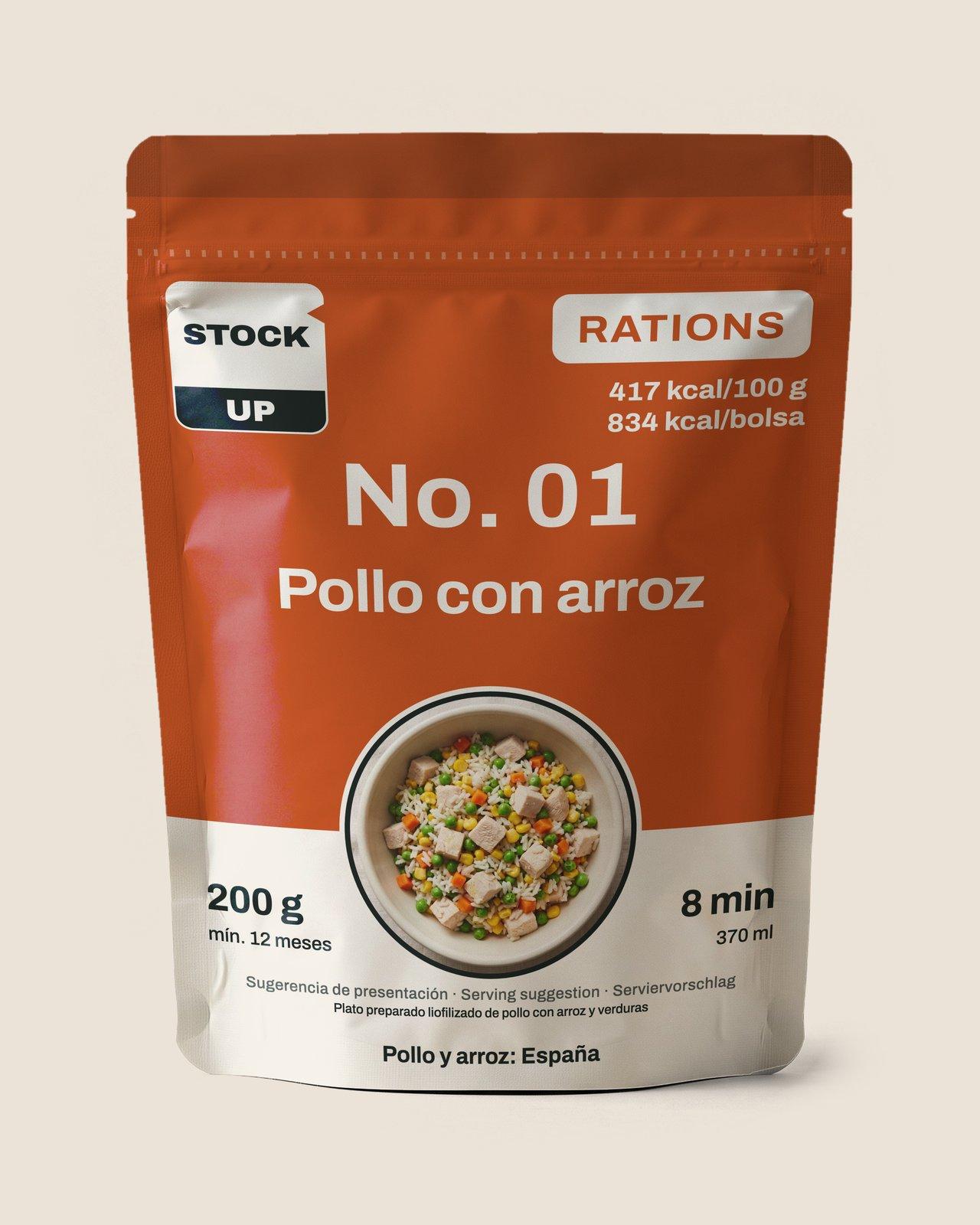
Whatever you make up with water, a pouch included, the CDC lists preparing food among the things untreated water shouldn’t be used for.1 Chicken & Rice takes 370 ml, a Porridge & Fruit breakfast 250 ml, and the whole 72-Hour Food Reserve 3.1 l, all of it counted in how much water to store per person. With the power off, heating that water is the hard part, and how to cook without power sets out what may be lit where; with cold water the meals take 20–30 minutes depending on the meal, listed dish by dish in freeze-dried meals with cold water. On a trek every litre for a meal comes from a stream and gets treated first, and the water per day is part of food for a multi-day hike.
From our range
Chicken & RiceLarge
Sources
Accessed 10 November 2026
- How to Make Water Safe in an Emergency (opens an external website)
- About Water Treatment Options When Hiking, Camping, or Traveling (opens an external website)
- Emergency Disinfection of Drinking Water (opens an external website)
- Boil water (opens an external website)
- Water (opens an external website)
- Food and drinking water safety in an emergency (opens an external website)
- Empfehlungen zum Umgang mit Abweichungen nach Trinkwasserverordnung – Vollzug der §§ 62 bis 68 TrinkwV (opens an external website)
- Home preparedness (opens an external website)
- How to Choose a Water Filter or Purifier (opens an external website)
- Real Decreto 3360/1983, de 30 de noviembre, por el que se aprueba la Reglamentación Técnico-Sanitaria de Lejías (opens an external website)
- Receiving a boil water notice (opens an external website)
- Water and sanitation: scripts for broadcast media (opens an external website)
- Boil Water Notice (opens an external website)
- What to do if a boil water alert is in place (opens an external website)
- Consumo de agua (opens an external website)
- Agua segura y salud (opens an external website)
Hear from us before the shop opens
Leave your email. After a quick confirmation you get a welcome, a couple of short notes about our food and one email the day ordering opens. Nothing else.