How much water to store per person: the official figures compared
Governments that tell you to keep water at home don’t agree on how much: from a litre and a half a day in Spain to 3.8 litres (a US gallon). Side by side, most of the gap turns out to be what the figure has to cover.
By STOCKUP · Updated
In this guide (6)
The table: litres per person per day, by country
The governments below all tell households to keep water at home, and they don’t agree on how much. Most of the gap comes from what each figure has to cover: the third column.
- The lowest daily figure, Spain’s12
- 1.5l
- The highest, the US gallon2
- 3.8l
- What Germany asks for, ideally9
- 10days
| Per person, per day | Days | What it covers | |
|---|---|---|---|
| United States, Ready.gov (FEMA) | 3.8 litres (1 US gallon)1 | “Several days” | Drinking and sanitation |
| United States, CDC | 3.8 litres (1 gallon)2 | 3; two weeks “if possible” | Drinking, cooking, brushing teeth, other uses |
| United Kingdom, Be Ready | 3 litres4 | 3 | Drinking; more for cooking and washing |
| Ireland, Be Emergency Ready | 2–3 litres5 | No figure | Drinking |
| Canada, Public Safety Canada | 2 litres6 | At least 3 | Drinking, cooking and hygiene |
| New Zealand, Get Ready | At least 3 litres8 | At least 3 | Drinking and basic hygiene |
English-speaking countries: water per person per day, as each authority printed it on the date under the sources
United States, Ready.gov (FEMA)
- Per person, per day
- 3.8 litres (1 US gallon)1
- Days
- “Several days”
- What it covers
- Drinking and sanitation
United States, CDC
- Per person, per day
- 3.8 litres (1 gallon)2
- Days
- 3; two weeks “if possible”
- What it covers
- Drinking, cooking, brushing teeth, other uses
United Kingdom, Be Ready
- Per person, per day
- 3 litres4
- Days
- 3
- What it covers
- Drinking; more for cooking and washing
Ireland, Be Emergency Ready
- Per person, per day
- 2–3 litres5
- Days
- No figure
- What it covers
- Drinking
Canada, Public Safety Canada
- Per person, per day
- 2 litres6
- Days
- At least 3
- What it covers
- Drinking, cooking and hygiene
New Zealand, Get Ready
- Per person, per day
- At least 3 litres8
- Days
- At least 3
- What it covers
- Drinking and basic hygiene
| Per person, per day | Days | What it covers | |
|---|---|---|---|
| Germany, BBK | 2 litres, ideally9 | 10 ideally, 3 at least | 1.5 litres to drink, 0.5 to cook |
| Switzerland, BWL | 9 litres for three days10 | 3 | Drinking and cooking; not washing or the toilet |
| Austria, Interior Ministry | 2.5 litres, its reference figure (Referenzwert)11 | At least 10–14 | No figure |
| Spain, Interior and Education ministries | At least 1.5 litres12 | 3 | Drinking water |
| Sweden, Krisinformation | At least 3–5 litres13 | At least a week | No figure |
| Chile, SENAPRED | 2 litres, and 2 more as an additional provision14 | 48–72 hours | No figure |
Europe and South America: water per person per day, as each authority printed it on the date under the sources
Germany, BBK
- Per person, per day
- 2 litres, ideally9
- Days
- 10 ideally, 3 at least
- What it covers
- 1.5 litres to drink, 0.5 to cook
Switzerland, BWL
- Per person, per day
- 9 litres for three days10
- Days
- 3
- What it covers
- Drinking and cooking; not washing or the toilet
Austria, Interior Ministry
- Per person, per day
- 2.5 litres, its reference figure (Referenzwert)11
- Days
- At least 10–14
- What it covers
- No figure
Spain, Interior and Education ministries
- Per person, per day
- At least 1.5 litres12
- Days
- 3
- What it covers
- Drinking water
Sweden, Krisinformation
- Per person, per day
- At least 3–5 litres13
- Days
- At least a week
- What it covers
- No figure
Chile, SENAPRED
- Per person, per day
- 2 litres, and 2 more as an additional provision14
- Days
- 48–72 hours
- What it covers
- No figure
What each figure covers: drinking, cooking, washing
Britain’s 3 litres are for drinking, and Be Ready says in the same line that cooking and washing need more.4 Switzerland’s 9 litres, one six-pack of 1.5-litre bottles, cover drinking and cooking for three days, and the BWL, the Swiss federal office for national economic supply, adds that water for washing and flushing the toilet isn’t included.10 Germany splits its 2 litres into 1.5 to drink and 0.5 to cook.9 New Zealand’s 3 litres stretch to drinking and basic hygiene,8 and Canada’s 2 litres to drinking, cooking and hygiene, though Health Canada suggests 2 more a day for cooking and cleaning as an extra.67
So the distance between the lowest and the highest figure is smaller than it looks. Spain’s 1.5 litres is drinking water and nothing else.12 The American gallon has to cover drinking and sanitation, and of that gallon Ready.gov reckons a normally active person drinks about three quarters, 2.8 litres a day, from water and other drinks.1
Most figures are written as minimums. Ready.gov says children, nursing mothers and people who are ill may need more, and that in very hot weather the need can double;1 New Zealand says the same of heat and hard physical work.8 Aid agencies work on far larger numbers: the WHO’s emergency tables count 7.5 to 15 litres per person per day once cooking and basic hygiene are in, a planning figure for camps and shelters rather than for a hall cupboard.15
The sum for your household: 3, 7 and 14 days
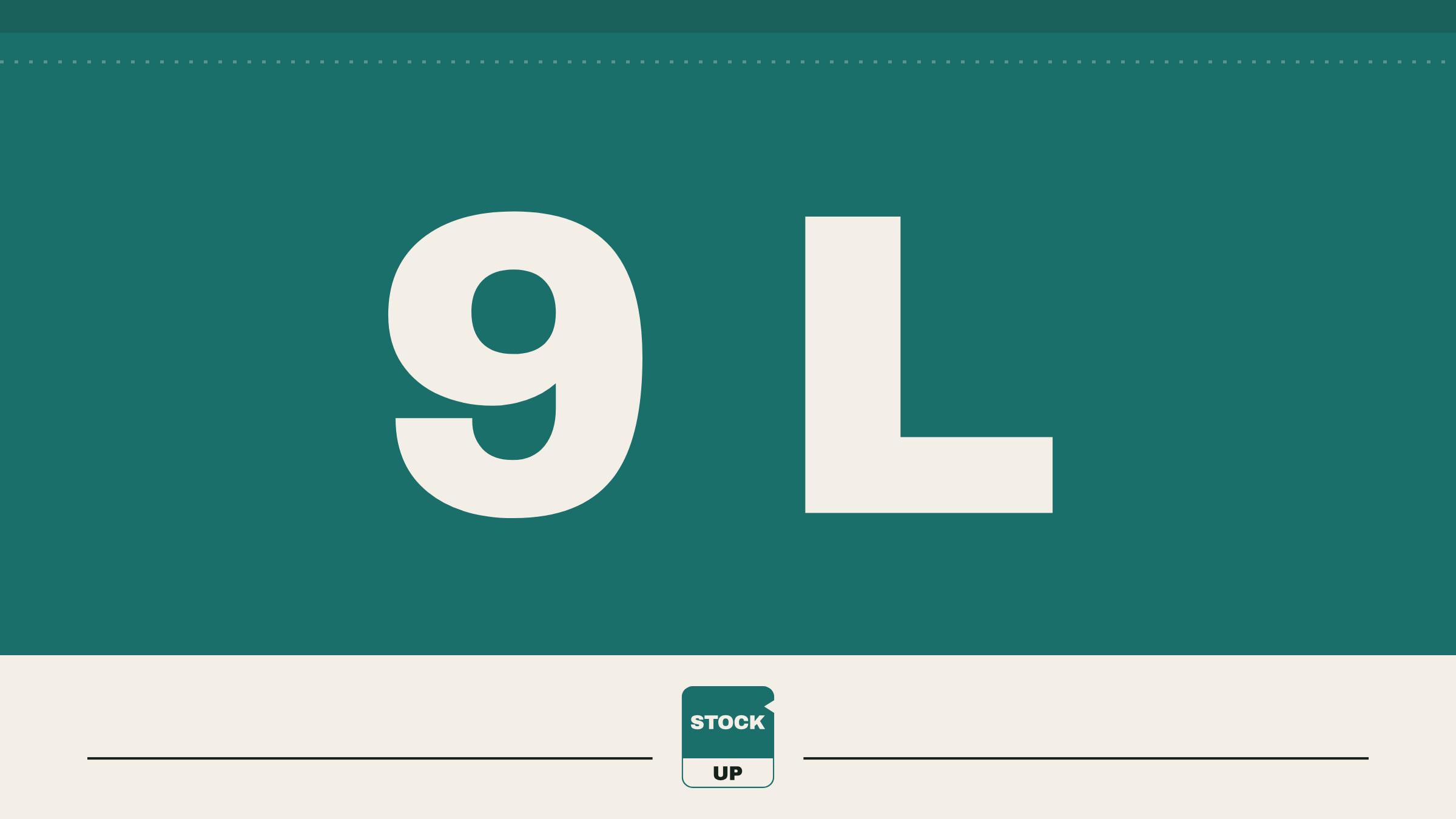
In bottles, 36 litres is 24 bottles of 1.5 litres, four six-packs. Two weeks at 3 litres is 112 of those bottles, so the larger figure is mostly a question of where to put it.
The days differ as much as the litres. Three is the common minimum: Britain, Spain, Switzerland, New Zealand, Canada, and the CDC’s starting point.2 Sweden plans for a week, Germany ideally for ten days and Austria for at least 10 to 14. The American Red Cross asks for three days in an evacuation bag and two weeks at home.3
What to keep it in, and when to replace it
The easy option is bought water. The CDC calls unopened, commercially bottled water the safest and most reliable source in an emergency, and says to go by the date on the bottle;2 Ireland’s booklet also goes by the date on the bottle, and says to keep it somewhere cool and dark.5
Filling your own from the tap works if the containers are right. The CDC asks for food-grade water containers or, failing that, a tight lid, a tough material that isn’t glass and, if possible, a narrow neck.2 New Zealand rules out plastic milk bottles and cartons, because the milk protein can’t be washed out.8
Step by step
Wash
Wash the container with soap and rinse it out completely with water.2Sanitise
The CDC mixes 1 teaspoon of unscented liquid household bleach, 5–9% sodium hypochlorite, into 1 quart (4 cups) of water, which is about 5 ml in just under a litre. Close the lid and shake so the solution touches every inside surface.2Empty and dry
Wait at least 30 seconds, pour the solution out and let the container air-dry.2Fill and label
Fill it with clean water, close it tightly and label it “drinking water” with the date.2
Store the containers somewhere cool, 10–21 °C (50–70 °F) in the CDC’s range, out of direct sun and away from petrol and pesticides.2 There’s also water in the house already. New Zealand’s Get Ready calls the hot-water cylinder and the toilet cistern valuable sources of water, the cistern only if you don’t use chemical toilet cleaners, and says rainwater has to be disinfected first.8 Sweden is less strict about the calendar: it says nobody can say exactly how long stored water keeps, and asks you to check it once or twice a year.13
Where you live
Go by the authority of the country you live in. If you live between two countries, or the figure you found covers drinking only, take the higher one: it costs shelf space and nothing else. The WHO’s emergency planning tables put the bare survival need, drinking and food, at 2.5 to 3 litres per person per day,15 which is where most of the national figures above sit.
Two rules travel well. Don’t ration: Ready.gov says to drink what you need today and look for more tomorrow, unless the authorities order otherwise.1 And when the stored water runs out, whatever comes next, a rain barrel, a stream or a tap under a boil notice, has to be treated first, by the boiling times and bleach doses in how to make water safe to drink.
None of this is enough to flush a toilet with: the WHO’s planning tables count 20 to 40 litres per user per day for a conventional flushing toilet,15 which is why emergency toilet and hygiene when the water’s off starts with two buckets. Water is one line of the 72-hour kit list, and the first step in prepping for beginners.
The water your food needs
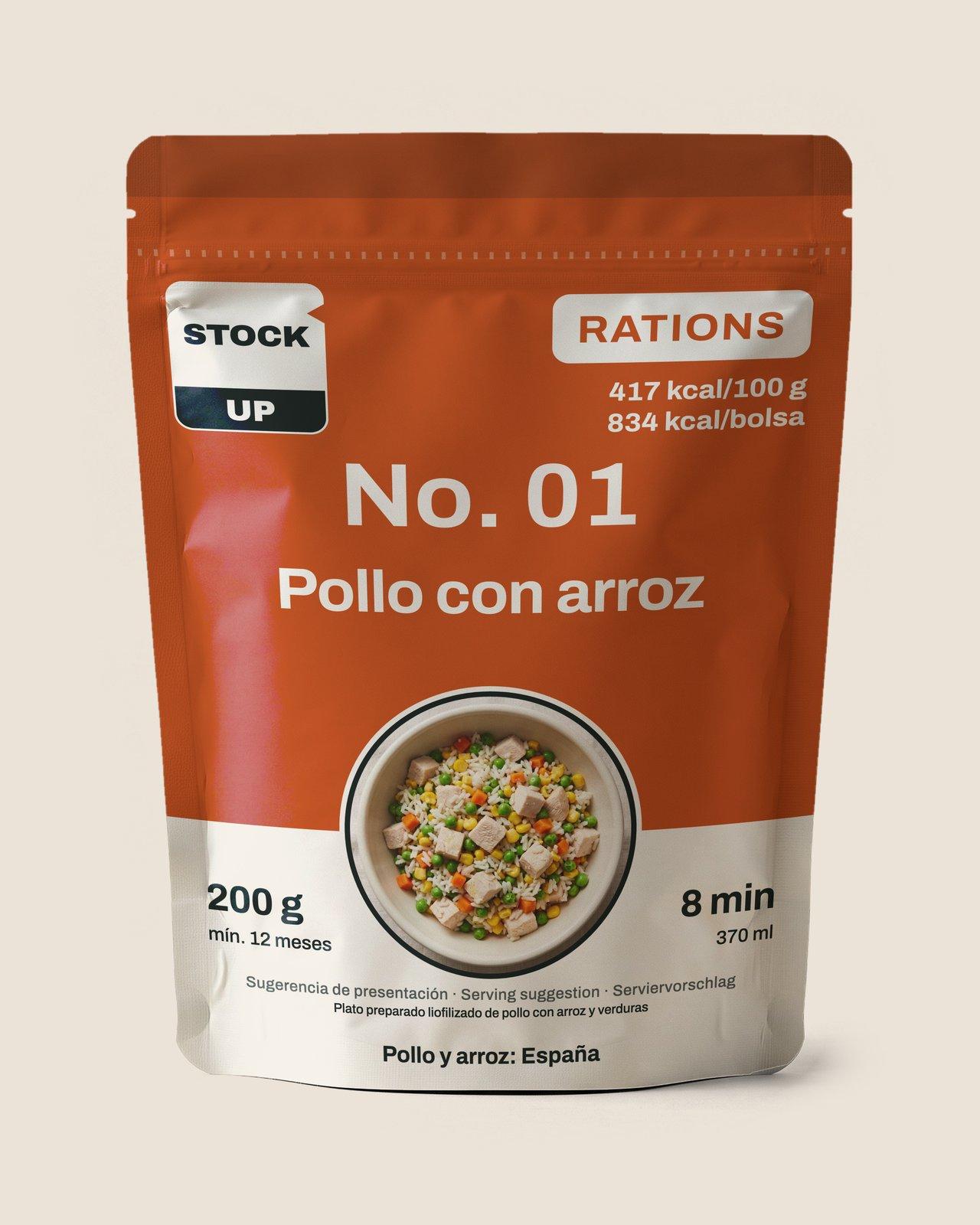
Tins bring their own water. Dried food takes it from the same containers you drink from, so it belongs in the sum. A freeze-dried main such as Chicken & Rice takes 370 ml, and the 72-Hour Food Reserve needs 3.1 l to make up every pouch in it, on top of what you drink. A cup of broth such as Puchero Broth takes 250 ml, and it is hot water only, so the kettle has to work too: how to cook without power covers that.
From our range
72-Hour Food Reserve
Sources
Accessed 10 November 2026
- Water (opens an external website)
- How to Create an Emergency Water Supply (opens an external website)
- Survival Kit Supplies (opens an external website)
- Get prepared for emergencies (opens an external website)
- Be Emergency Ready (opens an external website)
- Emergency kit checklist (opens an external website)
- Food and drinking water safety in an emergency (opens an external website)
- Storing water (opens an external website)
- Vorsorgen für Krisen und Katastrophen (opens an external website)
- Kluger Rat – Notvorrat (opens an external website)
- Verhalten bei Blackout (opens an external website)
- Guía para las familias. Prevención y autoprotección ante riesgos en el entorno (opens an external website)
- Home preparedness (opens an external website)
- Kit de Emergencia (opens an external website)
- Technical notes on drinking-water, sanitation and hygiene in emergencies: how much water is needed in emergencies (opens an external website)
Hear from us before the shop opens
Leave your email. After a quick confirmation you get a welcome, a couple of short notes about our food and one email the day ordering opens. Nothing else.