What freeze-dried food is, and how it differs from dried
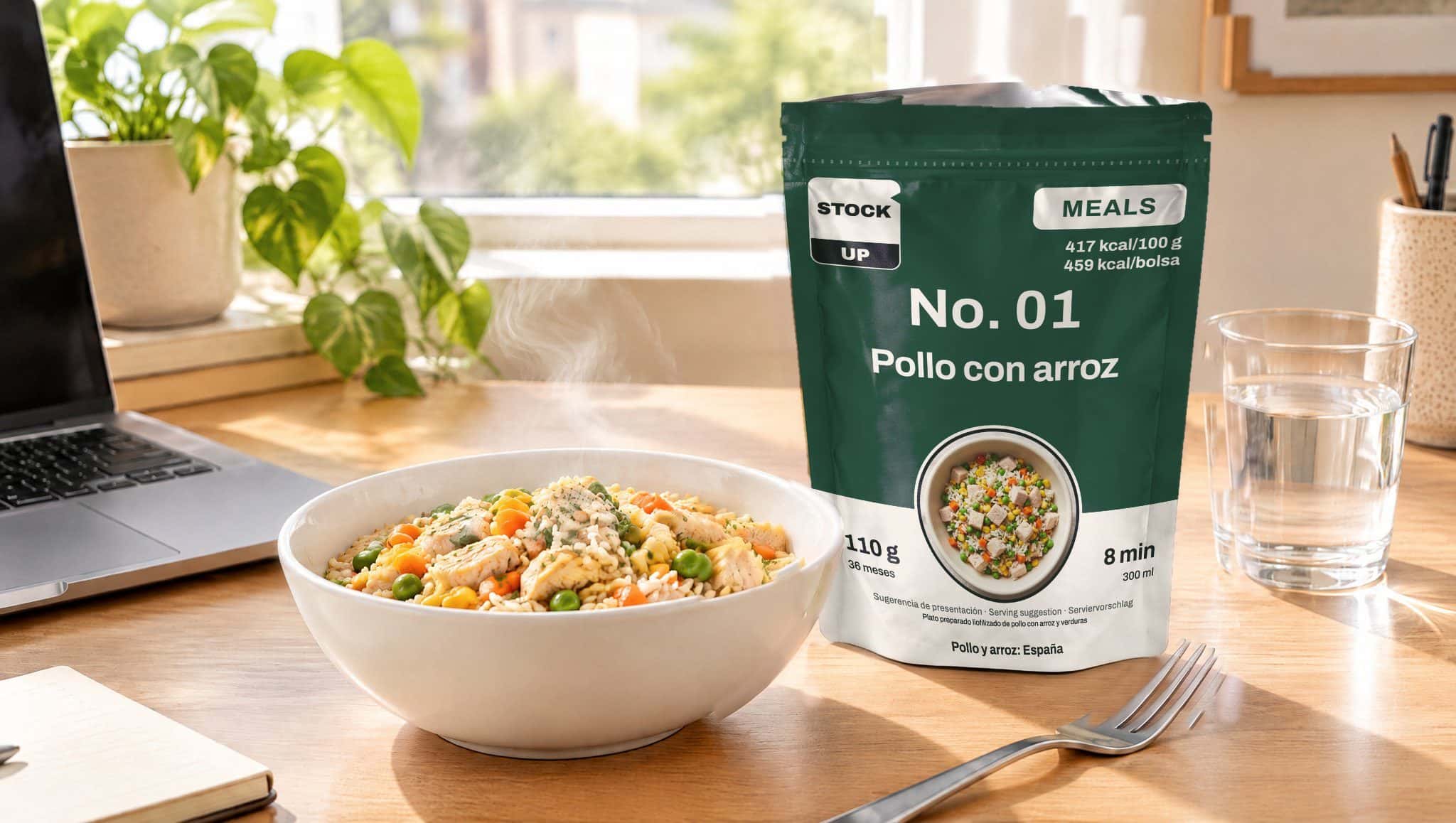
A pouch of cooked chicken and rice weighs a fraction of the bowl it becomes. The water left as vapour, straight from ice, in a vacuum, and it goes back in from the kettle or a bottle.
By STOCKUP · Updated
In this guide (4)
Freeze-drying takes the water out of food while the water is still ice. It leaves the food’s own structure standing, full of tiny holes where the ice used to be, and that’s why a freeze-dried dish takes water back so quickly.1
Frozen first, then the ice leaves as vapour
The trick is pressure. Below 0.01 °C and 0.612 kPa, the triple point of water, ice can’t melt; it can only turn into vapour.2 Keep the food under both figures and the water leaves without the food ever getting wet again.
- Freeze solid
- Ice to vapour under vacuum
- Draw off the last water
Step by step
Freeze
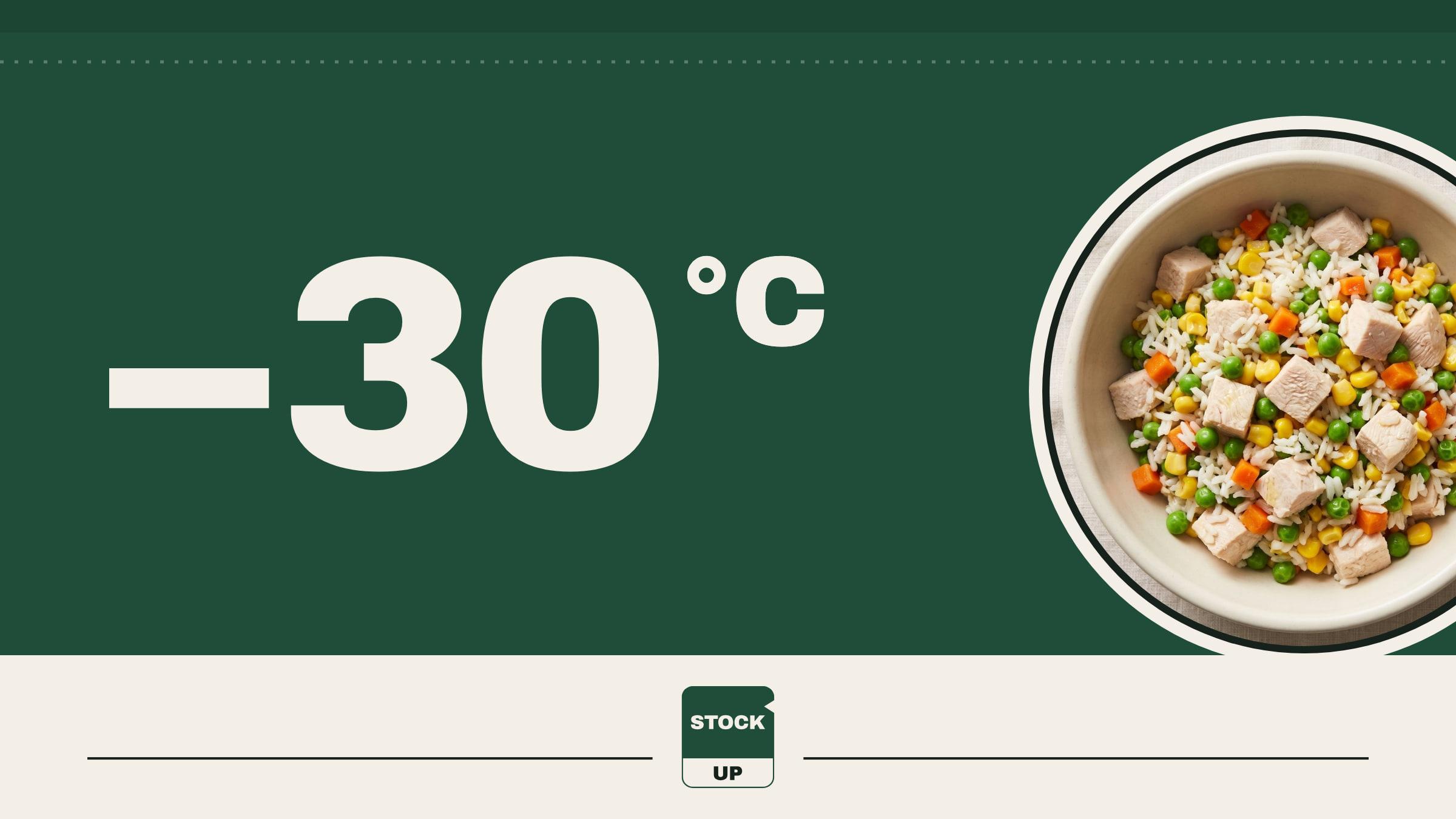
The food is frozen at normal pressure until all its free water is ice.1 We freeze ours below −30 °C before the vacuum starts.Primary drying
The pressure drops far below the triple point and the shelves supply gentle heat. The ice sublimes and the vapour freezes again on a condenser at about −60 to −80 °C. It’s the longest stage and uses the most energy.1
So it isn’t a cold process from start to finish, and nobody should call it raw. It’s drying at low temperature, with the heat kept below the point where the food would lose its shape.2
The idea is older than the camping shelf. Scientists were working on it at the turn of the twentieth century, and it became an industry in the Second World War, when blood plasma was freeze-dried on a large scale. For decades it was thought too expensive for food; freeze-dried coffee changed that.3
Freeze-dried against hot-air dried, line by line
“Dehydrated” on a label usually means dried in warm, moving air: a home dehydrator, or its industrial cousin. Both take the water out; the difference is in how, and you can feel it in the hand.
| Freeze-dried | Hot-air dried | |
|---|---|---|
| How the water leaves | As vapour, straight from ice, in a vacuum1 | Evaporates from the surface into warm air4 |
| Process temperature | −25 to −20 °C; up to 60–70 °C at the end1 | About 60 °C at home5 |
| Time | 20–40 h for a home batch7 | Faster: built to dry food quickly at about 60 °C5 |
| Water left | Under 5%1 | About 20% in fruit, 10% in vegetables6 |
| Shape and texture | Porous, crisp; carrot shrinks 21%2 | Denser, springier; carrot shrinks 36%21 |
| With water added | Fast, and more fully7 | Slower, less fully7 |
| Weight | Lightest: almost no water left1 | Heavier: more water stays6 |
| Why it costs more | Four to ten times the energy2 | The cheaper standard2 |
| VerdictChoose it for | Light, long-keeping, whole meals8 | Cheap, quick, fruit and vegetables25 |
Neither is the safer method; the sources compare quality, not safety. Dried apricots and jerky are fine things. They just don’t turn back into dinner.
Light in the rucksack, a full bowl at the table
Raw food is 80–95% water.1 Take nearly all of it out and the weight falls by a factor of five to twenty while the size barely changes, so a freeze-dried dish is light for its bulk.
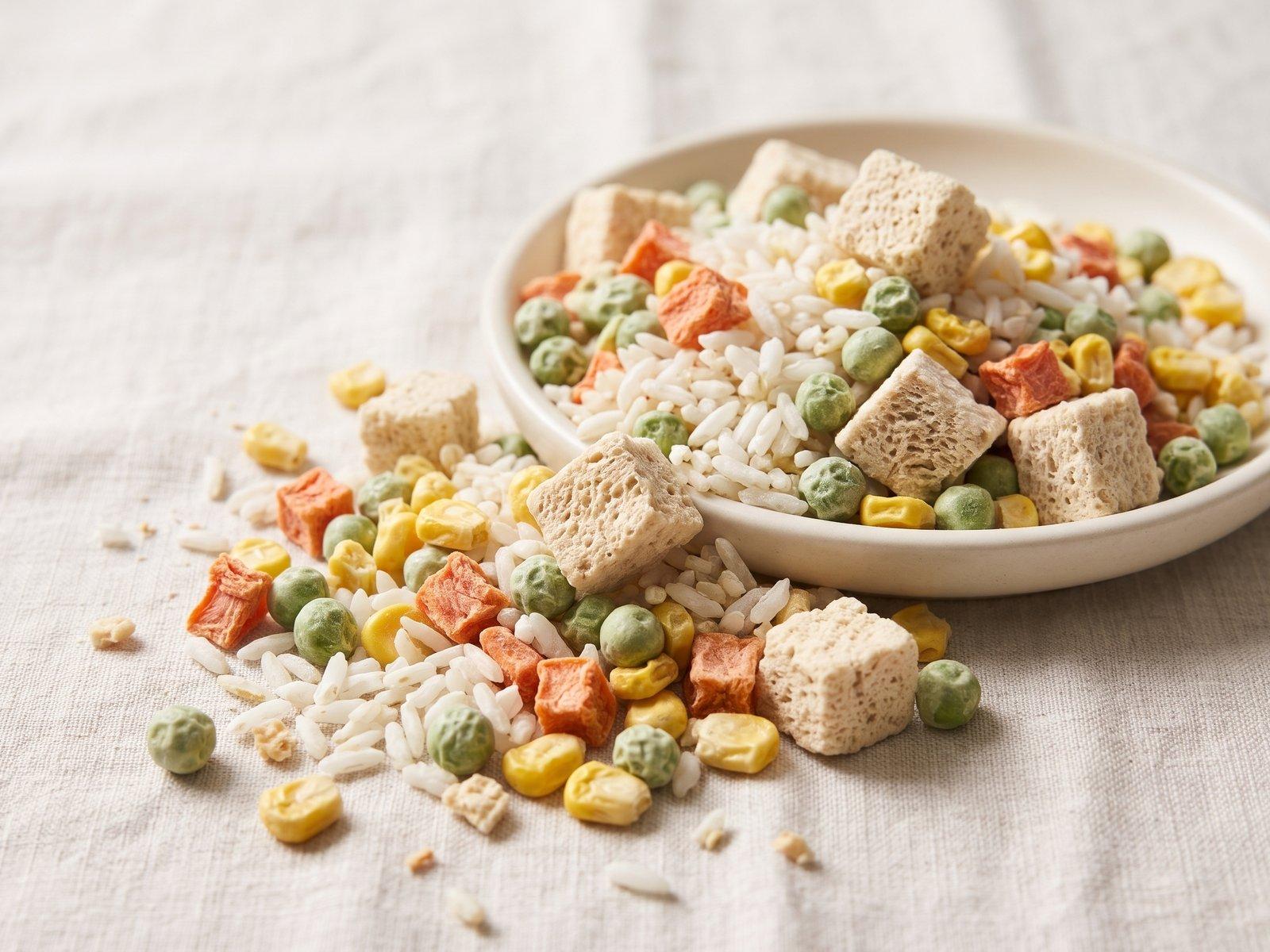
Dry, from the pouch
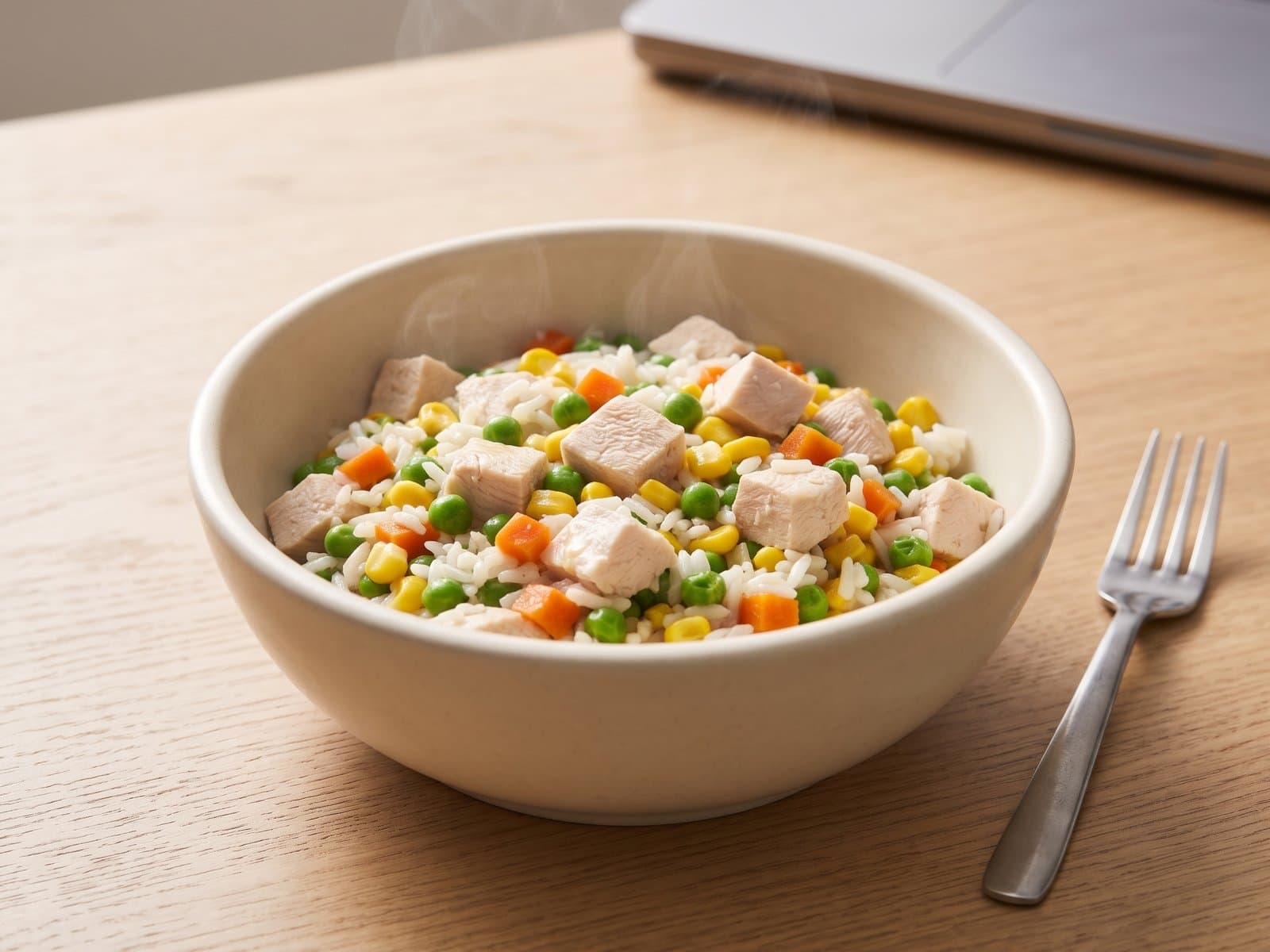
With waterServing suggestion
Our Chicken & Rice weighs 150 g in the pouch. Add 400 ml of water and the bowl weighs the two together: you carry the food, and the water comes from the tap or the bottle when you want to eat. With water from the kettle it’s ready in 8 minutes; from the bottle, in about 20 minutes.
Not every dish goes both ways. The Porcini Mushroom Risotto takes the same water and the same minutes hot, but it’s hot water only. Which pouches work cold, and how long they take, is in cold or hot water.
| Pouch | Net weight | Water | Hot water | Cold water |
|---|---|---|---|---|
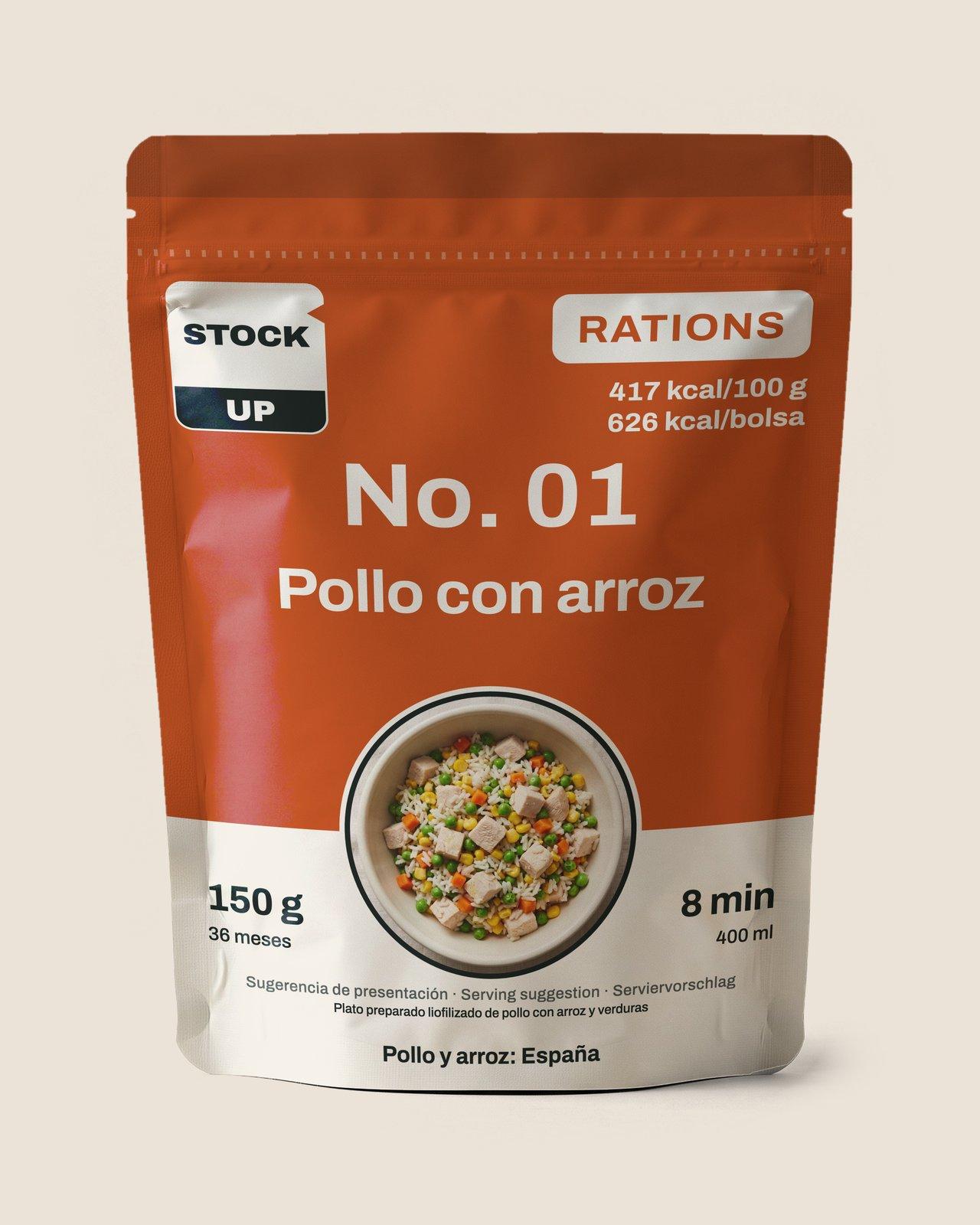 Chicken & RiceLarge | 150 g | 400 ml | 8 min | about 20 min |
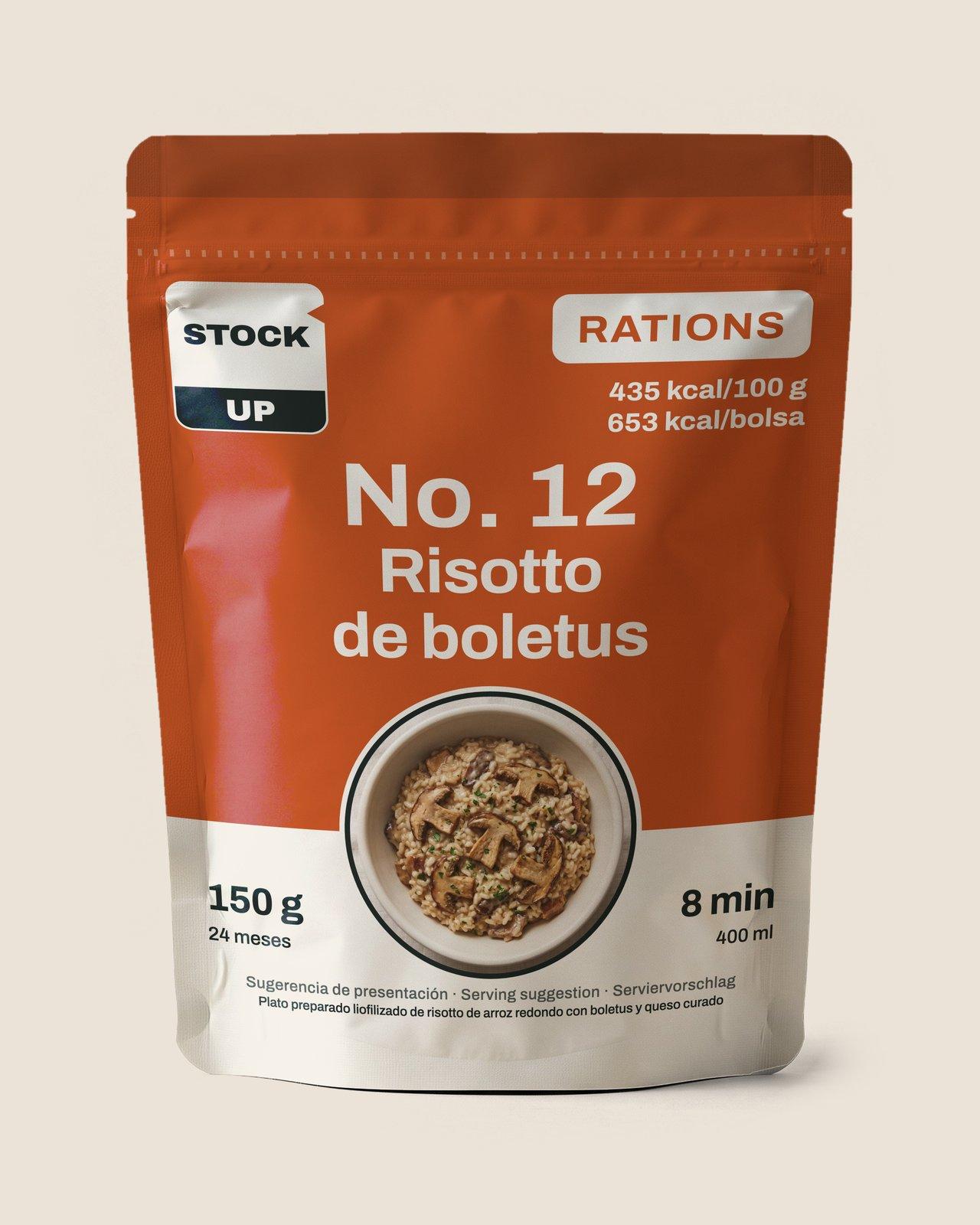 Porcini Mushroom RisottoLarge | 150 g | 400 ml | 8 min | Hot water only |
One dish that works cold, one that needs the kettle
- Chicken & RiceLarge
- Net weight
- 150 g
- Water
- 400 ml
- Hot water
- 8 min
- Cold water
- about 20 min
- Porcini Mushroom RisottoLarge
- Net weight
- 150 g
- Water
- 400 ml
- Hot water
- 8 min
- Cold water
- Hot water only
What freeze-drying doesn’t do
It doesn’t sterilise. Freeze-drying doesn’t kill bacteria; it puts them on hold, and they wake up when the water goes back in.9 That’s why food that needs cooking has to be cooked before it’s dried or after the water is added. Ours is cooked first, then freeze-dried whole, sauce and all, so the pouch holds a finished dish rather than a kit of ingredients.
It also doesn’t stop time. Oxygen, damp getting back in, light and fat that slowly turns rancid decide how long a dry food keeps,10 which is why each pouch carries its own date: the months are in how long freeze-dried food keeps. And what the process does to vitamins, with the measurements, is in what freeze-drying does to nutrients.
Our everyday dishes come in the Meals range, in a pouch sized for one lunch.
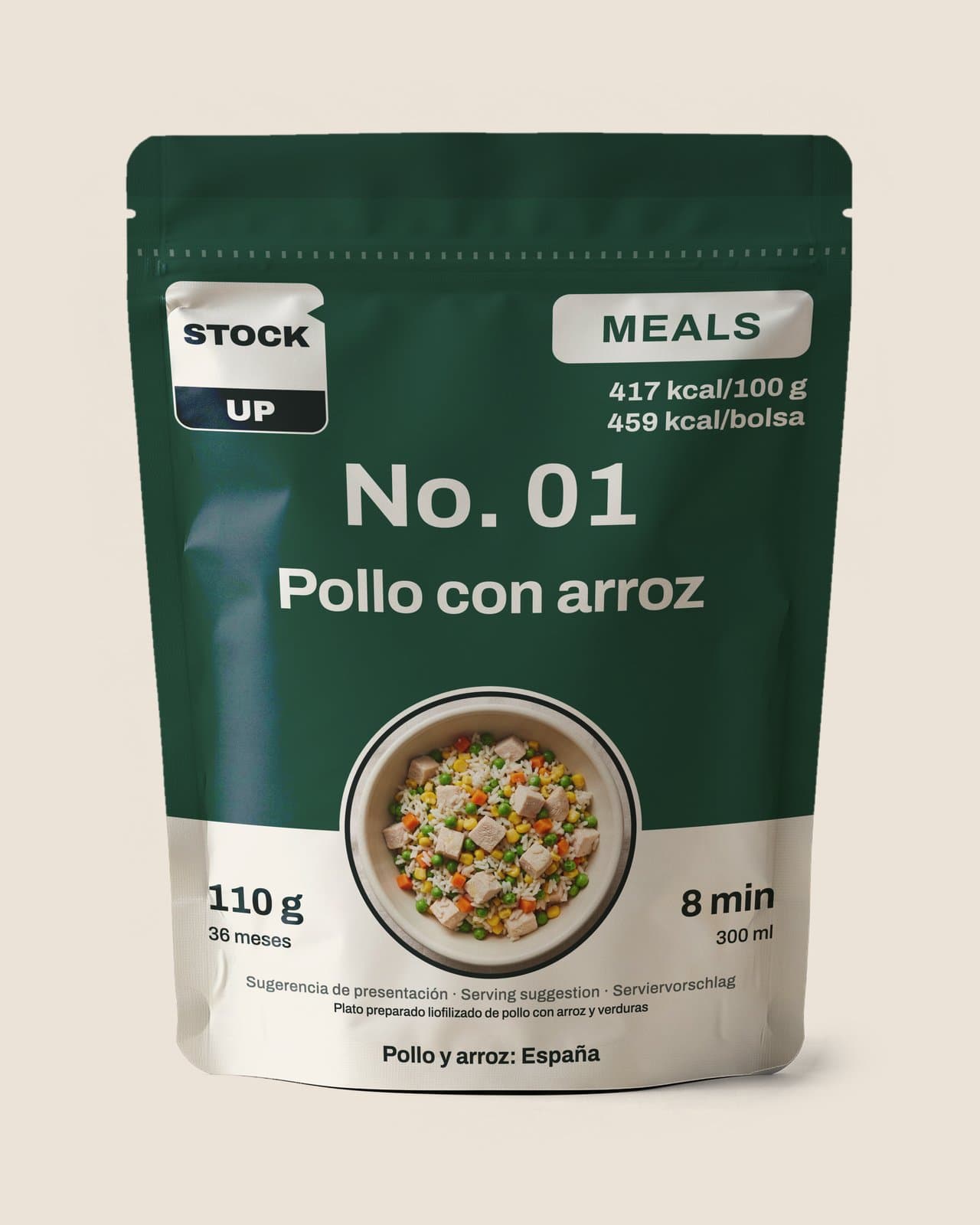
From our range
Chicken & RiceStandard
Sources
Accessed 6 November 2026
- The freeze-drying of foods: the characteristic of the process course and the effect of its parameters on the physical properties of food materials (opens an external website)
- Freeze-drying of plant-based foods (opens an external website)
- The saga of freeze-drying (opens an external website)
- Secado mágico: liofilización (opens an external website)
- Food dehydrators (opens an external website)
- Packaging and storing dried foods (opens an external website)
- Buying a home freeze-dryer: what to know before you go (opens an external website)
- Let’s preserve: freeze-drying (opens an external website)
- Can I freeze-dry that? A practical guide to safe and effective freeze-drying (opens an external website)
- Home freeze-drying, fact sheet az2097b (opens an external website)
Hear from us before the shop opens
Leave your email and we’ll ask you to confirm it, write to you about our food before the launch, and send a note the day ordering opens.