mealsrationsPublished October 29, 2026
What freeze-drying keeps, and what it takes out
One pouch of chicken and rice followed from 110 g dry to a 410 g plate: what the process removes, what stays, and how to read the per 100 g column.
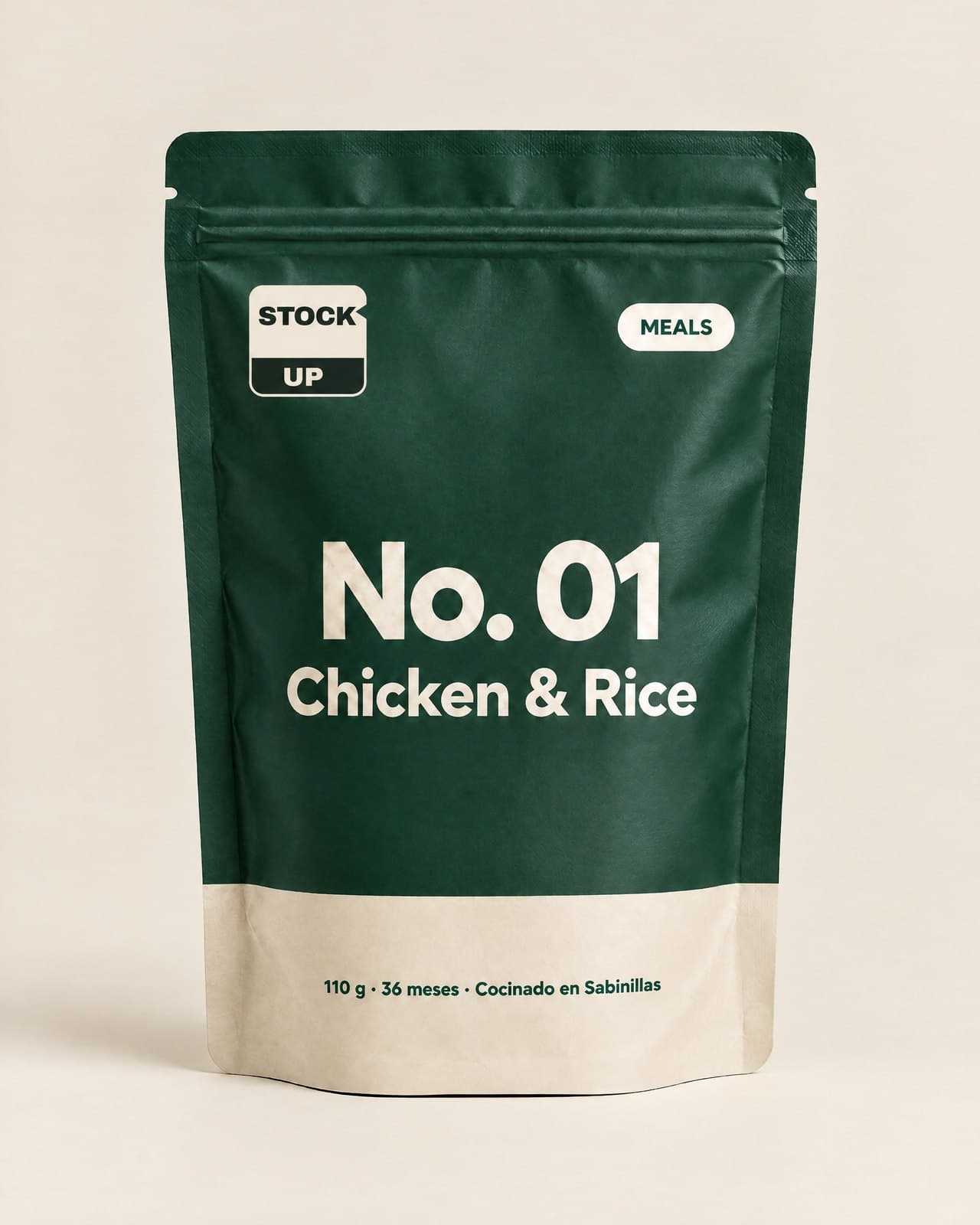
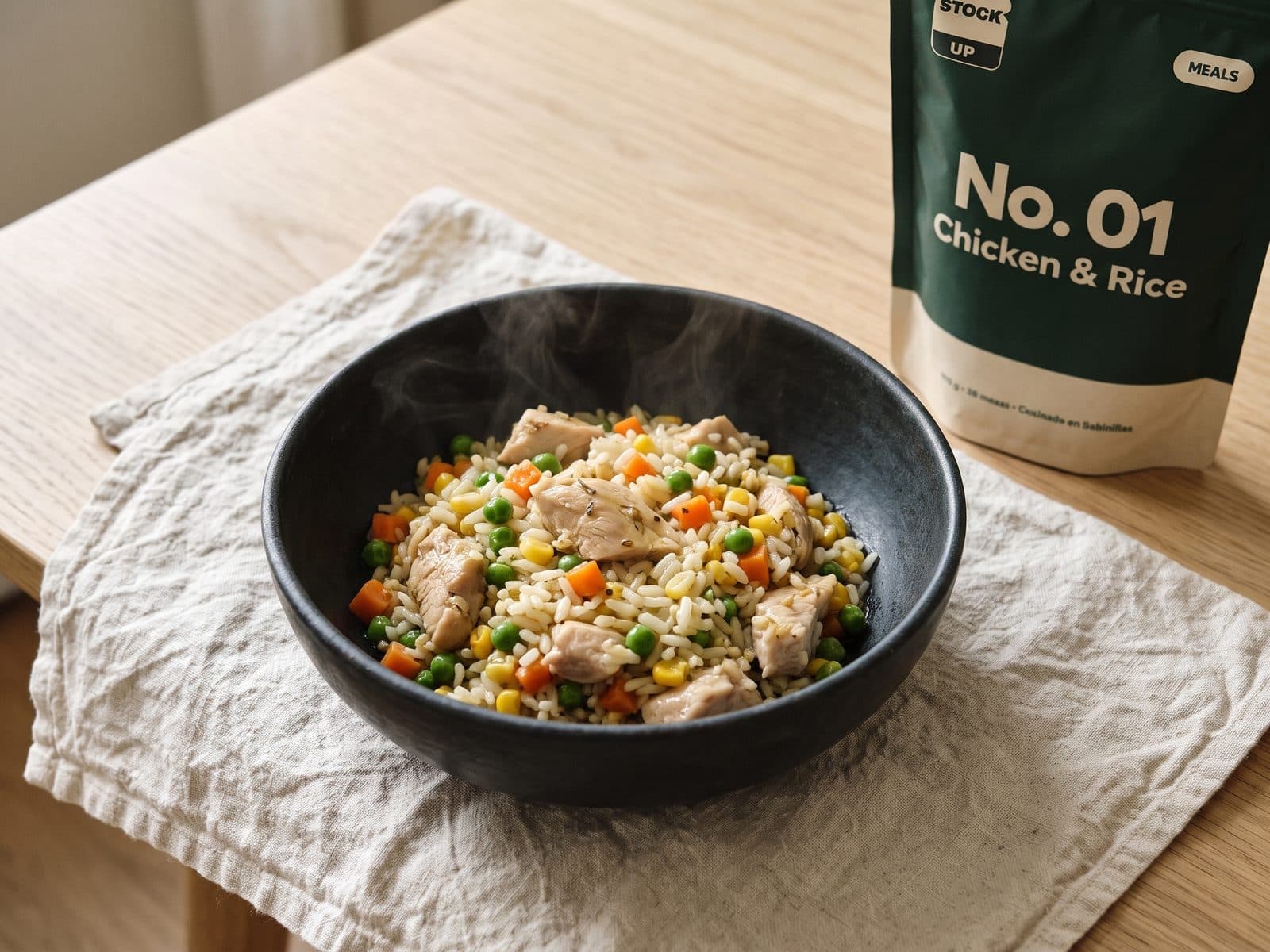
Meal No. 01 Chicken & Rice weighs 110 g in the pouch and about 410 g on the plate. The difference is the 300 ml of water you pour back in, and water is the only thing the process removes.
The chicken and rice is cooked first, then freeze-dried whole: spread in a thin layer and frozen below −30 °C. A vacuum pump then drops the pressure, a little heat goes in, and the ice turns straight into vapour without melting first. That step is sublimation, and a batch of cooked meals takes 24 to 36 hours. Because the food never sits in hot air, it keeps its shape, with fine channels where the ice used to be, and water runs back into those channels, in eight minutes hot or about 20 cold.
Protein, carbohydrate, fat and salt stay behind in the pouch. The 41 g of protein declared on the label were in the dish before freezing started, and nothing is added afterwards, which is why the ingredient list reads like the recipe: chicken (41 %), rice, peas, carrot, sweetcorn, olive oil, salt and spices.
What changes is the label. EU law asks for nutrition values per 100 g of the food as sold, and this food is sold dry, so the table reads 391 kcal and 37 g of protein per 100 g. Spread the same 430 kcal over the 410 g plate and you get about 105 kcal per 100 g, an ordinary figure for chicken and rice. That is why the table also carries a per-pouch column, and one pouch is one portion.
What freeze-dried food is, in three columns
The pattern holds across all four recipes. Each Meals pouch weighs 110 g and takes 300 ml of water, so every prepared plate comes to about 410 g. The dry column runs high because the water has gone; the prepared column is what actually lands in the bowl.
| Recipe, 110 g pouch | Per pouch | Per 100 g dry | Per 100 g prepared |
|---|---|---|---|
| Chicken and rice | 430 kcal, 41 g protein | 391 kcal, 37 g protein | 105 kcal, 10 g protein |
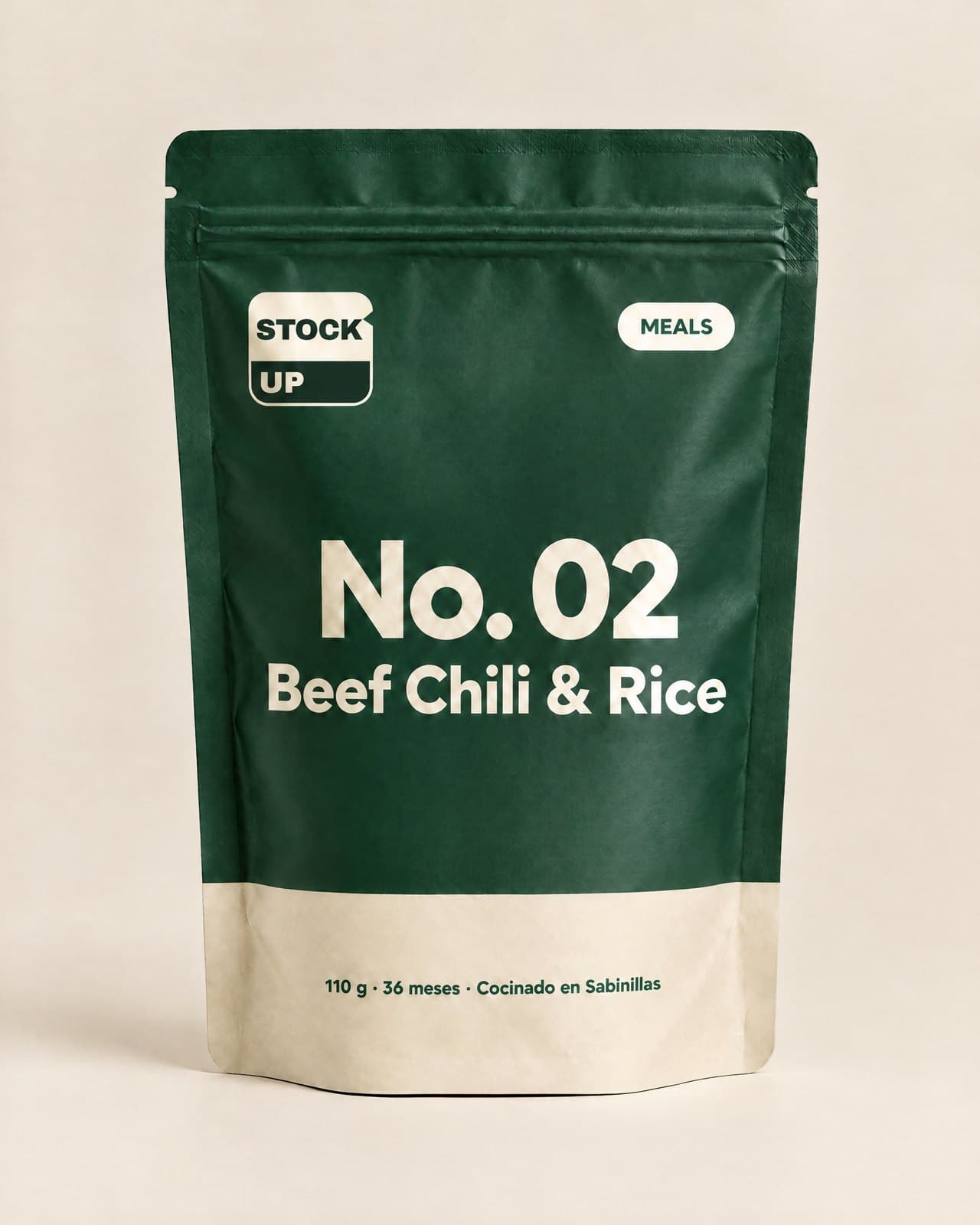
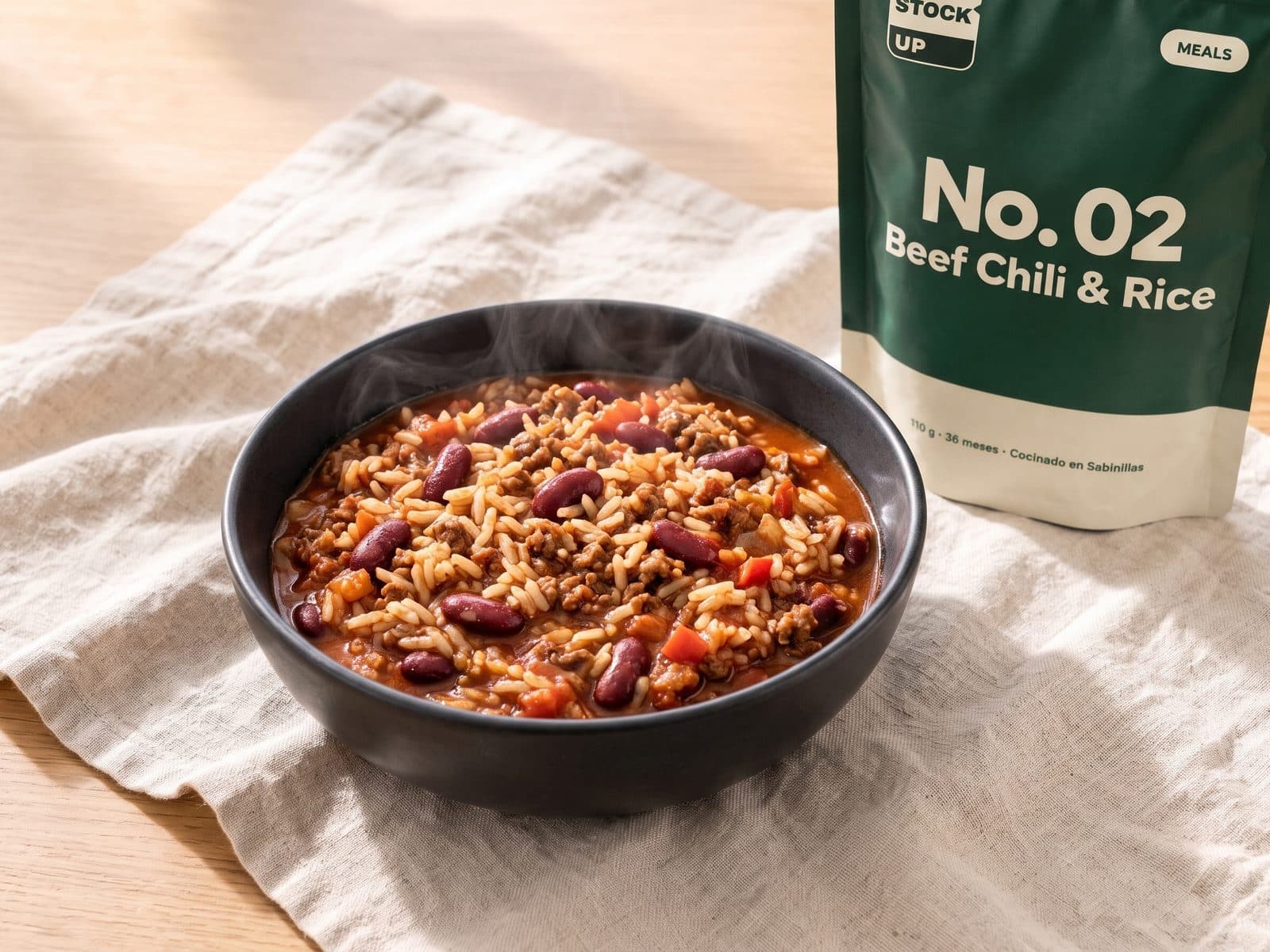
| Beef chili and rice | 440 kcal, 32 g protein | 400 kcal, 29 g protein | 107 kcal, 7.8 g protein |
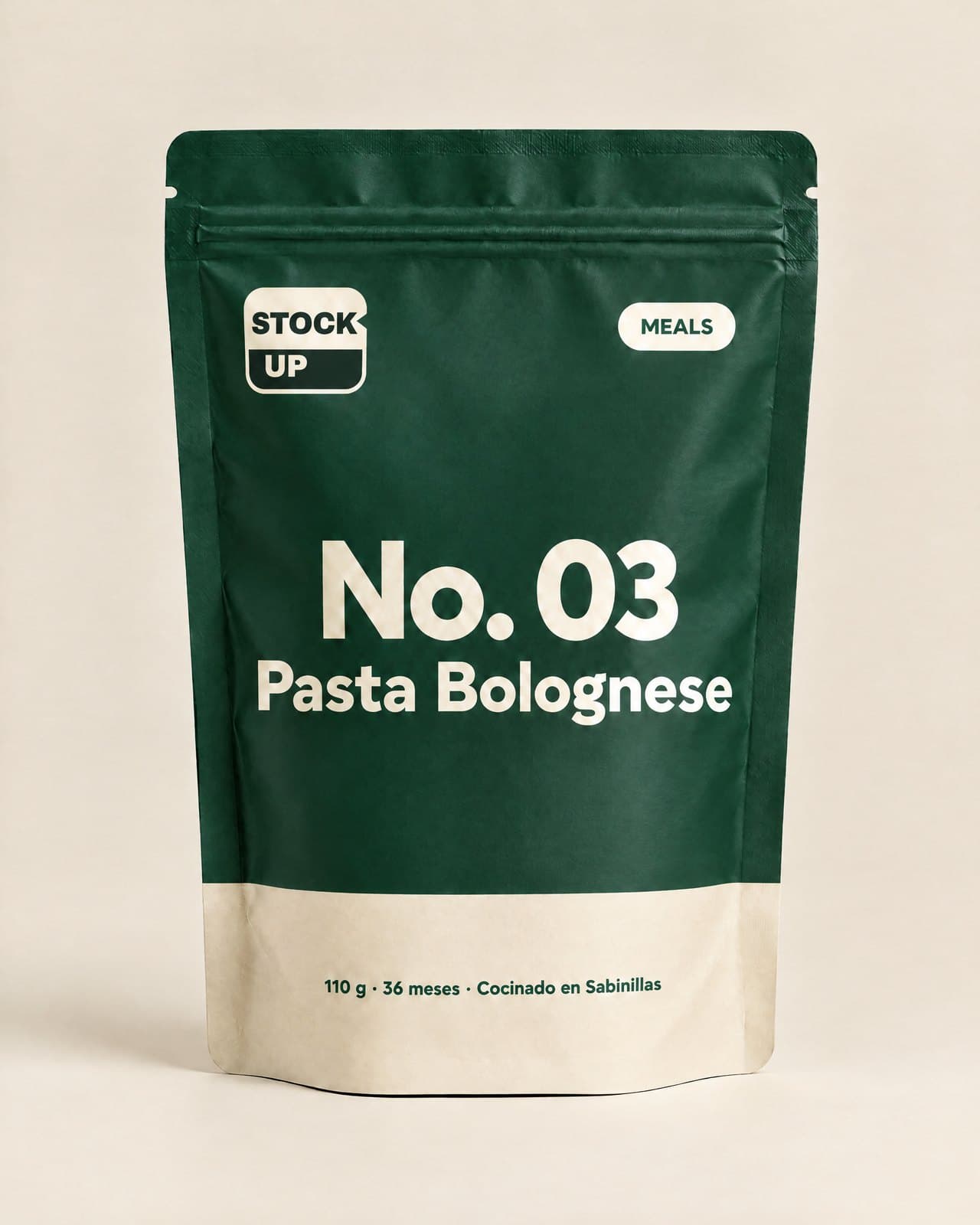
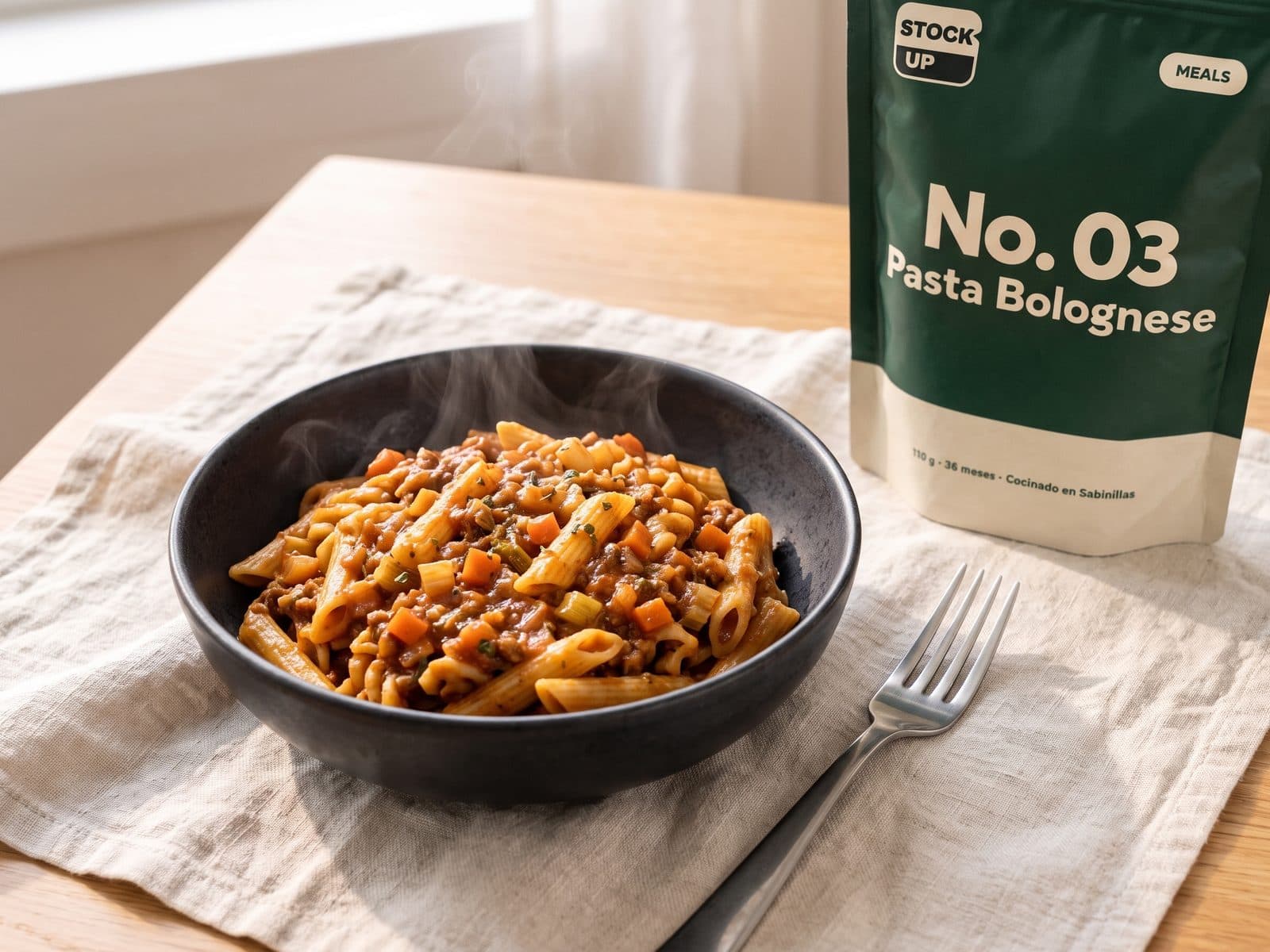
| Pasta bolognese | 450 kcal, 28 g protein | 409 kcal, 25 g protein | 110 kcal, 6.8 g protein |
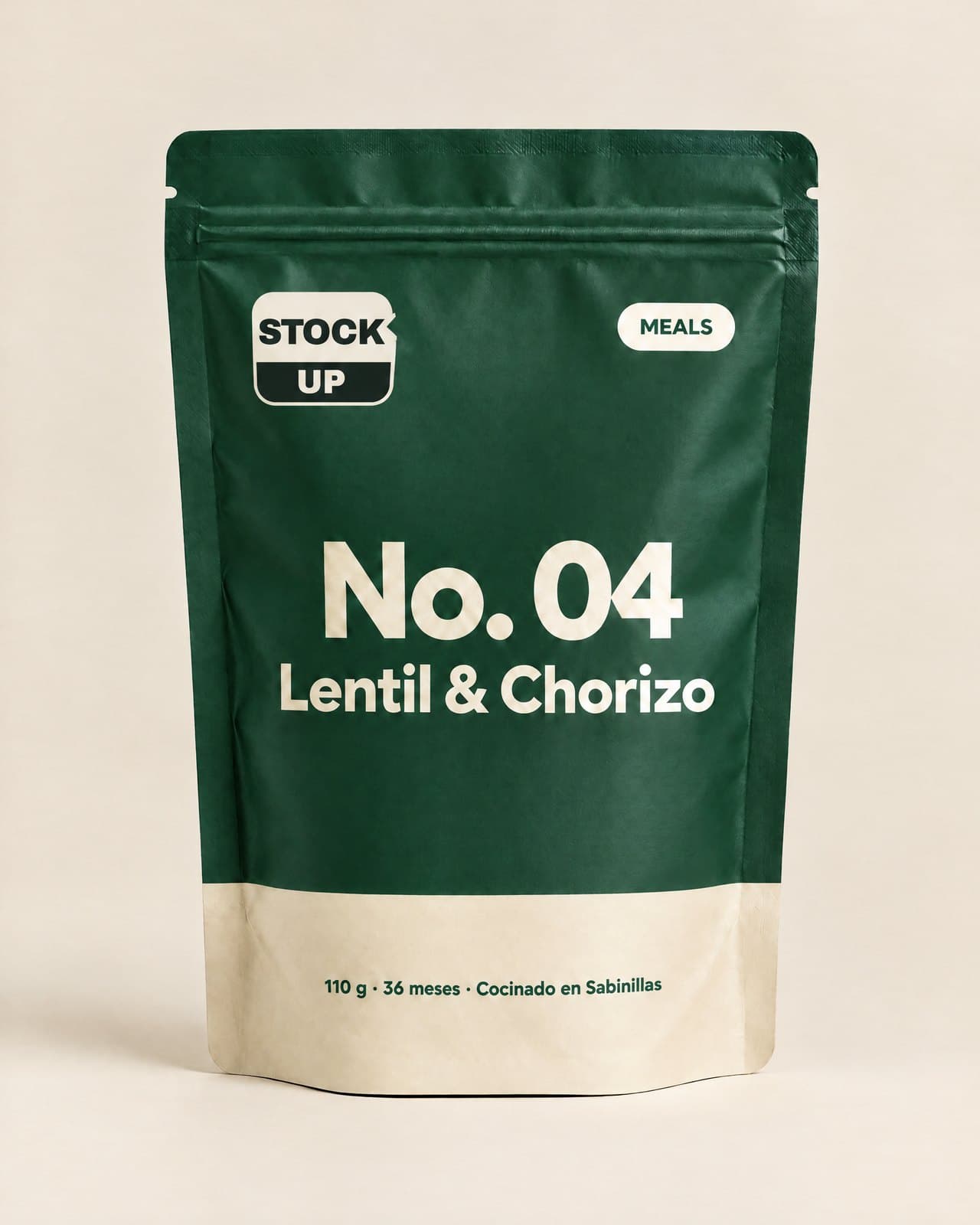
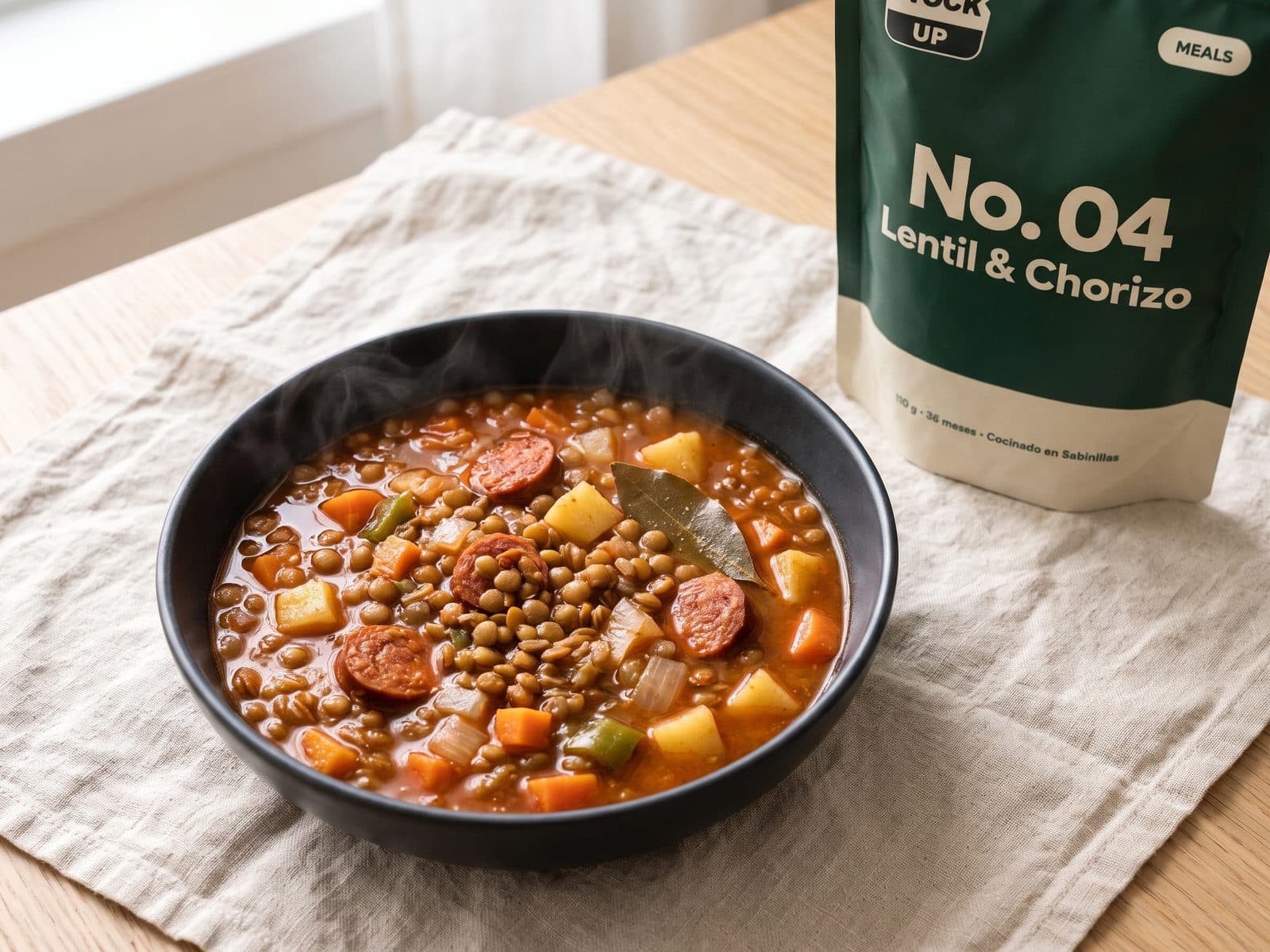
| Lentils and chorizo | 440 kcal, 30 g protein | 400 kcal, 27 g protein | 107 kcal, 7.3 g protein |
Compare a dry column only with another dry column. Set 391 kcal per 100 g against a fresh chicken dish and the pouch looks like a different food. Set 105 kcal per 100 g against the same dish and it looks like what it is. A chilled ready meal in the supermarket also prints its values per 100 g as sold, and it's sold wet, so its figures sit next to our prepared column, not the dry one.
The per-pouch column needs no conversion at all. You eat the whole pouch.
The Rations use the same recipes in a bigger pouch. Rations No. 01 Chicken & Rice weighs 120 g, takes 330 ml of water and comes to 469 kcal and 45 g of protein. Per 100 g dry it reads exactly like Meal No. 01, 391 kcal, because it's the same recipe portioned larger.
High protein: the sum
EU Regulation 1924/2006 lets a food call itself high protein only when at least 20 % of its energy comes from protein. Each gram of protein counts as 4 kcal. For chicken and rice, 41 g × 4 kcal is 164 kcal of the 430, which is 38 %.
The other three Meals come out at 29 % for the beef chili, 25 % for the bolognese and 27 % for the lentils with chorizo. All four clear the line, so all four carry the claim. The shop works it out from the declared values every time a page loads, which means a recipe change moves the claim with it.
The porridge in the Rations range is different. Breakfast No. 01 Porridge & Fruit has 12 g of protein in 360 kcal, or 13 %. That clears the 12 % EU threshold for "source of protein" and stops short of 20 %, so its page says "source of protein" and nothing stronger.
In grams, a working week of the Work Week Pack at €44.90 adds up to 172 g of protein across five lunches, from 28 g on the bolognese day to 41 g on the two chicken days.
Vitamins and the seven declared values
The nutrition table on every pouch lists the seven values EU law requires: energy, fat, saturates, carbohydrate, sugars, protein and salt. Vitamins aren't on it, and we make no vitamin claims. The line under the table says where the seven figures come from: they're worked out from the recipe.
What the process does to vitamins follows from how it runs. Some vitamins break down with heat, oxygen and light. The food is cooked first, and cooking changes vitamin content the same way it does at home. The drying that follows happens frozen and under vacuum, with no hot air blowing across the food. After that, the sealed pouch keeps oxygen and light away from whatever the cooked dish held when it was frozen.
Minerals and fibre don't leave with the water. Neither does salt, which is why the 1.2 g on the chicken and rice label is the 1.2 g you eat.
Why it keeps 36 months
Taking the water out does two jobs: it brings the weight down, and it stops spoilage. Microorganisms need free water to grow, and the measure of free water is water activity, a scale from 0 to 1. Fresh chicken sits near the top of it. Every batch we make is measured and packed only at 0.60 or below, and Reg. (EC) 2073/2005 already treats foods at 0.92 or below as ones where Listeria can't grow.
The pouch handles the rest. An oxygen absorber goes in before sealing, the metallised film keeps light out and a heat seal closes it. That is why Meals and Rations carry a 36-month best-before date.
Once the zip is open, the dry food starts drawing water from the air, and the 36 months stop applying. An opened pouch needs eating within 24 hours, and a prepared one straight away.
Reading any freeze-dried label
The same checks work on any brand's pouch, ours included.
- Read the per-pouch column first. It's the meal you're about to eat.
- Compare per 100 g only with other dry foods. Against wet food, every freeze-dried meal looks enormous.
- Note the water and the minutes. They tell you what the plate will weigh and how much water you need to carry or boil.
- Find the allergens in bold in the ingredient list, and the lot number and best-before date on the base.
For the difference between this process and hot-air drying, see freeze-dried vs dehydrated food. The four recipes and their numbers sit side by side on the Meals page.