rationsmealsPublished October 30, 2026
Freeze-dried vs dehydrated food
Warm air against cold and a vacuum: how the two methods differ on the spoon, in the rucksack and in minutes to eat, with one table.
Freeze-dried vs dehydrated is a question of temperature: dehydrated food dries in a stream of warm air, while freeze-dried food is frozen below −30 °C and dried in a vacuum. Both end up light and dry in a pouch, and both need water to become a meal again. The difference shows when you open the pouch, and in how long you wait.
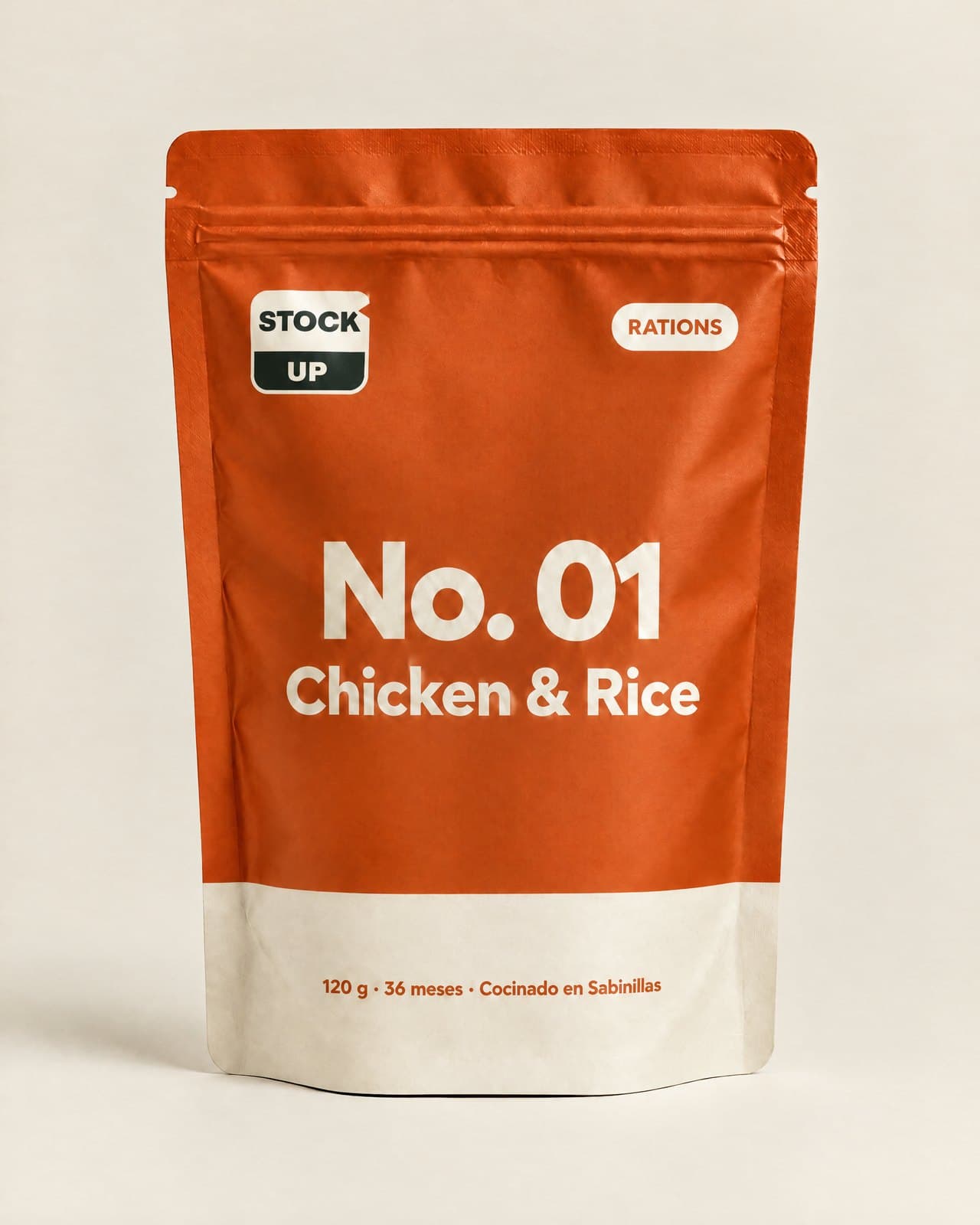
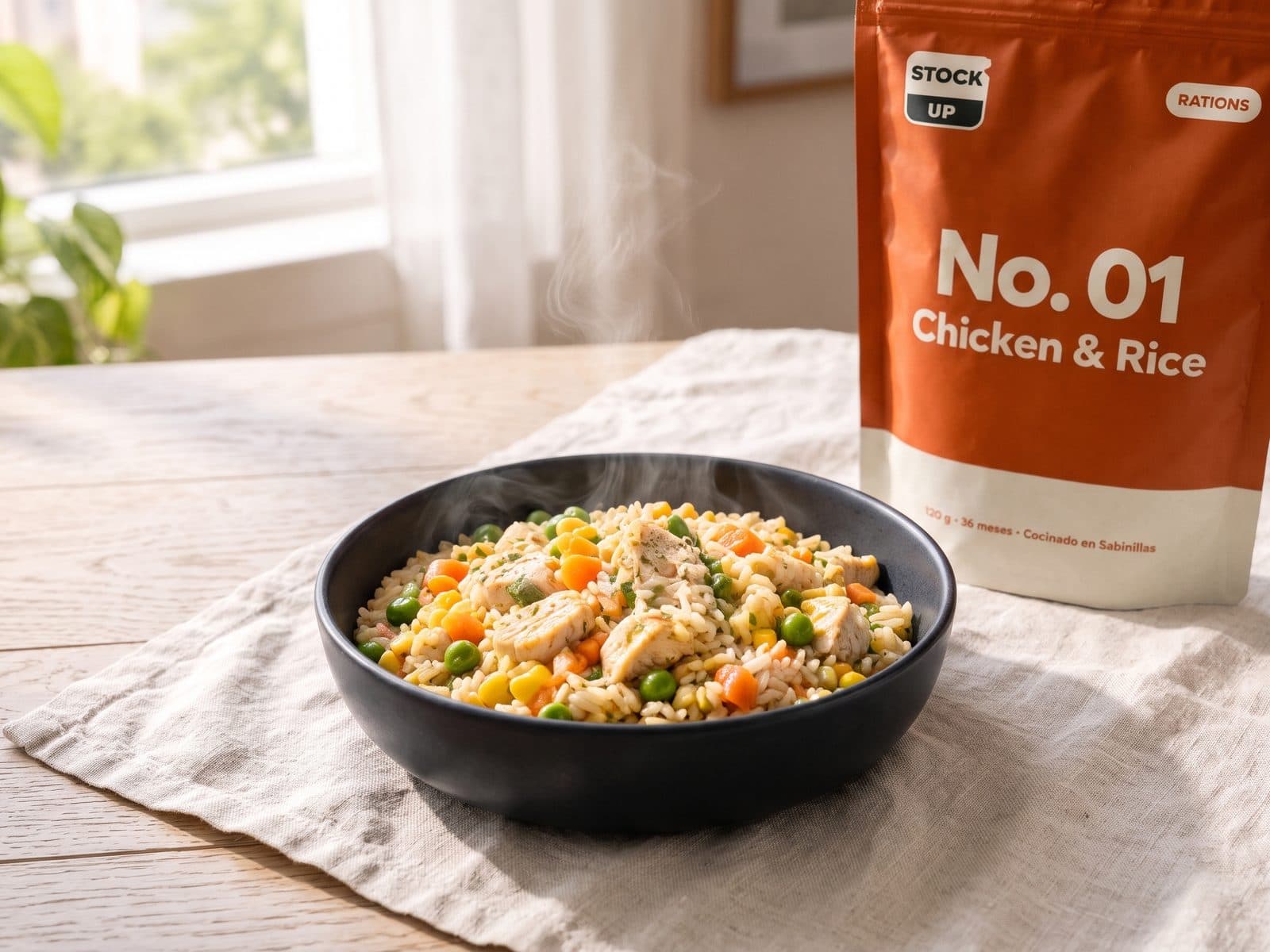
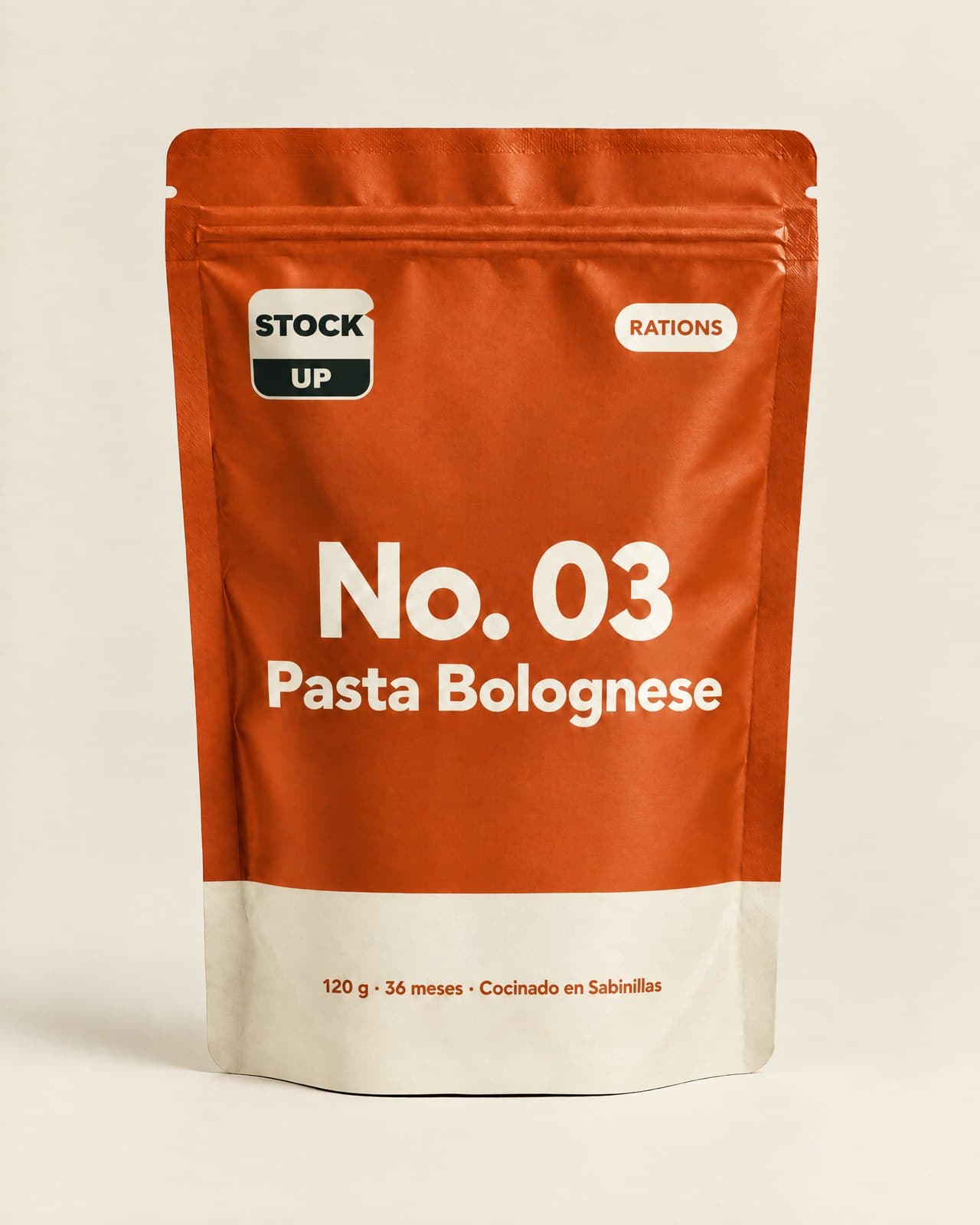
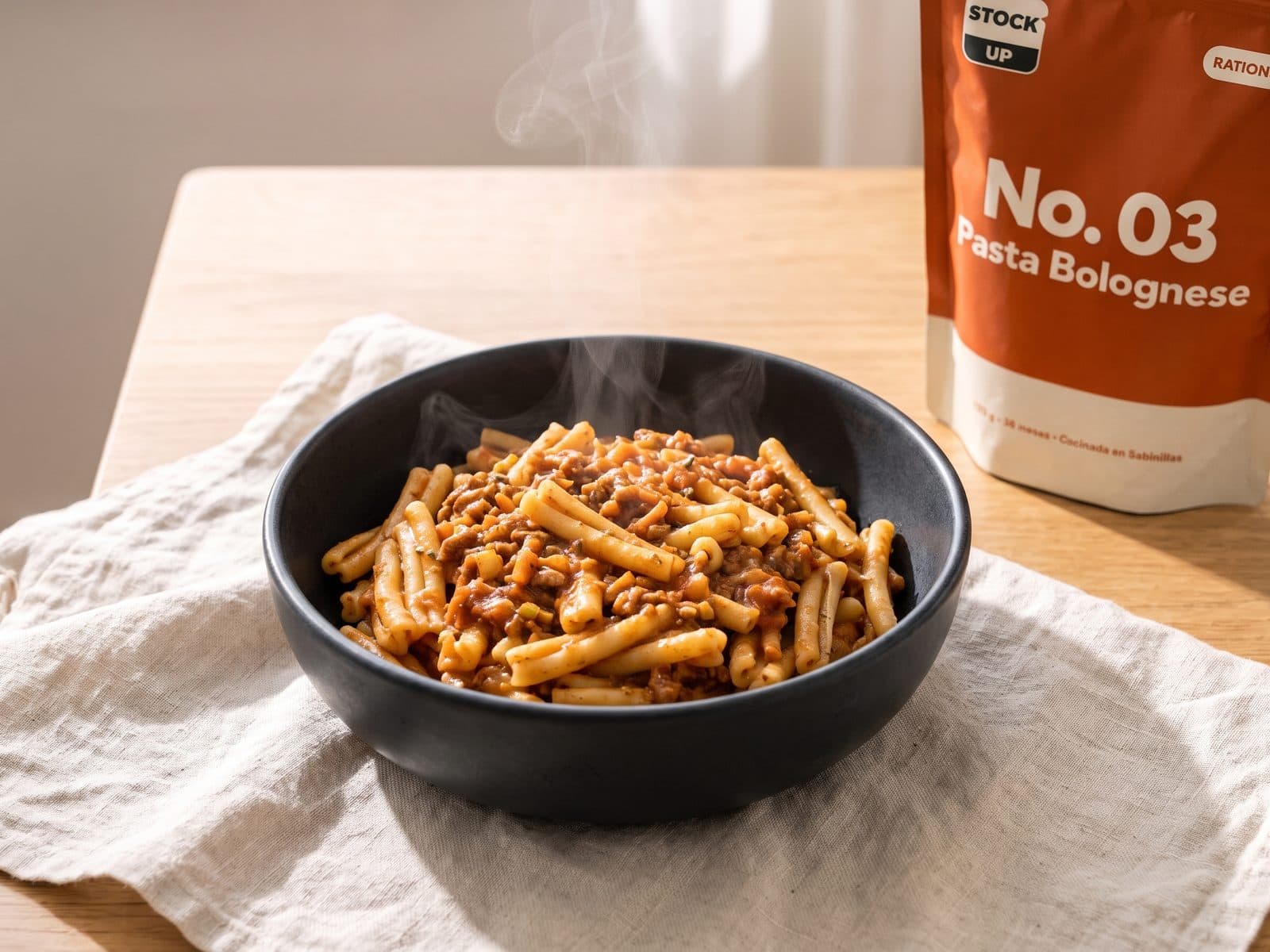
The clearest example we have is Rations No. 01 Chicken & Rice. It's frozen as cooked chicken, rice, peas, carrot and sweetcorn, and it comes out of the vacuum the same shape, only dry. Pour in 330 ml of water at 80–100 °C, zip the pouch, wait eight minutes, and the rice is separate grains again. Cold water gets there too, in about 20.
Texture: what the spoon finds
Warm air dries food from the outside in. The surface loses its water first, the cells near it collapse, and each piece gets smaller and denser as the drying goes on. Meat in particular comes out hard and compact, and some of that firmness stays after the water goes back in.
Freeze-drying starts with the water already frozen in place. The ice holds every grain of rice and every piece of chicken in its cooked shape while the vacuum draws it off as vapour. What's left is a dry scaffold with fine channels where the ice was. Water runs back into those channels, which is why a freeze-dried pea comes back round and a cube of chicken comes back a cube.
That doesn't make dehydrated food bad. A slow-cooked stew that has been dehydrated can eat very well, and one of the best-known British outdoor brands makes its whole range that way. The two methods give you a different plate.
Minutes to eat
Rehydration speed follows from the structure. Open channels fill fast; shrunken, dense pieces take longer to soak through.
Our Meals and Rations ask for 8 minutes in water at 80–100 °C, and the porridge for 5. That British dehydrated range asks for 15 minutes. On a hill in the wind, or in a cockpit at night, the gap is seven minutes of holding a warm pouch and waiting.
Those extra minutes don't cost extra gas. With either method the water is boiled once and poured, and the pouch stands off the flame while it waits, so the stove burns for the same few minutes either way.
Cold water is the second way on our pouches, with no stove at all. Add the same amount, stir and wait about 20 minutes; the time varies with the water and the recipe. The meal comes out cooler and softer, and it's cooked food eaten cool, so eat it within a couple of hours.
Freeze-dried vs dehydrated, side by side
| Freeze-dried | Dehydrated | |
|---|---|---|
| How the water leaves | Frozen, then turned to vapour under vacuum | Evaporated in warm air |
| Heat on the food while drying | A little, on frozen food | Hours of warm air |
| Shape afterwards | Close to the cooked shape | Shrunken and denser |
| Minutes in hot water | 8 for our mains, 5 for the porridge | 15 for one British range |
| Drying time per batch | 24 to 36 hours for cooked meals | Shorter |
| What limits the shelf life | Water left in, oxygen, light | The same three |
The last row matters more than it looks. Neither method makes food keep by itself. What keeps it is how little water is left, and whether the pack shuts out oxygen and light.
How each method gets the water out
A dehydrator is a warm box with a fan. Air passes over racks of food and carries the moisture away, and the food dries at the pace its surface allows. The equipment is simple, and so is running it.
Freeze-drying needs more patience. The cooked meal is spread in a thin layer and frozen below −30 °C. A vacuum pump then lowers the pressure until the ice turns to vapour without passing through liquid, and a gentle heat keeps that going for 24 to 36 hours for a batch of cooked meals. The vapour freezes onto a cold surface and is drained off at the end of the run.
Then the batch's water activity is measured. At 0.60 or below it goes into pouches with an oxygen absorber; above that, it stays out. The five steps from cooked dish to sealed pouch are written up in how Stock Up makes its freeze-dried meals.
Both methods leave protein, carbohydrate, fat and salt in the food, because those don't evaporate. Meal No. 01 Chicken & Rice carries 41 g of protein in 430 kcal, 38 % of its energy, which makes it high protein under EU rules by a wide margin.
Weight in the rucksack
Weight is the argument most often made for freeze-drying, and it's the weakest one. Once the water is out, the weight of 1,000 kcal depends mostly on how much fat the recipe holds, because fat carries 9 kcal a gram against 4 for protein and carbohydrate.
Our cooked recipes sit at 391 to 409 kcal per 100 g dry, so 1,000 kcal of them weighs 244 to 256 g. Imported expedition pouches built around more fat reach 440 to 575 kcal per 100 g, and they're lighter for the same energy, whichever way they were dried. If grams per kcal is the only number you care about, buy by that number.
Freeze-drying earns its place in the pack at the other end. A 120 g pouch turns into a 450 g plate of chicken and rice you'd recognise, with 45 g of protein in it.
Which to pack when
For a day walk, a sandwich and a bag of nuts do the job, and the ordinary larder is cheaper than any pouch. Dried fruit, nuts and chocolate are dry already, and they belong in the side pocket whatever else you carry.
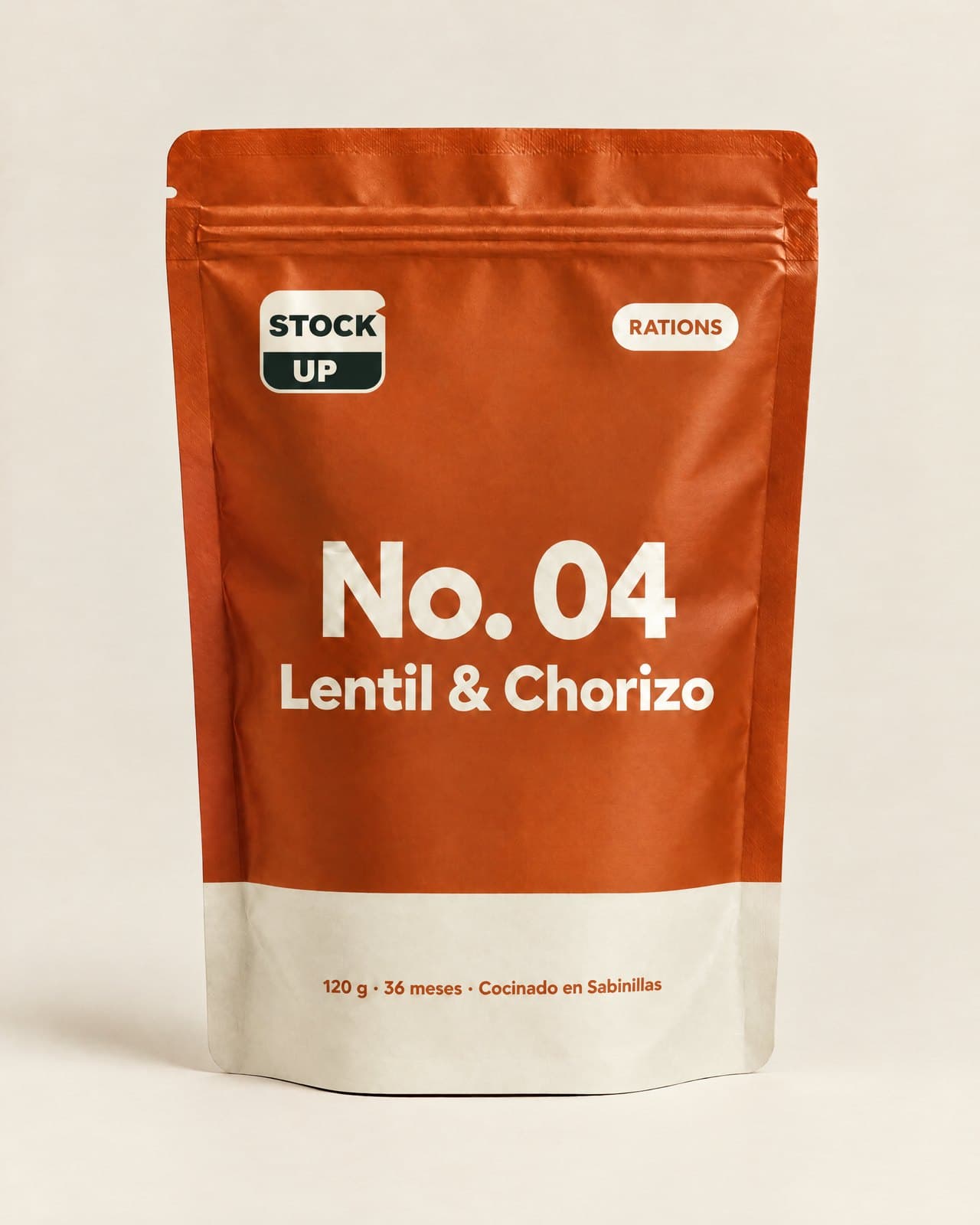
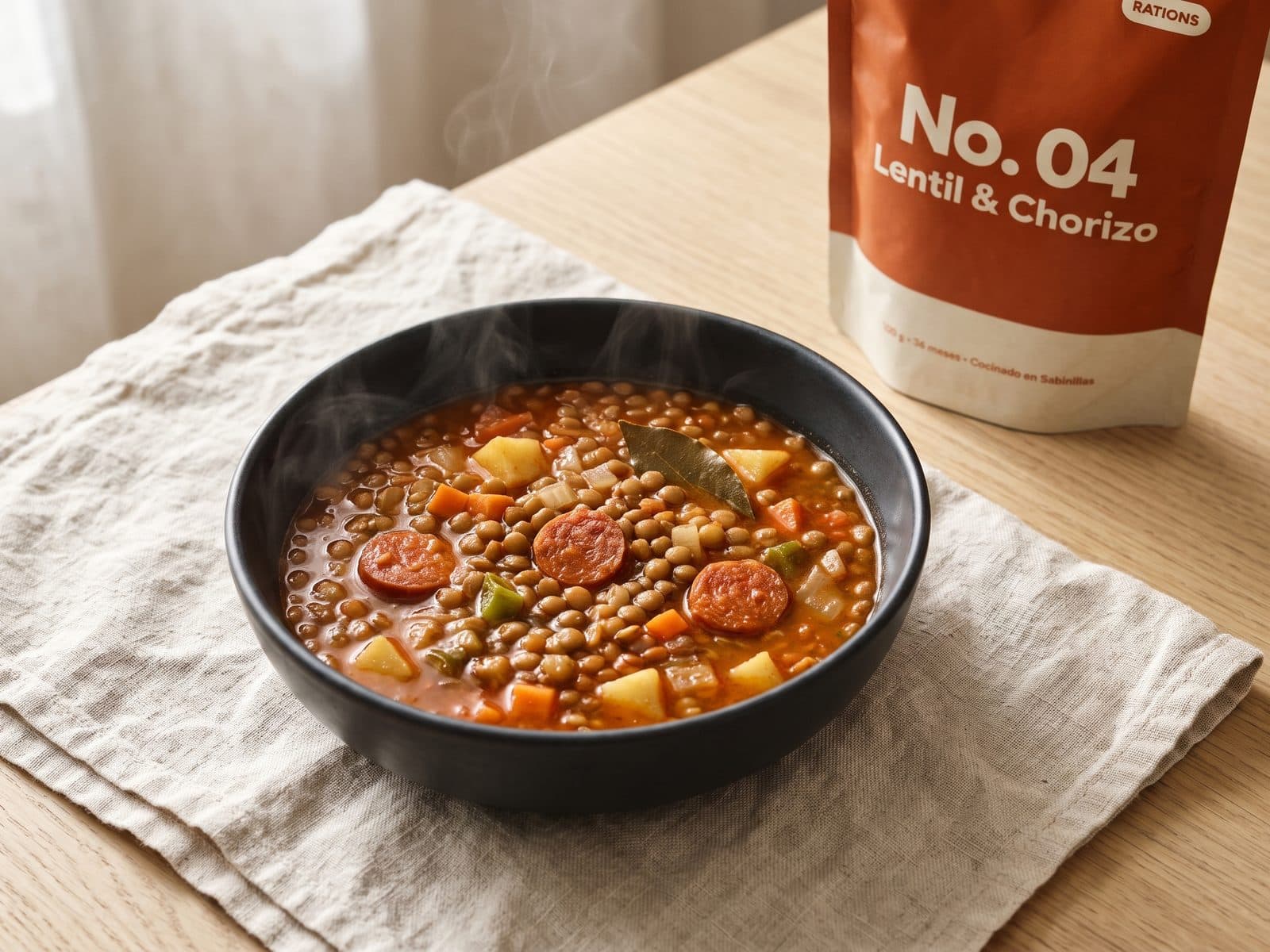
Freeze-dried makes sense when you want a cooked dinner on the second night out, or when food has to sit in a cupboard for years and still be a meal. For a cupboard kept against power cuts, either method works as long as the pack keeps water, oxygen and light out. Read the date and the preparation on the back, then choose by what you'd actually want to eat on the second evening. The Rations are built for that, in 120 g pouches that keep 36 months sealed. Two days of them, four mains and two porridges, come in the Sailing Weekend for €49, which works on a trail as well as at sea.