mealsrationsPublished October 30, 2026
How long freeze-dried food keeps
What the 36 months on a pouch means, how water activity is measured against the 0.60 limit, and what changes once the pouch is open.
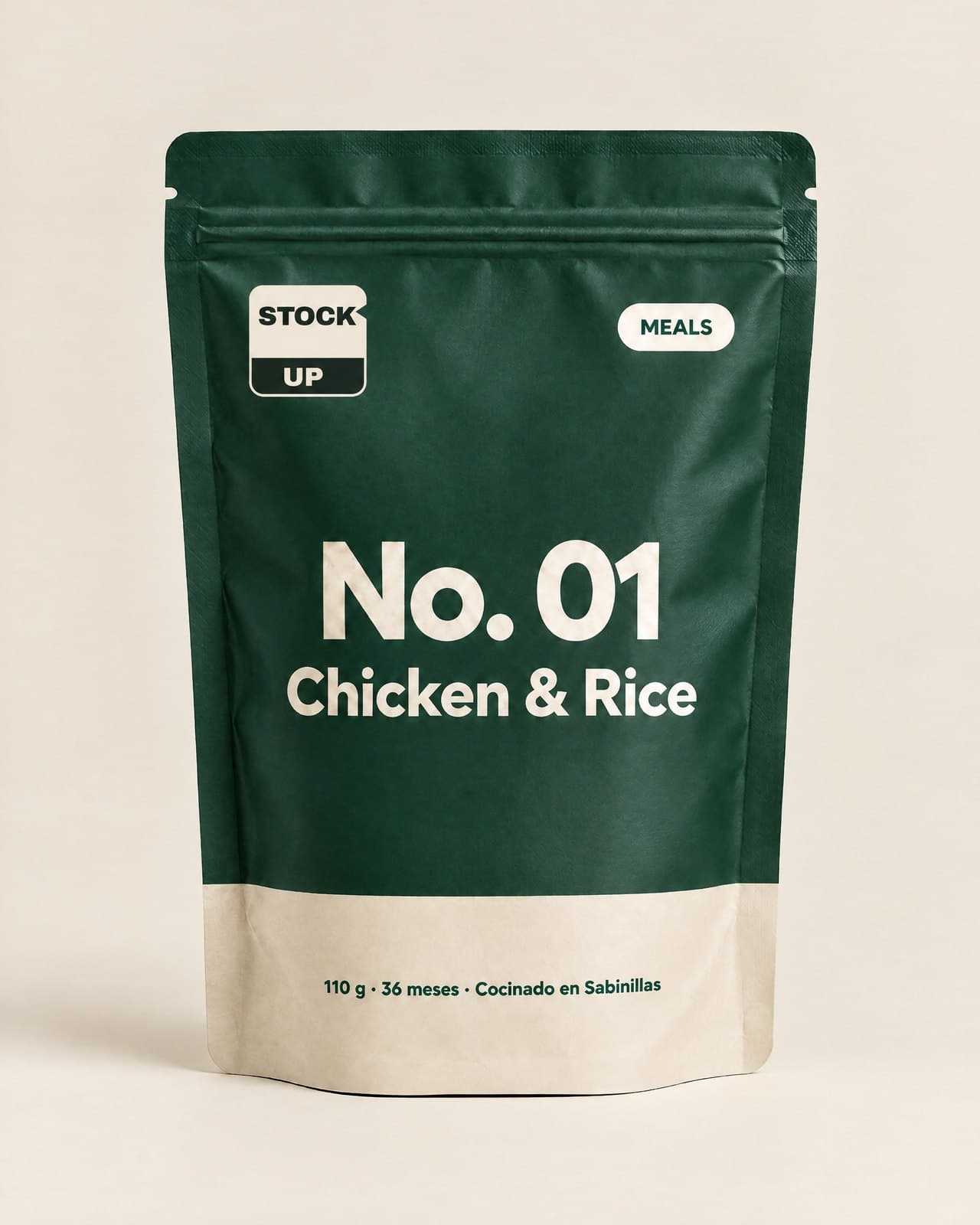
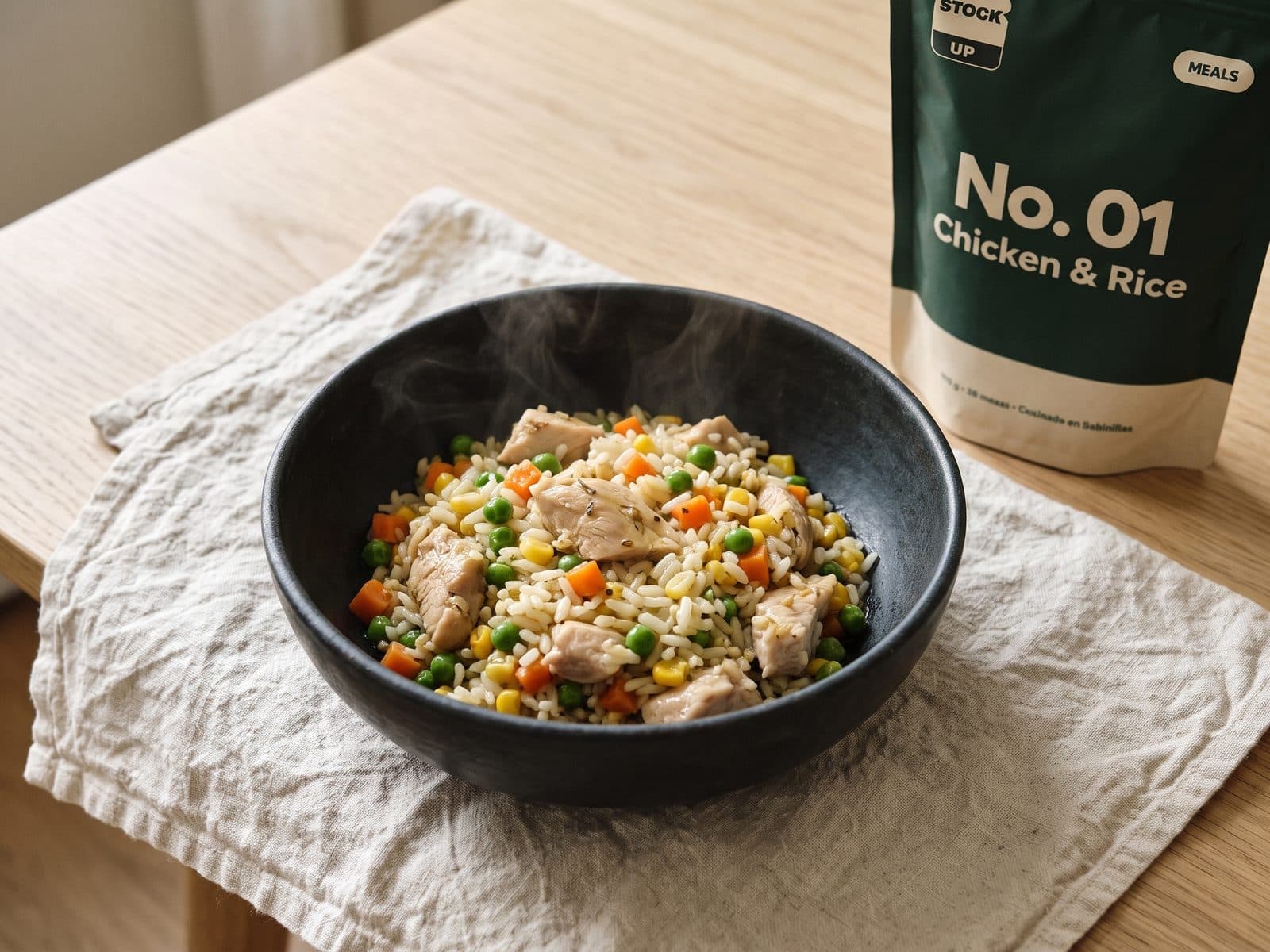
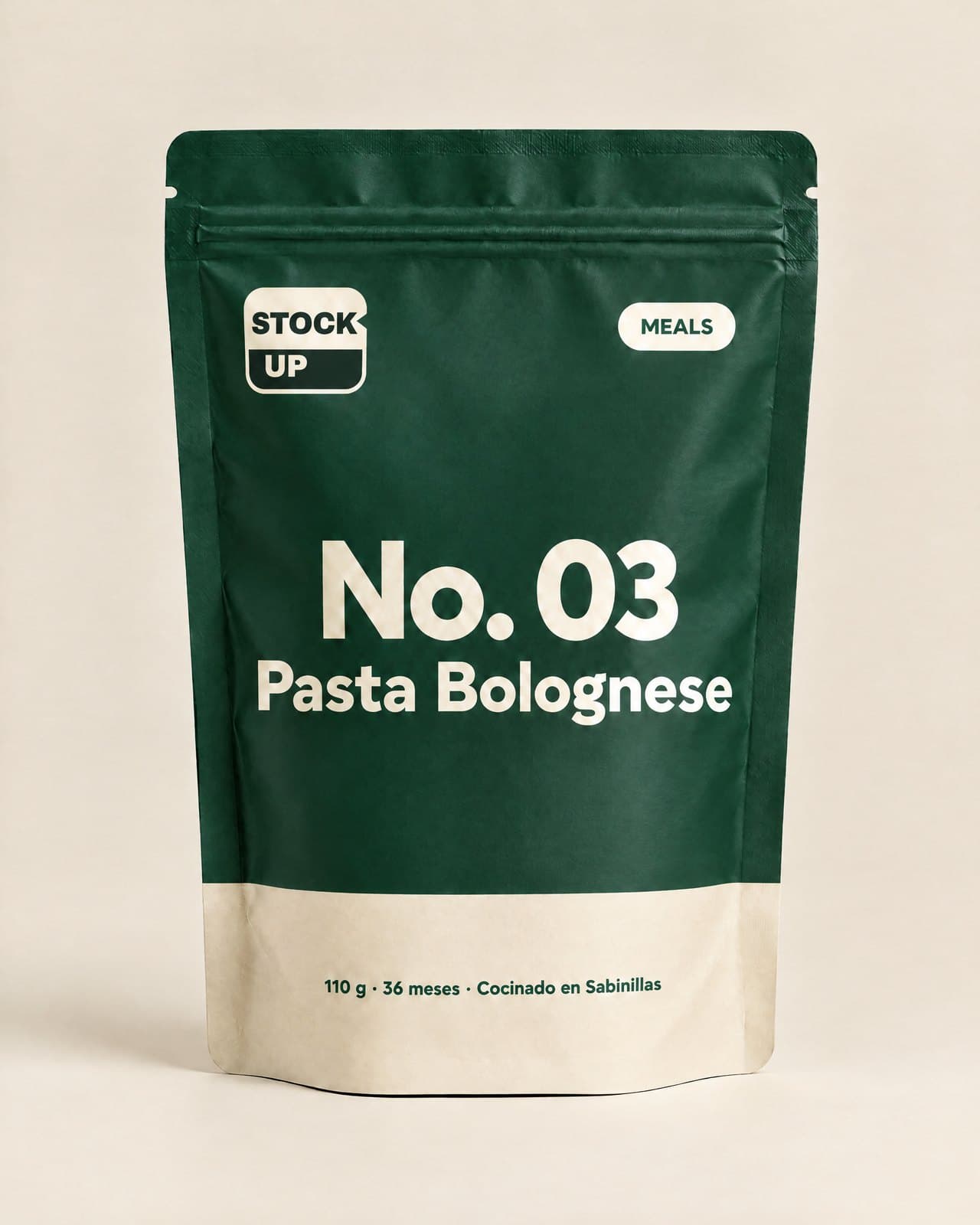
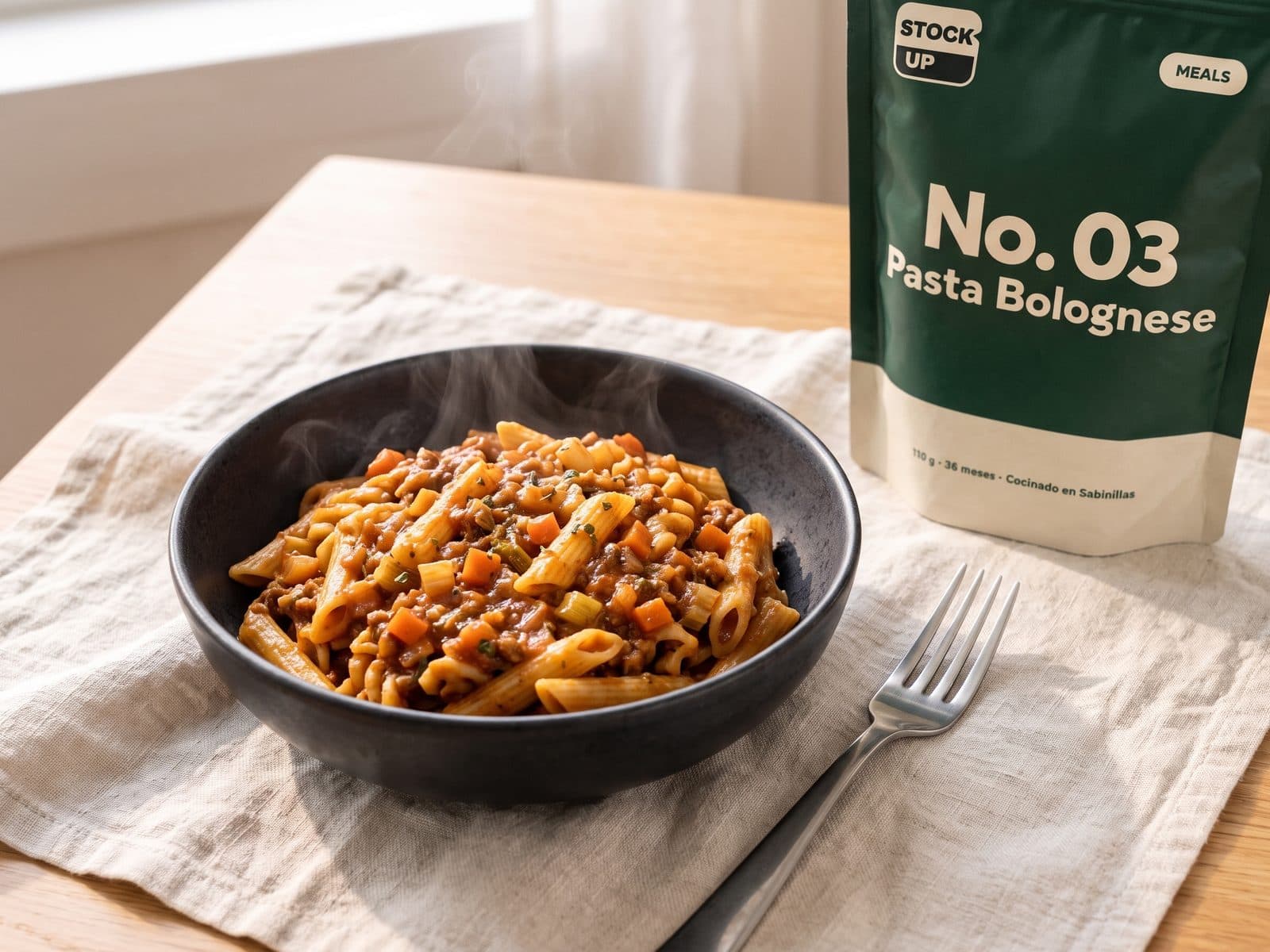
Freeze-dried food shelf life on our pouches is 36 months for Meals and Rations and 12 months for Sweets, printed as a best-before date on the base of every pouch next to the lot number. Take Meal No. 01 Chicken & Rice: cooked first, then freeze-dried whole, sealed with an oxygen absorber, and good on a shelf at room temperature for three years from packing. Three things hold that date up, and the first of them is a number between 0 and 1.
Best before, not use by
EU labelling law has two kinds of date. A use-by date goes on food that becomes unsafe after it, such as fresh chicken. A best-before date marks how long the food keeps its quality when stored as the label says: texture, flavour, the way it rehydrates.
Our pouches carry a best-before date. Up to that date, sealed and kept cool and dry, the chicken and rice comes back to the plate the way it was cooked. A pouch past its best-before date doesn't turn unsafe the next morning; what we no longer stand behind is the texture and the flavour. Meals and Rations keep at room temperature, and none of them carries a line asking for a fridge.
The number behind the date
Microorganisms need water to grow, but not all the water in a food is available to them. Some is bound to sugars, salt and proteins. Water activity measures the part that's still free, on a scale from 0 to 1, where pure water is 1.
EU Regulation (EC) 2073/2005 uses that scale for Listeria monocytogenes, one of the bacteria food law watches most closely. It treats a ready-to-eat food with a water activity of 0.92 or below as one in which Listeria can't grow, and with a pH of 5.0 or below the line moves to 0.94.
Our release limit is 0.60, far below either figure. At that level the microorganisms that spoil food can't grow at all. A properly dried batch passes; one that hasn't dried long enough fails on the meter.
Measured on every batch
When a batch has finished drying, a sample of the batch goes into a water activity meter before anything is packed. The rule is a single line: a batch is packed only when it measures 0.60 or below. A batch that reads higher goes back for more drying or isn't sold.
The reading is written into the batch record, with the cooking date, the core temperature at the end of cooking, the seal check and the best-before date. The lot number on the base of a pouch leads to that record, so the figure behind any pouch can be looked up. The home page shows the batch on sale with its own reading.
Oxygen and light, the other two
Water is the biggest threat to dry food, and it's the one freeze-drying removes. Oxygen and light come next. They don't make food unsafe, but over time they turn fats stale and fade flavour and colour.
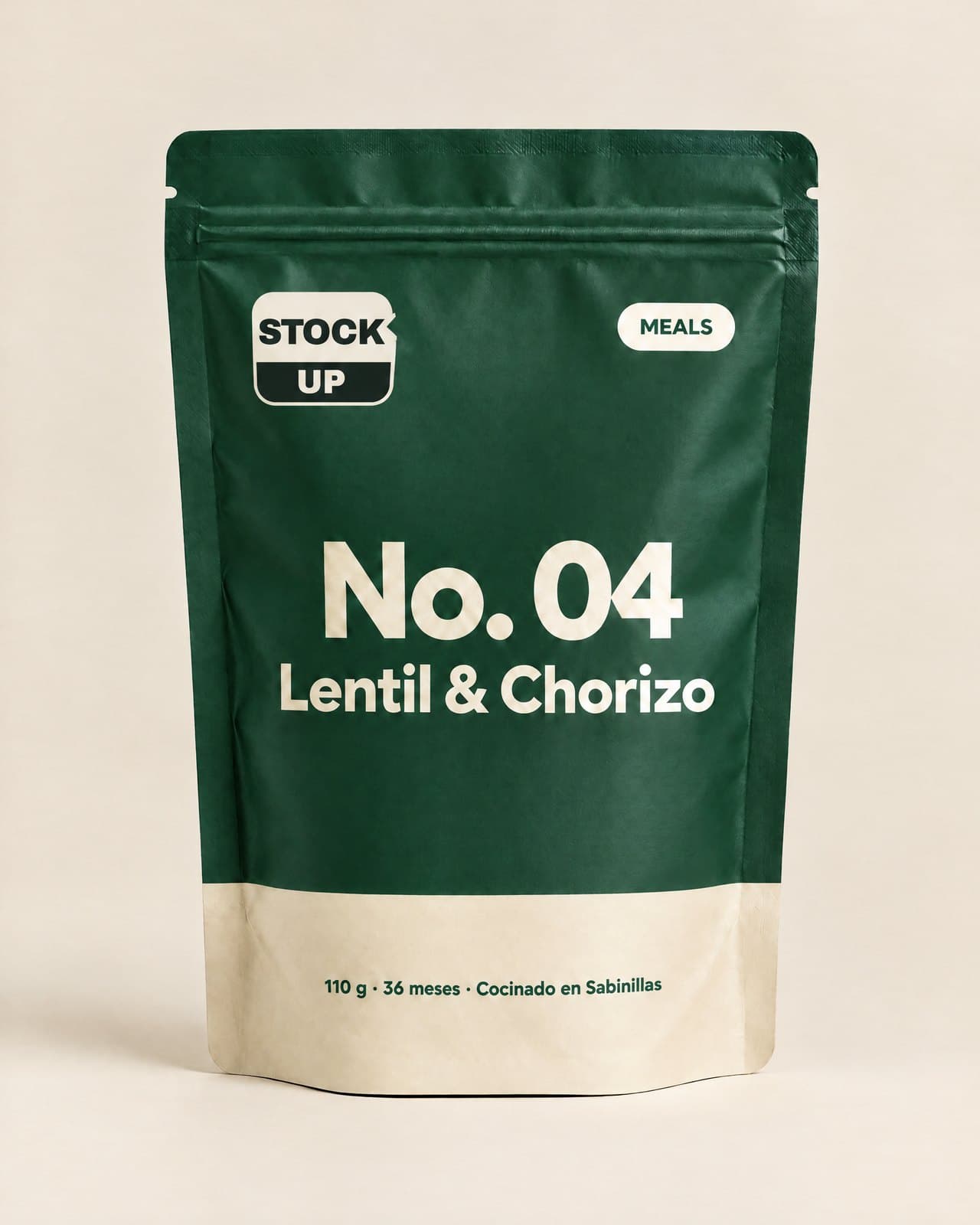
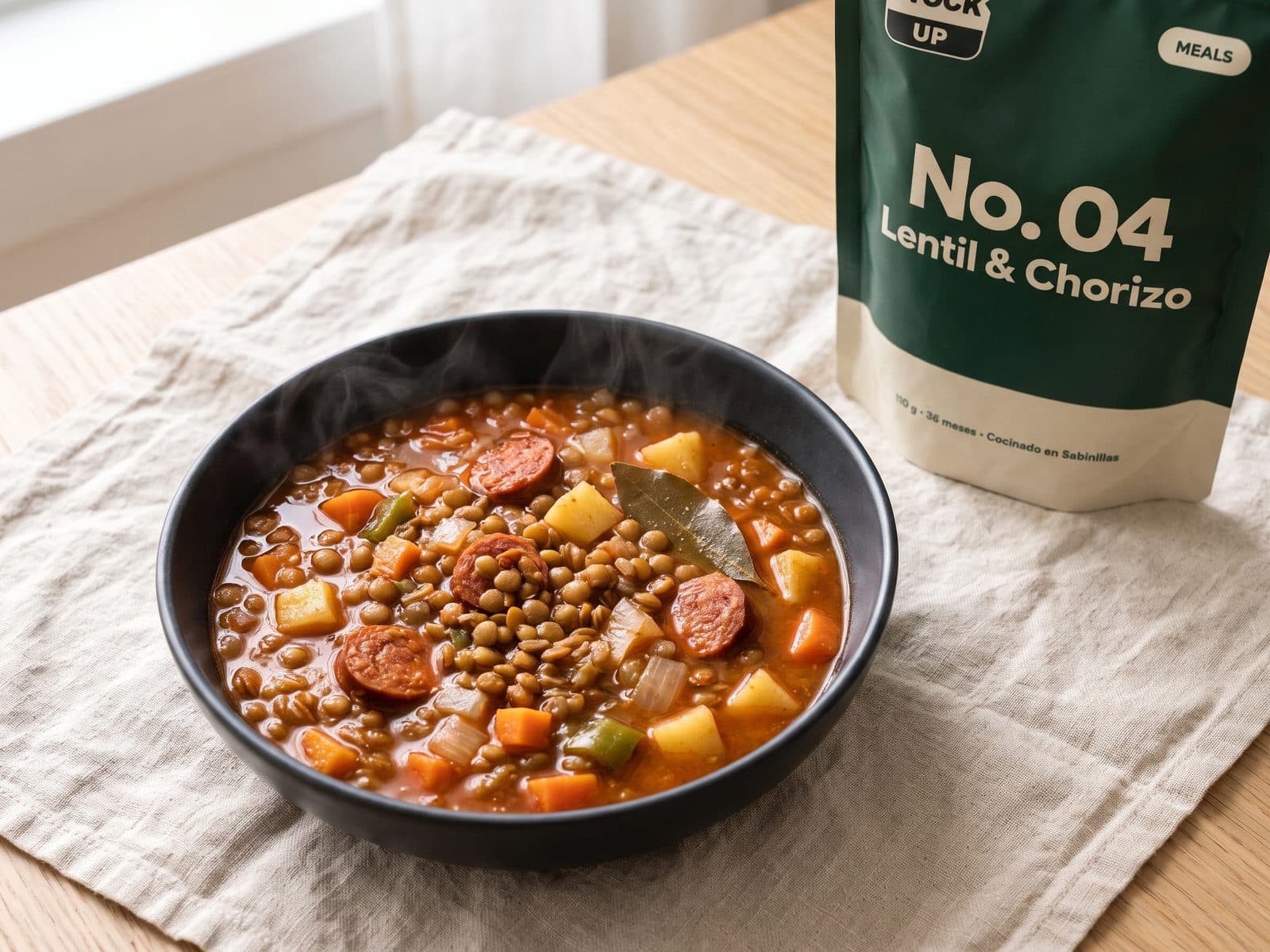
So every pouch is built to keep both out. An oxygen absorber goes in before sealing and takes up the oxygen left in the pouch. The pouch itself is a metallised film that light doesn't pass through, closed with a heat seal and a zip. Recipes with more fat, such as the lentils with chorizo at 14 g a pouch, are the ones that most need the oxygen out.
The dates, pouch by pouch
| Pouch | Sealed | Once opened | Once the water is in |
|---|---|---|---|
| Meals, 110 g | 36 months | Within 24 hours | Eat straight away |
| Rations, 120 g | 36 months | Within 24 hours | Eat straight away |
| Porridge, 90 g | 36 months | Within 24 hours | Eat straight away |
| Sweets, 30 to 50 g | 12 months | Within 7 days, zip shut | No water needed |
| 72 h Pack, whole box | 12 months, set by its sweets |
Rations No. 01 Chicken & Rice is the same recipe as Meal No. 01 in a 120 g pouch, and it keeps the same 36 months. The sweets keep 12. A dry sweet is a sugar sponge that pulls moisture out of the air, and its crunch is the quality the shorter date protects. Sweets No. 01 Sour Keys carries the same 12 months as the other five.
Storing a box for years
The date assumes a cool, dry cupboard. Heat speeds up the slow changes that oxygen and light cause, so keep pouches away from the oven, the boiler and a sunny window, and out of a car boot in summer. A cockpit locker is fine as long as it's dry and out of direct sun.
For an emergency box, treat the date as a reminder. Once a year, check the dates on the base, eat the oldest pouches on an ordinary weekday and put fresh ones in their place. The 72 h Pack for €85 carries one date for the whole box, 12 months from packing, because its three bags of sweets set the shortest date inside it. The Rations in it keep their own 36 months, printed on each pouch, so they can stay in the cupboard after the sweets are eaten.
What goes into such a box apart from food, with a three-day menu, is in what goes in a 72-hour kit.
After the zip opens
The protection lasts as long as the seal. Once a pouch is open, air and its moisture get in, and the dry food starts taking water back. An opened meal pouch should be used within 24 hours, and once the water is in, a hot one should be eaten straight away and a cold one within a couple of hours, like any cooked dish on a plate.
Sweets are kinder. With the zip pressed shut after every handful, an open bag keeps its crunch for about a week. On a humid day on the coast it softens sooner, and a softened sweet hasn't gone off; it has simply taken on water.
How the water comes out in the first place, from cooking to the vacuum, is in what freeze-drying keeps, and what it takes out. Every main with its date and figures is on the Rations page.