How much cash to keep at home, and which papers to copy
Most governments put cash on the emergency list and stop there. Five in Europe name an amount, and they don’t agree on what it covers: three days or a week, per adult or per head.
By STOCKUP · Updated
In this guide (5)
The table: what each country says
Most official kit lists include cash. Five authorities in Europe also say how much, and they don’t measure the same thing: some count three days, some a week, some per adult and some per head.
| Amount | Per | For how long | Who says it | |
|---|---|---|---|---|
| Netherlands | €70 an adult, €30 a child1 | Adult, child | The first 72 hours | De Nederlandsche Bank, for the national payments forum; the government repeats it2 |
| Austria | About two weekly shops, or up to €1003 | Household member | No figure | Oesterreichische Nationalbank |
| Sweden | About 1,000 kronor, about €914 | Adult | A week of essential shopping5 | Sveriges Riksbank; the civil defence agency repeats it6 |
| Denmark | 250 kroner, about €337 | Person in the household | At least three days | Danmarks Nationalbank |
| Switzerland | Enough for a weekly shop and, if needed, a tank of fuel8 | Household | No figure | BWL, the federal office for national economic supply |
Countries that name an amount, as each authority published it on the date under the sources; euro figures at the ECB reference rate of 9 November 2026
Netherlands
Austria
- Amount
- About two weekly shops, or up to €1003
- Per
- Household member
- For how long
- No figure
- Who says it
- Oesterreichische Nationalbank
Sweden
Denmark
- Amount
- 250 kroner, about €337
- Per
- Person in the household
- For how long
- At least three days
- Who says it
- Danmarks Nationalbank
Switzerland
- Amount
- Enough for a weekly shop and, if needed, a tank of fuel8
- Per
- Household
- For how long
- No figure
- Who says it
- BWL, the federal office for national economic supply
| What it says | Per | For how long | Who says it | |
|---|---|---|---|---|
| United Kingdom | A mix of coins and notes; the amount depends on your family’s needs9 | Family | 3 days | UK Government, Be Ready |
| United States | “A small amount”, in small bills10 | Family20 | No figure | FEMA, Ready.gov |
| Canada | Cash in smaller bills and coins11 | No figure | At least 72 hours | Government of Canada |
| Germany | Cash, in the emergency bag and at home12 | No figure | No figure | BBK, the federal civil protection office |
| Finland | “Enough for three days”13 | Household | 72 hours | Bank of Finland |
| Spain | Cash and spare keys, on the kit list14 | No figure | No figure | Protección Civil, the civil protection directorate |
Countries that give no amount, and what they say instead, as published on the date under the sources
United Kingdom
- What it says
- A mix of coins and notes; the amount depends on your family’s needs9
- Per
- Family
- For how long
- 3 days
- Who says it
- UK Government, Be Ready
United States
Canada
- What it says
- Cash in smaller bills and coins11
- Per
- No figure
- For how long
- At least 72 hours
- Who says it
- Government of Canada
Germany
- What it says
- Cash, in the emergency bag and at home12
- Per
- No figure
- For how long
- No figure
- Who says it
- BBK, the federal civil protection office
Finland
- What it says
- “Enough for three days”13
- Per
- Household
- For how long
- 72 hours
- Who says it
- Bank of Finland
Spain
- What it says
- Cash and spare keys, on the kit list14
- Per
- No figure
- For how long
- No figure
- Who says it
- Protección Civil, the civil protection directorate
The figures are closer than they look. Denmark’s 250 kroner is three days of food at what an average Dane spends, about 70 kroner a day, rounded up;7 Sweden’s 1,000 kronor is a week of essential shopping per adult, worked out from the consumer agency’s figures for what a household spends on food.15 Both banks say the figure is a guide, and the Riksbank adds that a smaller amount still helps.4 What the money is for is plainest in the Dutch advice: water, food and transport in the first 72 hours, with the amount raised for a pet’s food or medicines.1 If your country gives none, borrow the nearest one that matches your days: Britain, Canada and Finland count three, as the Dutch and Danish figures do.
Which notes, and why small ones
Card machines and cash machines need power and a network, and the ECB described what happened in Spain’s blackout of 28 April 2025: many card terminals, cash machines and mobile wallets were widely inoperable for hours and only fully restored the next morning, while banknotes kept working.16 Ready.gov makes the same point for the US: small bills, because ATMs and credit cards may not work during a disaster.10 What else stops working in a power cut, and what to keep for it, is in how long the fridge and freezer keep food in a power cut.
Keep a payment card too: Denmark’s checklist pairs the cash with a physical card and a PIN you remember.18 And you don’t have to draw it all out this week. The Dutch central bank suggests putting a little aside over the coming months.1 Where to keep it is the one thing the authorities leave to you: “in a safe place”, Ready.gov says, and no more.10
The papers: what to copy, where each copy lives
The documents lists agree more than the cash figures do. Germany’s BBK is the most precise about originals: family certificates stay in the original, while ID, passport and driving licence go in as plain copies; it also says to ask the issuing office whether a document has to be kept as the original or as a certified copy.1912
Cash and papers
0 of 17 ticked
Your ticks stay in this browser only.
Three sets in three places is what the lists add up to. The folder at home, where everyone knows it is; a digital set, which FEMA’s financial first-aid kit says to keep password-protected; and one set outside the house, which the BBK suggests leaving with relatives, friends, a notary or a lawyer, and the Australian Red Cross simply calls “one place outside your home”.201925 Paper still matters for the phone numbers: Be Ready asks for them written down and kept somewhere easy to find in a power cut, with your regular medicines and the insurance details beside them.9
A bank safe deposit box is on several of these lists, with one catch: the FDIC says most aren’t waterproof, and suggests sealing the papers in waterproof bags.26 Spain’s family guide asks for the same in the kit itself, copies in waterproof sleeves.14
What no authority says
None of these authorities plans the cash for longer than a week or two, and none tells you where in the house to put it. The Bank of Finland says outright that keeping large amounts at home isn’t advisable.13 The figure you will see quoted as the ECB’s advice, €70 to €100 per person, is the ECB summing up what the Netherlands, Austria and Finland say;16 the Bank of Finland’s own page gives no euro figure.13
The rest of the kit
Cash and papers are one shelf of a kit, and they travel in the bag: what else goes in it is in the go bag list. If you’re starting from nothing, prepping for beginners puts the jobs in order, and one of the first is making sure a warning reaches you, which is the subject of emergency alerts on your phone. For the food, one main such as Chicken & Rice is a meal, the One-Day Ration is a day, and the 72-Hour Food Reserve covers 3 days.
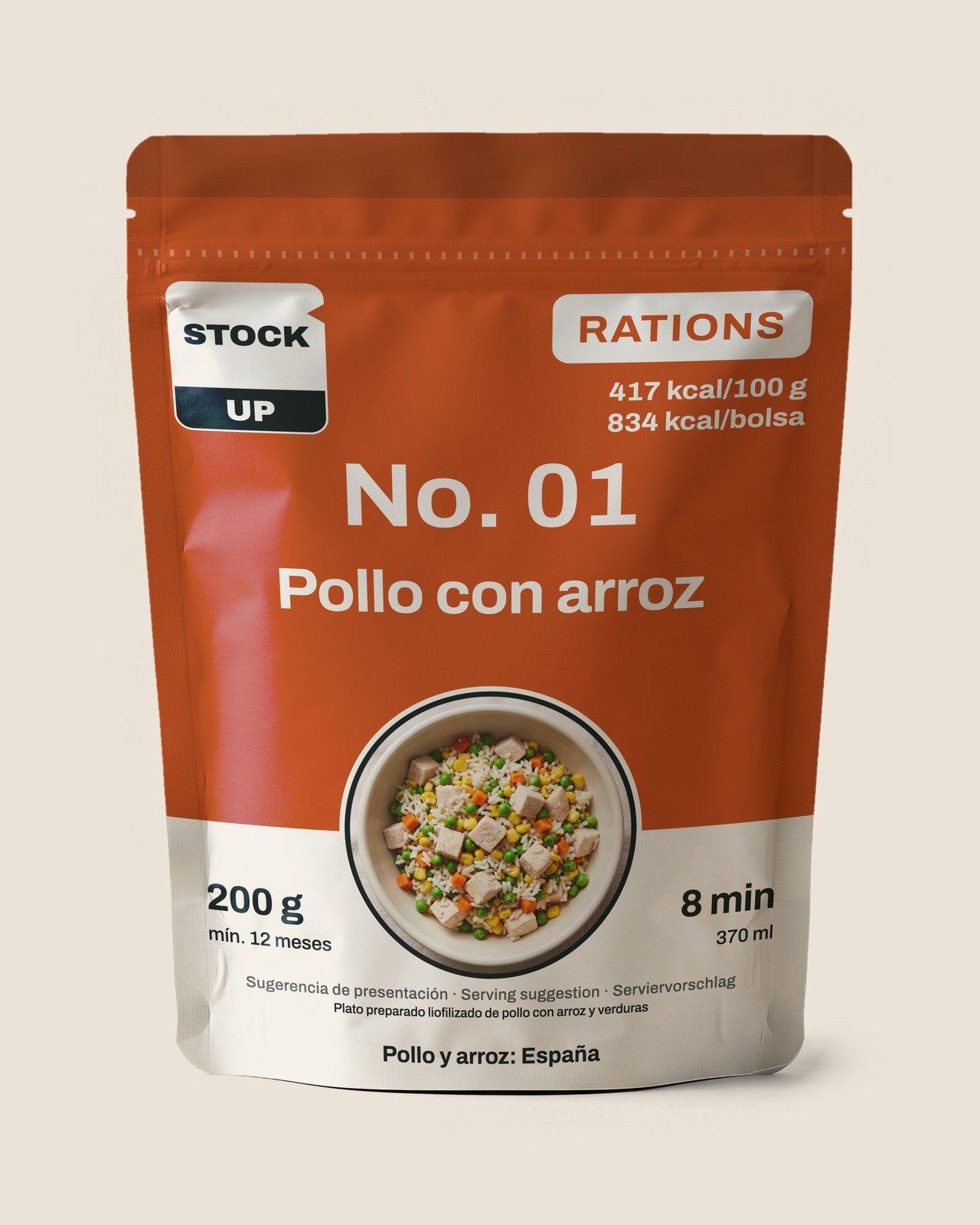
From our range
72-Hour Food Reserve
Sources
Accessed 10 November 2026
- Contant geld in jouw noodpakket (opens an external website)
- Hoeveel contant geld mag ik thuis bewaren? (opens an external website)
- Unser Bargeld (opens an external website)
- Rekommendationer till allmänheten om betalningar (opens an external website)
- Nya rekommendationer för allmänhetens betalningsberedskap (opens an external website)
- Betalningar och kontanter i kris (opens an external website)
- Spørgsmål om anbefalinger til betalingsberedskab (opens an external website)
- Kluger Rat – Notvorrat (opens an external website)
- Be ready for emergencies (opens an external website)
- Financial Preparedness (opens an external website)
- Emergency kit checklist (opens an external website)
- Vorsorgen für Krisen und Katastrophen (opens an external website)
- ‘Home emergency kit’ for payments (opens an external website)
- Guía para las familias. Prevención y autoprotección ante riesgos en el entorno (opens an external website)
- Hushåll bör ha flera betalsätt för att kunna betala vid störningar, till exempel 1 000 kronor i kontanter per vuxen (opens an external website)
- Keep calm and carry cash: lessons on the unique role of physical currency across four crises (opens an external website)
- Egenberedskap for å betale (opens an external website)
- Prepared for crises – Checklist (opens an external website)
- Dokumente sichern (opens an external website)
- Emergency Financial First Aid Kit (opens an external website)
- Build A Kit (opens an external website)
- Notgepäck (opens an external website)
- Stel je noodpakket samen (opens an external website)
- Get Packing Checklist 2025 (opens an external website)
- Get organised (opens an external website)
- Preparing Your Finances for an Unanticipated Disaster (opens an external website)
Hear from us before the shop opens
Leave your email. After a quick confirmation you get a welcome, a couple of short notes about our food and one email the day ordering opens. Nothing else.