Power cut: how long the fridge and the freezer keep food
When the power goes, the fridge starts a clock. The hours are much the same from Washington to Madrid; the temperature line and the rule on refreezing are not, and those decide what goes in the bin.
By STOCKUP · Updated
In this guide (6)
The fridge holds up to four hours, a full freezer about two days
Note the time the power goes off: every rule below counts from it. Keep both doors shut. FoodSafety.gov, the US government’s food-safety site, says a fridge keeps food safe for up to four hours, and a full freezer holds a safe temperature for about 48 hours, 24 if it’s half full and the door stays closed.1 Britain’s Food Standards Agency gives the same three figures.3
Two things help before the next cut. A full freezer holds the cold longest, so the USDA suggests filling the gaps with frozen jugs of water, bags of ice or gel packs.2 And a fridge thermometer turns guesswork into a reading: each agency’s rule is a temperature as well as a time.
Don’t taste anything to see whether it’s still fine: the US, Spanish and Australian agencies all warn against it.168 When in doubt, FoodSafety.gov says, throw it out.
What to keep and what to bin
The four hours is the fridge without power. FoodSafety.gov’s chart works per food instead: it sorts what to keep once a food has been at 4 °C (40 °F) or above for more than two hours, which is what the thermometer tells you.1
| Keep | Throw out | |
|---|---|---|
| Dairy | Hard cheeses such as Cheddar and Parmesan; butter, margarine | Milk, cream, yoghurt, soft cheeses |
| Meat, fish, eggs | Nothing | Meat, poultry, fish, eggs, sliced meats, bacon, sausage, opened tins of meat or fish |
| Fruit and vegetables | Whole fresh fruit and vegetables; dried fruit | Anything cut |
| Jars and spreads | Peanut butter, jam, mustard, ketchup, pickles, olives | Opened mayonnaise and tartare sauce after more than 8 hours above 10 °C (50 °F) |
| Bread and cooked food | Bread, rolls, cakes, tortillas | Cooked pasta, rice and potatoes; soups, stews, gravy; opened baby formula |
Fridge food after more than two hours at 4 °C or above, from FoodSafety.gov’s chart1
Dairy
- Keep
- Hard cheeses such as Cheddar and Parmesan; butter, margarine
- Throw out
- Milk, cream, yoghurt, soft cheeses
Meat, fish, eggs
- Keep
- Nothing
- Throw out
- Meat, poultry, fish, eggs, sliced meats, bacon, sausage, opened tins of meat or fish
Fruit and vegetables
- Keep
- Whole fresh fruit and vegetables; dried fruit
- Throw out
- Anything cut
Jars and spreads
- Keep
- Peanut butter, jam, mustard, ketchup, pickles, olives
- Throw out
- Opened mayonnaise and tartare sauce after more than 8 hours above 10 °C (50 °F)
Bread and cooked food
- Keep
- Bread, rolls, cakes, tortillas
- Throw out
- Cooked pasta, rice and potatoes; soups, stews, gravy; opened baby formula
Cooking the perishables afterwards doesn’t rescue them: AESAN, Spain’s food safety agency, warns they can make you ill even cooked.6 In the freezer, FoodSafety.gov allows refreezing whatever still has ice crystals or is at 4 °C or below, though the quality may suffer; ice cream goes either way.1
Where you live
The hours hardly change from one country to the next. The temperature line does, and so does the rule on refreezing, and those two decide what ends up in the bin. Go by the agency where you live.
| Fridge | Freezer | Temperature line | Thawed food | |
|---|---|---|---|---|
| United States | Up to 4 hours1 | Full about 48 hours, half full 241 | 4 °C (40 °F), more than 2 hours per food1 | Refreeze if ice crystals remain or at 4 °C or below1 |
| United Kingdom | Up to 4 hours34 | Full up to 48 hours, half full about 2434 | 8 °C during a power cut; at 8 °C or more, eat chilled food inside 4 hours4 | Doesn’t say |
| Canada | About 4 hours, unopened5 | Full about 48 hours, half full about 245 | Fridge at or below 4 °C (40 °F); bin anything 2 hours or more at room temperature5 | Refreeze if ice crystals remain or it feels fridge-cold5 |
| Australia and New Zealand | Around 4 hours8 | Around 24 hours8 | No figure | Don’t refreeze8 |
| Spain | Under 4 hours nothing needs to go6 | At least 24–48 hours, door shut6 | 5 °C6 | Refreeze only if not fully thawed; thawed at 5 °C or below, eat it that day6 |
| Germany | No figure | A well-filled one stays cold enough for many hours, door shut7 | 7 °C at most for thawed food kept cold7 | Cooked dishes and raw plant food yes; raw meat and fish only once heated through7 |
Fridge and freezer in a power cut, by each country’s food agency, as on its page on the date under the sources
United States
United Kingdom
- Temperature line
- 8 °C during a power cut; at 8 °C or more, eat chilled food inside 4 hours4
- Thawed food
- Doesn’t say
Canada
Australia and New Zealand
Spain
Germany
Ireland’s food safety authority, the FSAI, gives no hours: if the fridge door stayed shut the food may still be safe, and if it was above 5 °C for a substantial time, it goes.9 Whether the garden counts as a fridge depends on the country too. Food Standards Scotland says chilled food can go outside when it’s 8 °C or lower, and the FSA adds a sealed box, dry and out of the sun;34 Health Canada says not to put frozen food outside, even in winter.5
Two more, for readers further afield. Argentina’s food agencies, SENASA and ANMAT, print almost the American rule: the fridge keeps food cold for about 4 hours, the freezer for about 24 hours half full and 48 full, and perishable food that has been above 5 °C for 2 hours or more is thrown away.18 Austria’s interior ministry gives no hours at all. A freezer, it says, is built for cuts of a few minutes or hours, so the food you keep for a long power cut should mostly be the kind that needs no power.19
Eat what needs no heat, in the right order
Food normally kept at room temperature stays safe in a power cut, and tins can be eaten cold. The FSA’s order: what’s in the fridge, then anything defrosted that needs no cooking, then the perishable things from the worktop, and the tins, jars and dried food last.3
A freeze-dried pouch goes at the very end of that queue: Chicken & Rice keeps at least 12 months sealed, with no fridge. Most of ours can be made with cold water, 20–30 minutes depending on the meal. Meat and potato stay a little firmer that way than with hot water, and a little liquid may be left at the bottom.
| Pouch | Net weight | Water | Cold water |
|---|---|---|---|
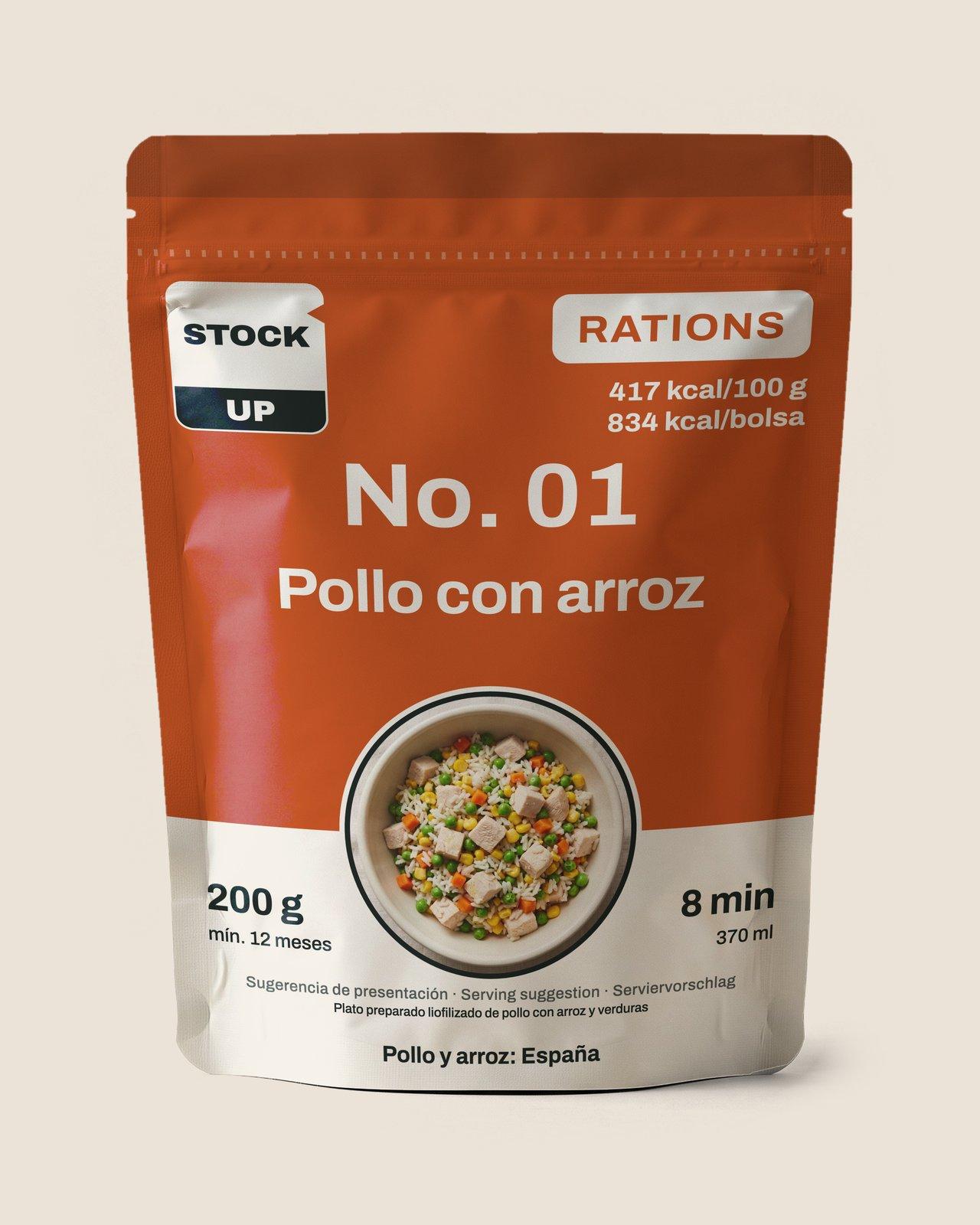 Chicken & RiceLarge | 200 g | 370 ml | about 20 min |
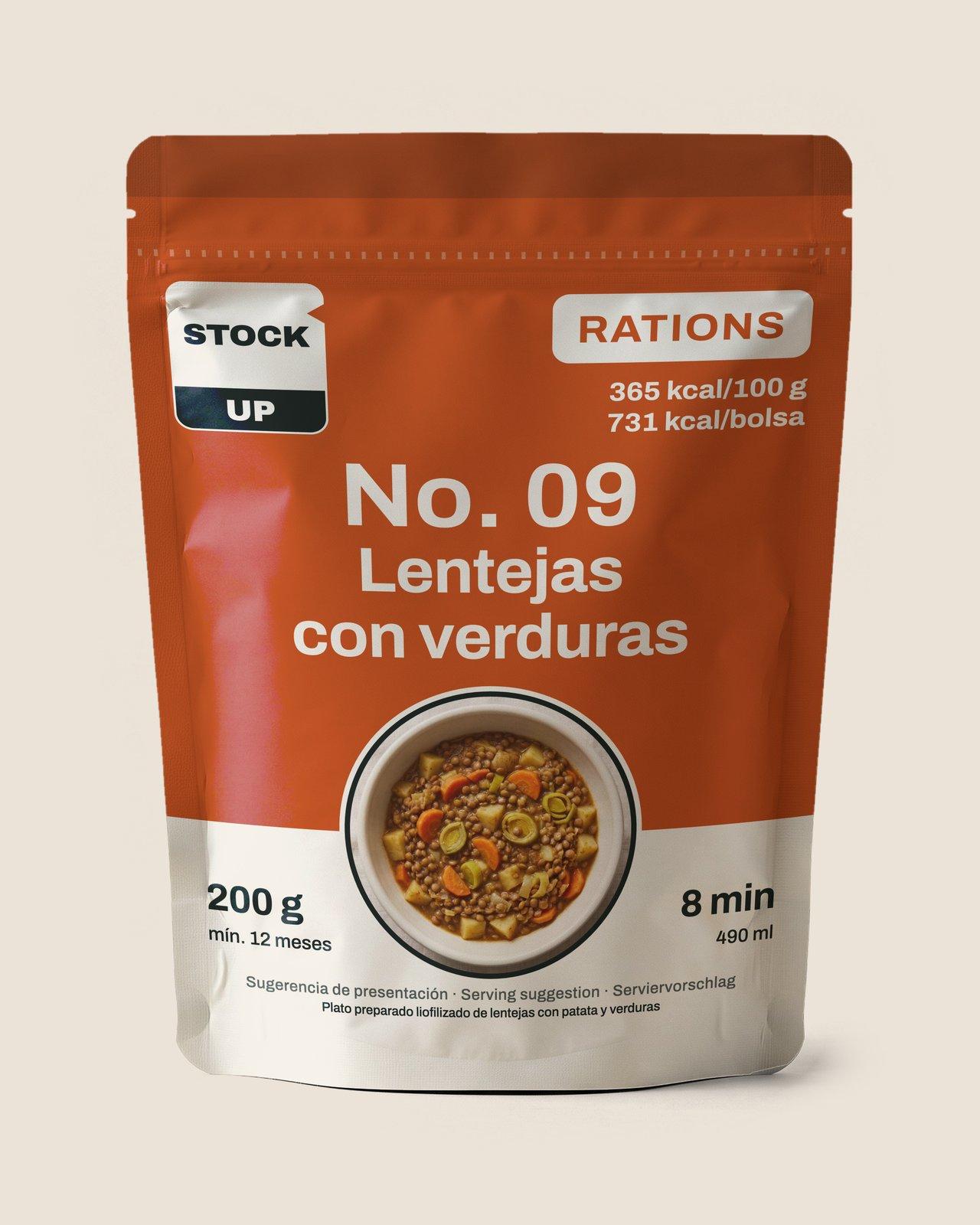 Lentil & Vegetable StewLarge | 200 g | 490 ml | about 30 min |
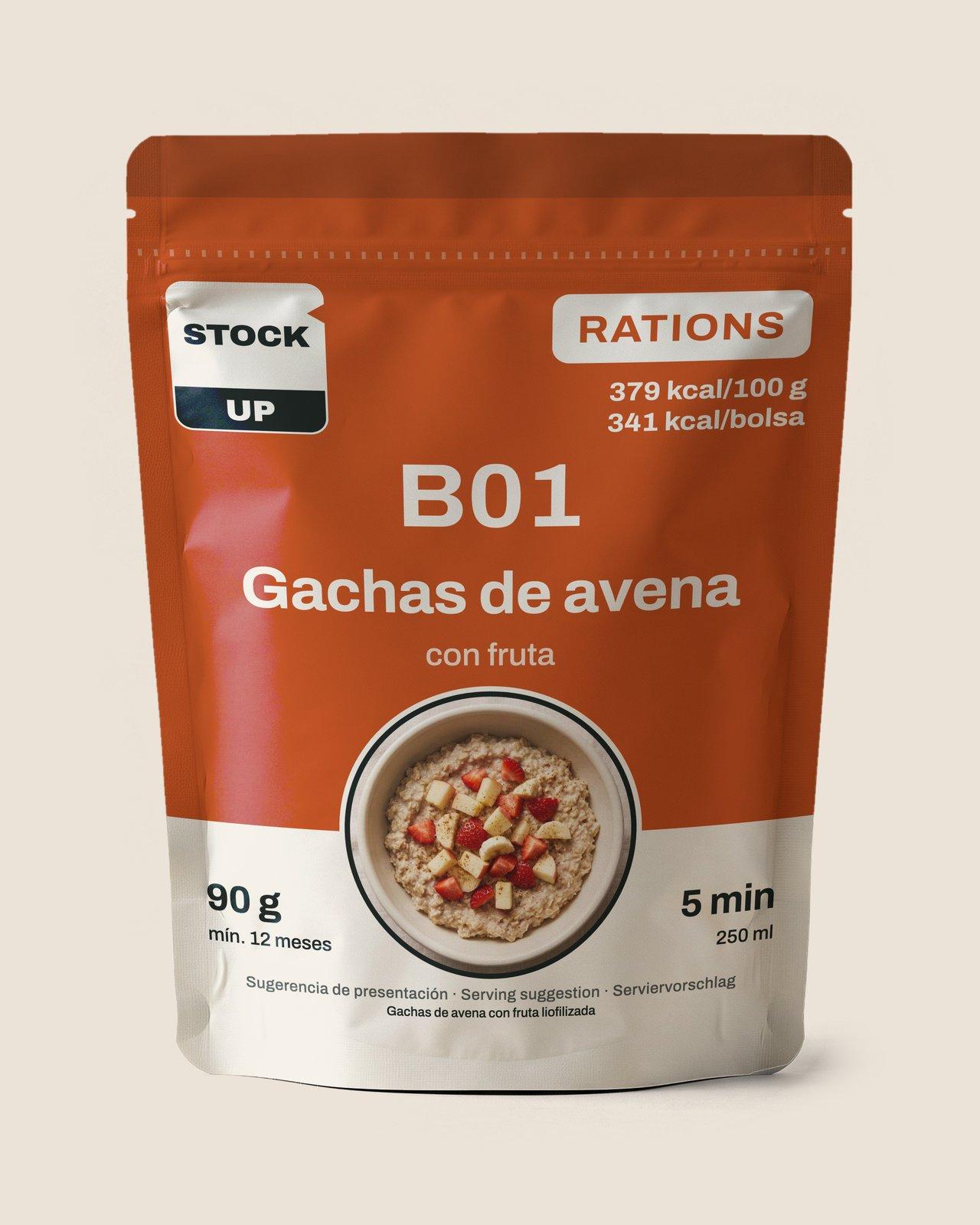 Porridge & Fruit | 90 g | 250 ml | about 20 min |
 Porcini Mushroom RisottoLarge | 200 g | 490 ml | Hot water only |
Cold water or hot only, pouch by pouch
- Chicken & RiceLarge
- Net weight
- 200 g
- Water
- 370 ml
- Cold water
- about 20 min
- Lentil & Vegetable StewLarge
- Net weight
- 200 g
- Water
- 490 ml
- Cold water
- about 30 min
- Porridge & Fruit
- Net weight
- 90 g
- Water
- 250 ml
- Cold water
- about 20 min
- Porcini Mushroom RisottoLarge
- Net weight
- 200 g
- Water
- 490 ml
- Cold water
- Hot water only
Chicken & Rice takes 370 ml and about 20 minutes with cold water. Porcini Mushroom Risotto is hot water only, and so is Puchero Broth; the dishes that need the kettle are listed in freeze-dried meals with cold water. Once the water is in, we treat it as prepared food, and AESAN gives cooked food two hours at room temperature at most, so make it up when you’re ready to eat.10
Heat is the harder part. Don’t use a barbecue or a camping stove indoors, says the NHS, which also counts portable generators among the sources of carbon monoxide;11 what each authority allows you to cook on is set out in how to cook without power.
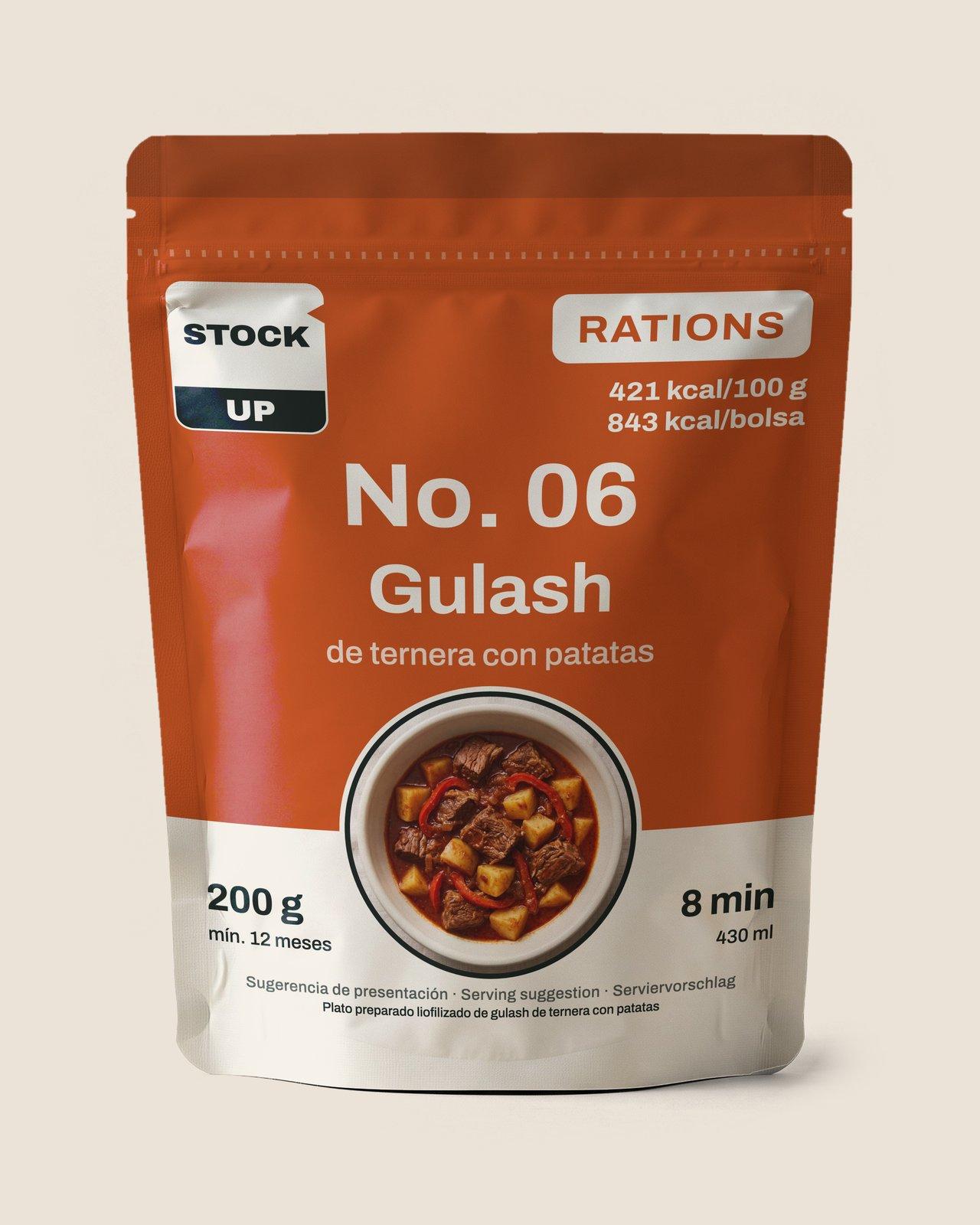
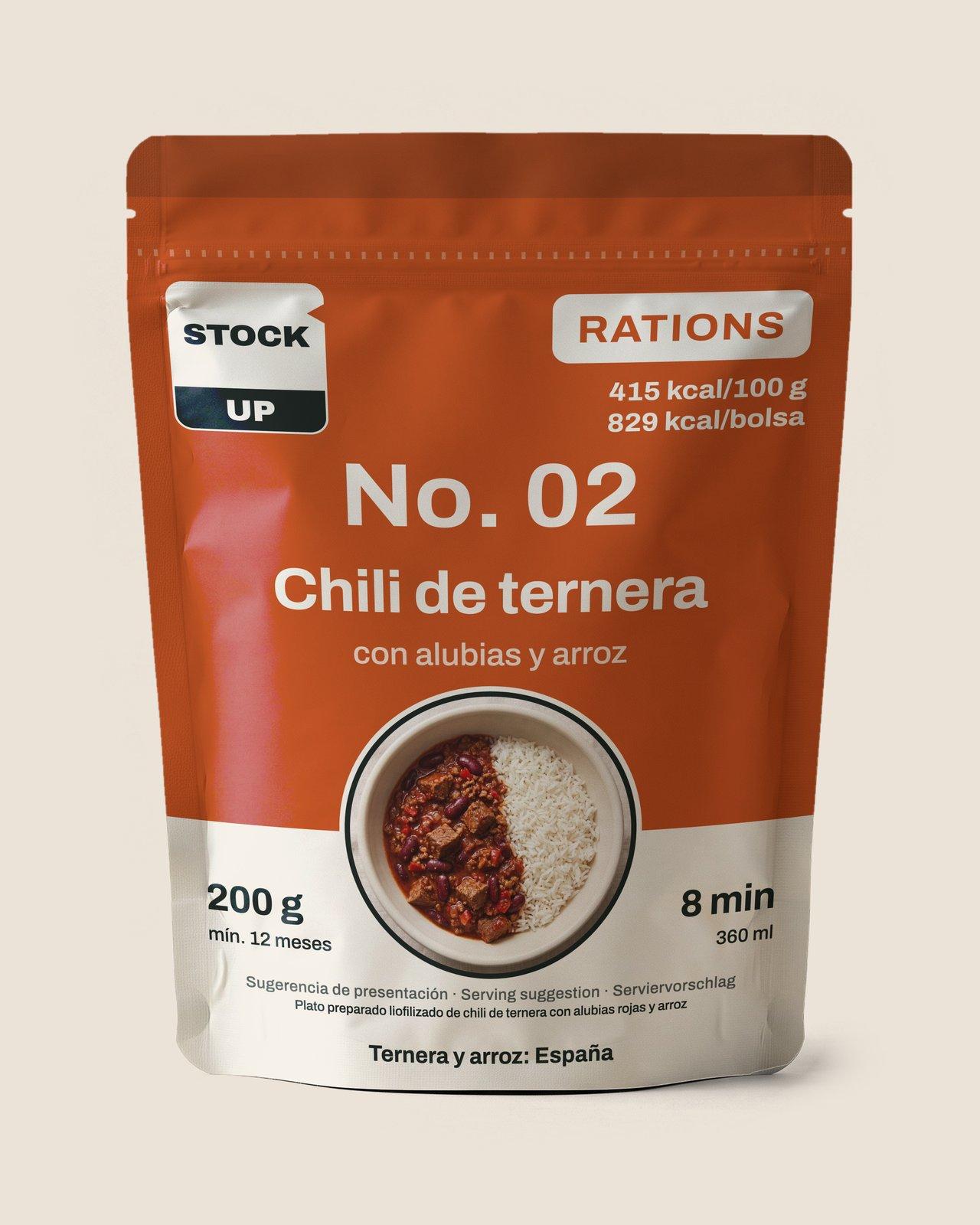
From our range
72-Hour Food Reserve
One drawer for the next power cut
A cut that runs into the evening needs light, news and water before it needs food. Most of that fits in one kitchen drawer.
When the power goes
0 of 8 ticked
Your ticks stay in this browser only.
Three days need more than a drawer, mostly water, medicines and documents, and the 72-hour kit list sets it out item by item.
28 April 2025: the clock in a real cut
At 12:33 that Monday, mainland Spain and Portugal lost power.13 By 07:00 the next morning 99.95% of demand on the mainland was back, according to Spain’s competition regulator, the CNMC: a few hours or about 18½, depending on where you lived.14
Run AESAN’s rules over the longest of those cuts. A fridge that went off at 12:33 passed its four hours at 16:33, so by morning the meat, fish, milk and leftovers had to go. A full freezer with the door kept shut was still inside the agency’s 24–48 hours when the power came back.6 Andalusia’s 112 emergency service drew a stricter line that day: anything that had been above 4 °C for more than two hours went.15
Over the next two days the CIS, Spain’s state polling institute, asked 1,752 people what they’d missed at home.16
- Missed something at home during the blackout16
- 41.6%
- Of those, a way to cook without electricity16
- 34.9%
- Of those, food that needs no cooking16
- 5.4%
After a way to cook came a radio (15.5%), torches or candles (10.0%), batteries (8.1%) and water (7.3%).16 Food that needs no cooking came well down the list: people had food in the house and no safe way to heat it.
Sources
Accessed 10 November 2026
- Food safety during power outage (opens an external website)
- Keep your food safe during emergencies: power outages, floods & fires (opens an external website)
- Food safety in a power cut: advice for consumers (opens an external website)
- Food safety during a power cut (opens an external website)
- Food and drinking water safety in an emergency (opens an external website)
- ¿Qué hacer con los alimentos del frigorífico y del congelador después del apagón eléctrico? (opens an external website)
- Korrektes Kühlen von Lebensmitteln im Privathaushalt (opens an external website)
- Food safety in an emergency (opens an external website)
- Storage (opens an external website)
- Prevenir intoxicaciones alimentarias en verano (opens an external website)
- Carbon monoxide poisoning (opens an external website)
- Be ready for emergencies (opens an external website)
- 28 April 2025 Iberian blackout (opens an external website)
- Comparecencia de la presidenta de la CNMC ante la Comisión de Economía, Comercio y Transformación Digital, 13 de mayo de 2025 (opens an external website)
- La Junta activa la Situación 2 del Plan de Emergencias de Protección Civil ante el apagón (opens an external website)
- Estudio 3513, avance de resultados (opens an external website)
- Pentagon orders bases to plan for 90 days without the grid as Britain urges families to stockpile food and water (opens an external website)
- Seguridad de los alimentos y del agua en caso de emergencias climáticas y cortes de luz (opens an external website)
- Verhalten bei Blackout (opens an external website)
Hear from us before the shop opens
Leave your email. After a quick confirmation you get a welcome, a couple of short notes about our food and one email the day ordering opens. Nothing else.