Long-term food storage: what keeps for years, and why
Rice for thirty years, says one source; two years, says another. Both are right, because they answer different questions. Here are the four things that decide how long dry food keeps, and the questions that make sense of any long date.
By STOCKUP · Updated

In this guide (5)
Four things decide: moisture, oxygen, heat, light
Dry food doesn’t go off overnight the way milk does. It loses quality slowly, and four things set the speed. The first is the one every source puts at the top: for long-term storage, the food has to be dry, about 10% moisture or less, in the words of both the Church of Jesus Christ of Latter-day Saints and Utah State University (USU) Extension.13
| What it does | What keeps it in check | |
|---|---|---|
| Moisture | Lets mould and bacteria grow; in wheat, USU puts degradation above 12% moisture and mould above 15%6 | Food at about 10% moisture or less, containers off the floor1; the BLE’s “dry” means at most 70% relative humidity12 |
| Oxygen | Oxidises compounds in the food3 | A sealed pack with an oxygen absorber, or the air pushed out with nitrogen or dry ice3 |
| Heat | Halves shelf life for every 6 °C (10.8 °F) rise, in USU’s rule, which it credits to the USDA3 | 24 °C (75 °F) or lower, says the Church1; 4–16 °C (40–60 °F), says USU3 |
| Light | Degrades food; direct sunlight is “detrimental”4 | A dark cupboard; oil and plastic bottles kept out of the light1 |
The four factors: what each does to dry food and what keeps it in check, as the named sources put it on the date under the sources
Moisture
- What it does
- Lets mould and bacteria grow; in wheat, USU puts degradation above 12% moisture and mould above 15%6
Oxygen
Heat
- What it does
- Halves shelf life for every 6 °C (10.8 °F) rise, in USU’s rule, which it credits to the USDA3
Light
Heat is where the numbers move fastest. The USDA’s figures for military ready meals show the slope: 7 years at 16 °C (60 °F), 4½ years at 21 °C (70 °F), 18 months at 38 °C (100 °F) and one month at 49 °C (120 °F).11 In BYU research that USU cites, wheat stored hot, in a garage or attic, kept an acceptable quality for only 5 years.4 Even USU gives two ranges for the ideal: 4–16 °C on its wheat page and in a 2015 column, 4–21 °C (40–70 °F) on its storage-conditions page.64 Germany’s environment agency, the UBA, puts it in household terms: dark, aired, dry and cool, at most 18 °C, away from the cooker, the oven and the fridge.18
Which staples keep longest, and under what conditions
The Church’s advice is to build a longer-term store around wheat, rice, pasta, oats, beans and potatoes, packed properly and kept cool and dry.2 How long each keeps depends on whom you ask.
| The Church: still edible, packed, 24 °C or lower | USU Extension | USDA FSIS: on the shelf | BLE: household stock | |
|---|---|---|---|---|
| White rice | 30+ years1 | Up to 10 years at a constant 21 °C (70 °F) with oxygen absorbers; up to 30 cooler, oxygen-free5 | 2 years11 | 1 year, in a closed jar or tin, dry12 |
| Wheat | 30+ years | Bread acceptable to most tasters after 32 years in No. 10 cans, in a BYU study; rotate within 56 | No figure | 2 years, whole grain |
| Pasta | 30 years | No figure | 2 years | 1 year |
| Rolled oats | 30 years | No figure | No figure | 1 year |
| Sugar | Indefinite | Indefinite; about 2 years for best quality8 | No figure | Almost unlimited, kept dry |
| Non-fat milk powder | 20 years | 3–5 years cool; as little as 3 months hot7 | No figure | No figure |
Six staples, as each source states it on the date under the sources; each column answers a different question, so they don’t agree
White rice
Wheat
- The Church: still edible, packed, 24 °C or lower
- 30+ years
- USU Extension
- Bread acceptable to most tasters after 32 years in No. 10 cans, in a BYU study; rotate within 56
- USDA FSIS: on the shelf
- No figure
- BLE: household stock
- 2 years, whole grain
Pasta
- The Church: still edible, packed, 24 °C or lower
- 30 years
- USU Extension
- No figure
- USDA FSIS: on the shelf
- 2 years
- BLE: household stock
- 1 year
Rolled oats
- The Church: still edible, packed, 24 °C or lower
- 30 years
- USU Extension
- No figure
- USDA FSIS: on the shelf
- No figure
- BLE: household stock
- 1 year
Sugar
- The Church: still edible, packed, 24 °C or lower
- Indefinite
- USU Extension
- Indefinite; about 2 years for best quality8
- USDA FSIS: on the shelf
- No figure
- BLE: household stock
- Almost unlimited, kept dry
Non-fat milk powder
- The Church: still edible, packed, 24 °C or lower
- 20 years
- USU Extension
- 3–5 years cool; as little as 3 months hot7
- USDA FSIS: on the shelf
- No figure
- BLE: household stock
- No figure
The columns differ by decades because they answer different questions. The Church’s chart gives “Life-Sustaining” shelf lives: how long the food stays edible, not how long it stays at its best.1 The USDA’s times are for quality on a kitchen shelf, and the BLE’s are a rule for a household that eats its stock. Milk powder shows it most clearly: 20 years for the Church, 15 in the BYU table the Church links to, 3–5 years cool for USU.1107 Dried pinto beans get 30 years from the Church, and none of the other three gives a figure.
What the long figures leave out matters as much. The Church keeps nuts, brown rice, wholewheat flour, dried meat such as jerky, dried eggs, granola and chocolate out of long-term storage altogether.1 USU says dried whole milk isn’t suitable because of its milk fat,7 and BYU counts cooking oil and peanut butter as short-term foods of a year or more.10
Mylar, oxygen absorbers, buckets: what each is for
Foil pouches, sold as Mylar-type bags, are the oxygen barrier. The Church describes its own as laminated plastic and aluminium, 178 microns thick (7 mils), and says the metal layer is what keeps moisture and oxygen out. It also says they aren’t rodent-proof.1
Oxygen absorbers are small sachets of iron powder, salt and activated carbon or clay; the iron binds the oxygen in the sealed pack and turns to iron oxide.15 They aren’t silica gel and don’t dry the food.16 Low oxygen kills the insects in the food and slows the loss of quality, says the Church.1 USU adds that wheat doesn’t need to be kept without oxygen unless insects are present, and that bay leaves, nails or salt have “absolutely no effect” on them.6 Tox Info Suisse, the Swiss poison centre, says sachets found in a pack are not to be opened but thrown away, and kept from children and pets.16
Buckets and PETE bottles are the outer layer. The Church uses PETE bottles for wheat, corn and beans, and for up to five years for white rice, and plastic buckets “under certain conditions” for dry foods unlikely to go rancid.1 USU warns that polyethylene bags and 5-gallon (about 19 litre) food-grade buckets won’t stay oxygen-free after an absorber has done its work.6
How to read a very long date
USU draws the line plainly: the date on a pack is the “best if used by” date, when you still get most of the original taste and nutrition, while a “life sustaining” shelf life is how long the food stays edible.3 EU and British labels work the same way: best before is about quality, use by about safety.1314 A promise from a maker is a third kind again. One US maker of emergency meals offers a “30-year taste guarantee”,17 which is that maker’s promise about taste, for its food and its packs.
Read that way, most decades on a label shrink to a condition: a dry staple, sealed without oxygen, kept at the temperature the source names. Change one of the three and the number no longer applies. For a reserve you rotate rather than bury, the BLE’s one or two years and the dates on the packs are the figures that matter, and a two-week pantry from the supermarket shows how to keep that turning; the foods themselves are in the non-perishable food list.
What we print on the pouch, and why
Every figure above is for dry staples in their own packs. A cooked meal with meat, oil and sauce in it is a different food, so none of those numbers carries over to a pouch of ours. Freeze-drying doesn’t kill bacteria, USU Extension says: it leaves the food too dry for them to grow, and if a damaged pack lets it take up moisture they can become active again.9 That’s why an opened pouch has a short time and a sealed one a printed date.
| Pouch | Net weight | Keeps for | Once opened |
|---|---|---|---|
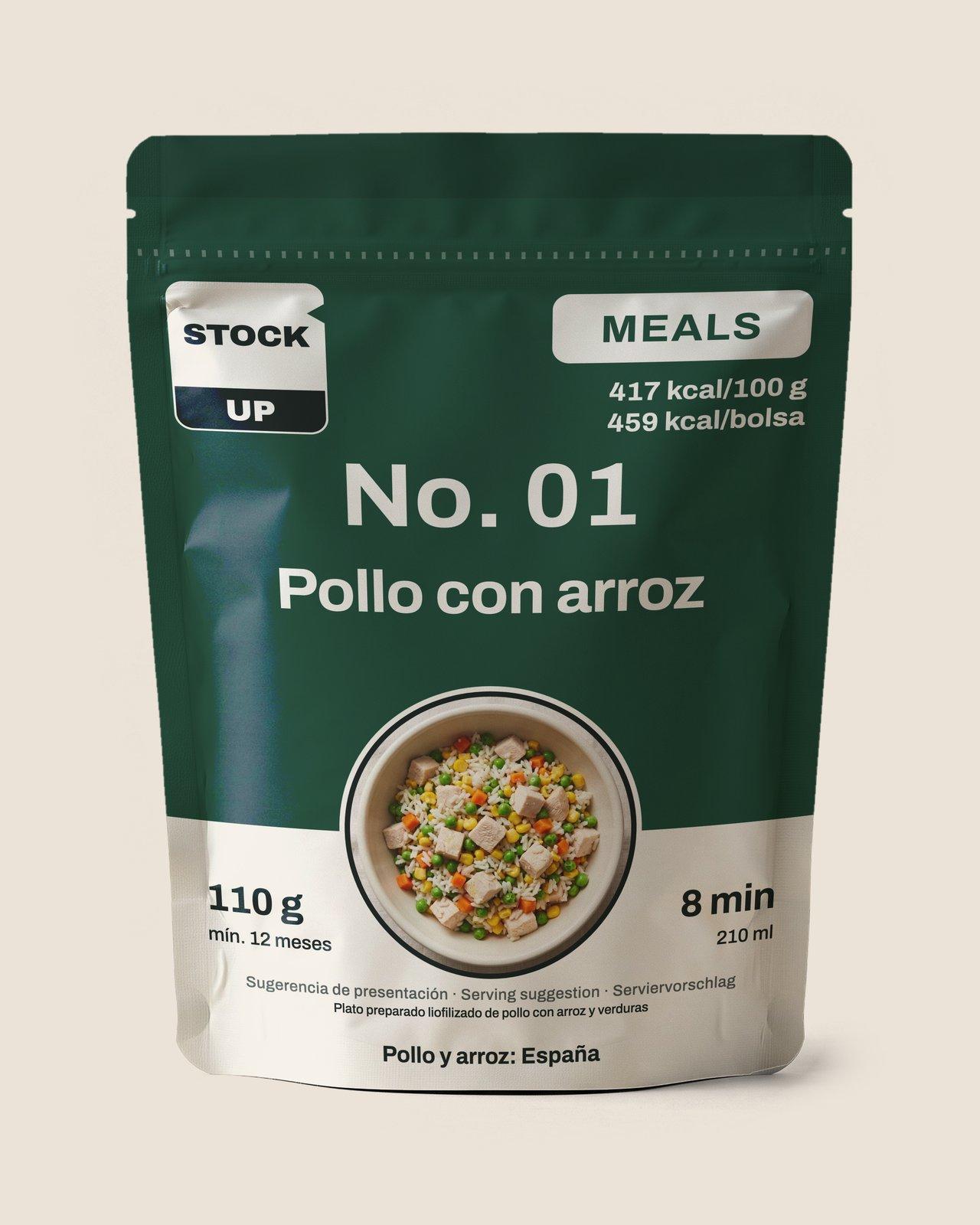 Chicken & RiceStandard | 110 g | at least 12 months | 24 hours |
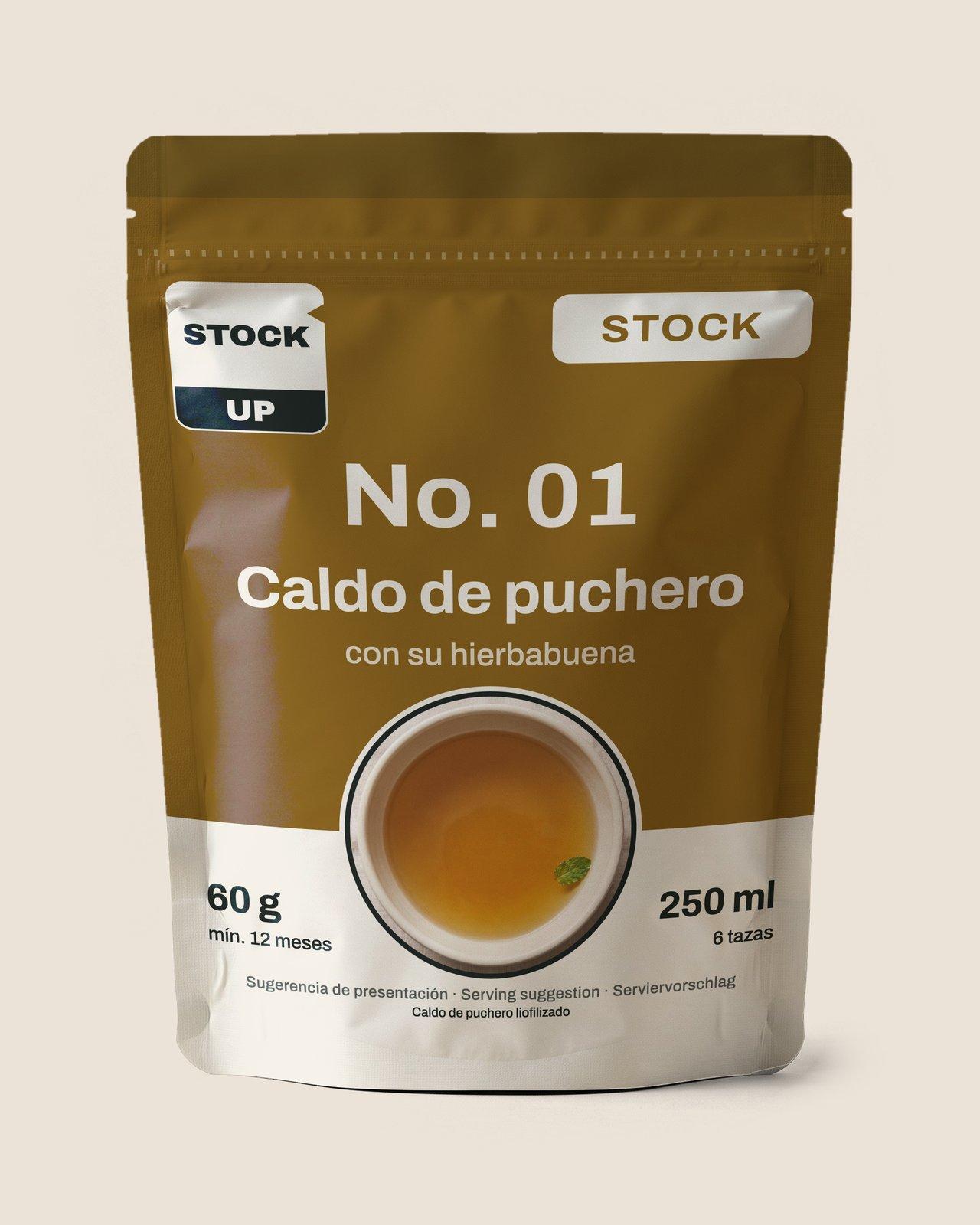 Puchero Broth | 60 g | at least 12 months | 7 days |
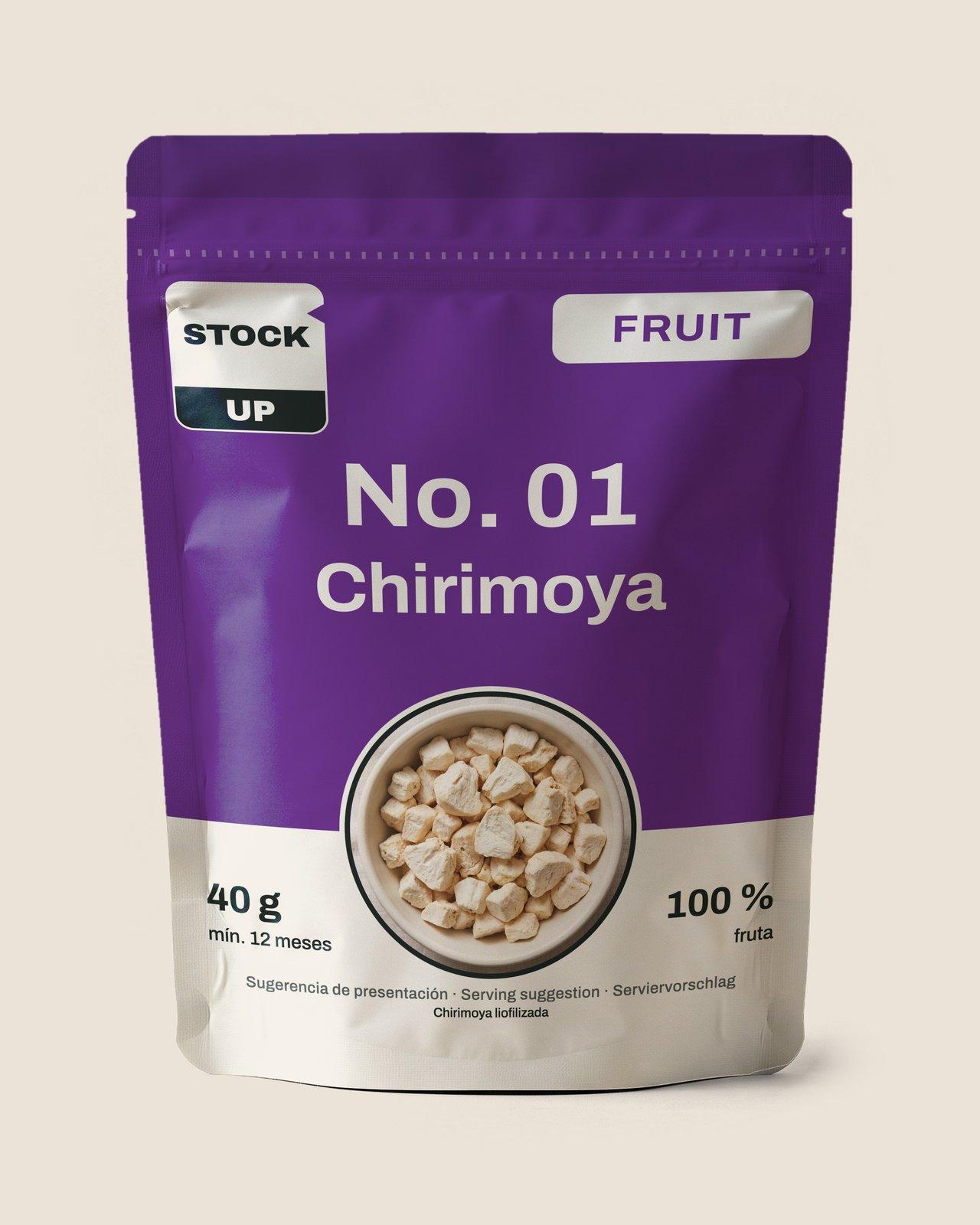 Cherimoya | 40 g | at least 12 months | 7 days |
Three of our pouches: weight, shelf life sealed and once opened
- Chicken & RiceStandard
- Net weight
- 110 g
- Keeps for
- at least 12 months
- Once opened
- 24 hours
- Puchero Broth
- Net weight
- 60 g
- Keeps for
- at least 12 months
- Once opened
- 7 days
- Cherimoya
- Net weight
- 40 g
- Keeps for
- at least 12 months
- Once opened
- 7 days
Freeze-drying is one way of drying among several, and what it changes against warm air is in the difference between freeze-dried and dehydrated. How many kilos of all this one person needs for two weeks is a sum of its own: how much emergency food per person.
From our range
Chicken & RiceStandard
Sources
Accessed 10 November 2026
- Long-Term Food and Water Storage (opens an external website)
- Food Storage (opens an external website)
- How Can I Get the Most Out of My Food Storage (opens an external website)
- Food Storage Conditions (opens an external website)
- Storing White Rice (opens an external website)
- Storing Wheat (opens an external website)
- Storing Dried Milk (opens an external website)
- Storing Sugars (opens an external website)
- Can I freeze-dry that? A practical guide to safe and effective freeze-drying (opens an external website)
- An Approach to Longer-Term Food Storage (opens an external website)
- Shelf-Stable Food Safety (opens an external website)
- So können Lebensmittel gelagert werden (opens an external website)
- Understanding food labelling: best before and use-by dates (opens an external website)
- Fechas de caducidad y consumo preferente (opens an external website)
- What happens if a child swallows an oxygen absorber packet? (opens an external website)
- Oxygen absorbers (opens an external website)
- 30-Day Emergency Food Supply Kit (opens an external website)
- Vorratsschädlingen keine Chance geben (opens an external website)
Hear from us before the shop opens
Leave your email. After a quick confirmation you get a welcome, a couple of short notes about our food and one email the day ordering opens. Nothing else.