A two-week pantry from the supermarket: build it, rotate it
Germany’s food agency and Austria’s civil protection association each print an emergency pantry in kilos per person. Scaled to fourteen days the two nearly agree, and both come down to food you already eat, bought a little at a time and eaten from the front.
By STOCKUP · Updated
In this guide (6)
The list, per person, in kilos
Which foods keep is the easy half, and it’s in the non-perishable food list. The harder half is how much. Two European bodies answer it in kilos: Germany’s federal food agency, the BLE, with a table for one person and ten days at 2,200 kcal a day,1 and Austria’s Zivilschutzverband, the civil protection association, with one for fourteen days at 2,000 kcal.2 Scaled to two weeks, the German table lands close to the Austrian one on everything but vegetables and fruit.
| BLE, scaled to 14 days | Zivilschutzverband, 14 days | |
|---|---|---|
| Bread, grains, potatoes | 4.6 kg1 | 4.5 kg2 |
| Vegetables and fruit | 9.1 kg (5.6 vegetables, 3.5 fruit) | 6.0 kg |
| Milk and dairy | 3.5 kg | 4.5 kg |
| Eggs, meat, fish | 1.7 kg | 2.0 kg |
| Fat and oil | 0.46 kg | 0.5 kg |
| Drinks | 28 litres | 21 litres |
| Food in all | About 19.4 kg (43 lb) | About 17.5 kg (39 lb) |
Two weeks, one person, by food group; the BLE column is its ten-day table scaled to fourteen days, both as published on the date under the sources
Bread, grains, potatoes
Vegetables and fruit
- BLE, scaled to 14 days
- 9.1 kg (5.6 vegetables, 3.5 fruit)
- Zivilschutzverband, 14 days
- 6.0 kg
Milk and dairy
- BLE, scaled to 14 days
- 3.5 kg
- Zivilschutzverband, 14 days
- 4.5 kg
Eggs, meat, fish
- BLE, scaled to 14 days
- 1.7 kg
- Zivilschutzverband, 14 days
- 2.0 kg
Fat and oil
- BLE, scaled to 14 days
- 0.46 kg
- Zivilschutzverband, 14 days
- 0.5 kg
Drinks
- BLE, scaled to 14 days
- 28 litres
- Zivilschutzverband, 14 days
- 21 litres
Food in all
- BLE, scaled to 14 days
- About 19.4 kg (43 lb)
- Zivilschutzverband, 14 days
- About 17.5 kg (39 lb)
The BLE’s tinned vegetables and fruit are counted at drained weight, the food without the liquid, which is part of why its vegetable line is the heavier one.1 Line by line, scaled from the BLE’s examples and rounded, two weeks for one person look like this.
Two weeks, one person
0 of 21 ticked
Your ticks stay in this browser only.
Why food you already eat works best
Buy what is already in your trolley, a little more of it each time. The UK’s Be Ready says “It’s best to buy food you’d usually eat”.3 Germany’s civil protection office, the BBK, turns that into a habit: take one or two more packs of pasta than you need on every shop, use the stock in everyday cooking, starting with what runs out first, and replace it on the next shop.4
That habit fixes the two problems of a reserve bought in one go: food nobody wants to eat, and a date that passes unnoticed. The Austrian brochure adds the check most lists skip: plan a two-week menu, so the tins and packets actually make meals for fourteen days.2 Switzerland’s federal office for national economic supply, the BWL, adds a second check: some of the stock should be food you can eat without cooking, for the days the hob is off.18 How to heat the rest without power, and what each authority allows indoors, is in how to cook without power.
It also spreads the cost. The Church of Jesus Christ of Latter-day Saints builds in stages: a day’s food times seven for a week, then a month, then three months, and it says plainly that going into debt for a food store all at once is not prudent.5 A two-week pantry fits that order: a week first, a second one over the next month of shopping.
Rotation without a spreadsheet
Step by step
New to the back
Put new stock behind or under the old, as the BLE advises.6Eat from the front
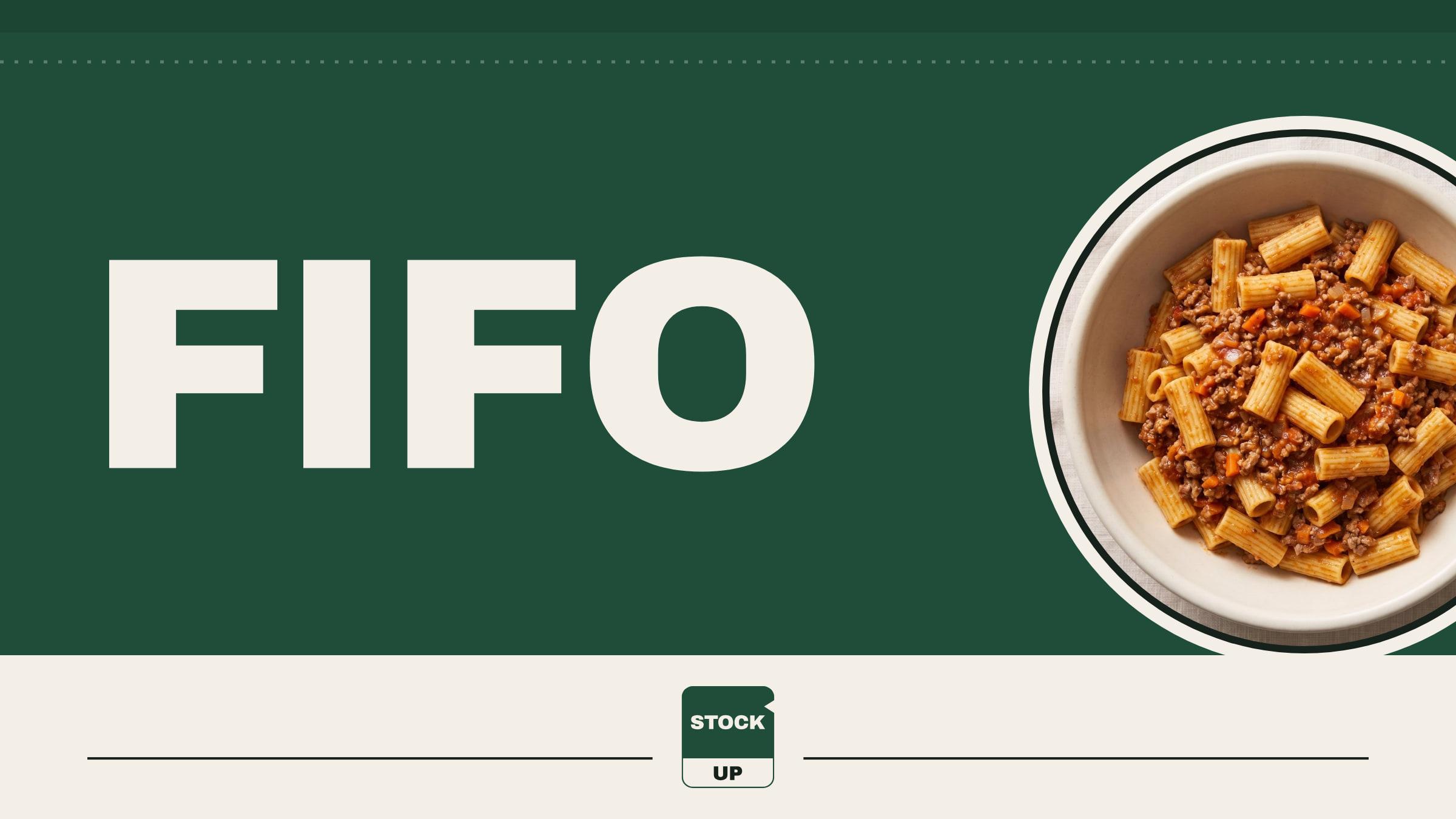
Use the older packs first. USU Extension, Utah State University’s advice service, calls it FIFO, first in, first out.7One shelf, one list
Keep the reserve on one shelf, with the nearest date written large on a card. The BLE also keeps a stock list and crosses off whatever is taken.6
Twice a year is the common middle. Canada asks for food, water, batteries and medicines to be replaced at least once a year,10 and the USDA asks for a look at the pantry every few weeks and for tins you’ve had a while to be used.11 A reserve you cook from every week checks itself.
Best before and use by aren’t the same date
| Best before | Use by | |
|---|---|---|
| What it’s about | Quality1213 | Safety1213 |
| After the date | “Usually safe to eat but may not be of the same quality” (GOV.UK)13 | “Could make you ill” (GOV.UK); not to be eaten (AESAN)1312 |
| Typical foods | Flour, pulses, rice, pasta, biscuits, tins, oil, honey, frozen food12 | Fresh meat or fish, mince, poultry, cut salad and fruit1214 |
| On condition that | The pack is unopened and stored as the label says14 | It is kept as the label next to the date says17 |
The two dates on food in the EU and the UK, in the words of AESAN, GOV.UK and the BZfE on the date under the sources
What it’s about
After the date
- Best before
- “Usually safe to eat but may not be of the same quality” (GOV.UK)13
Typical foods
- Best before
- Flour, pulses, rice, pasta, biscuits, tins, oil, honey, frozen food12
On condition that
Almost everything on the list above carries a best-before date, which is why a pantry is forgiving. The BZfE, Germany’s federal centre for nutrition, puts it as “Das Mindesthaltbarkeitsdatum ist kein Wegwerfdatum”: the best-before date is not a date to throw food away.14 It is still the maker’s quality date for the unopened pack, and rotating keeps you inside it.
Where to keep it
The BLE’s “cool” means up to 18 °C, outside the fridge, and “dry” at most 70% relative humidity; its ideal food cupboard is 15–20 °C, aired and dark.15 The USDA lists the places not to use: above or beside the cooker, under the sink, a damp garage or cellar, and says temperatures below 29 °C (85 °F) are best.11 Move opened dry goods into glass, metal or plastic containers that close tightly; that also keeps moths out, says the BZfE.16
That is all a two-week reserve asks for. Storing for years is a different job, with sealed pouches and oxygen absorbers, covered in long-term food storage.
Where a pouch fits
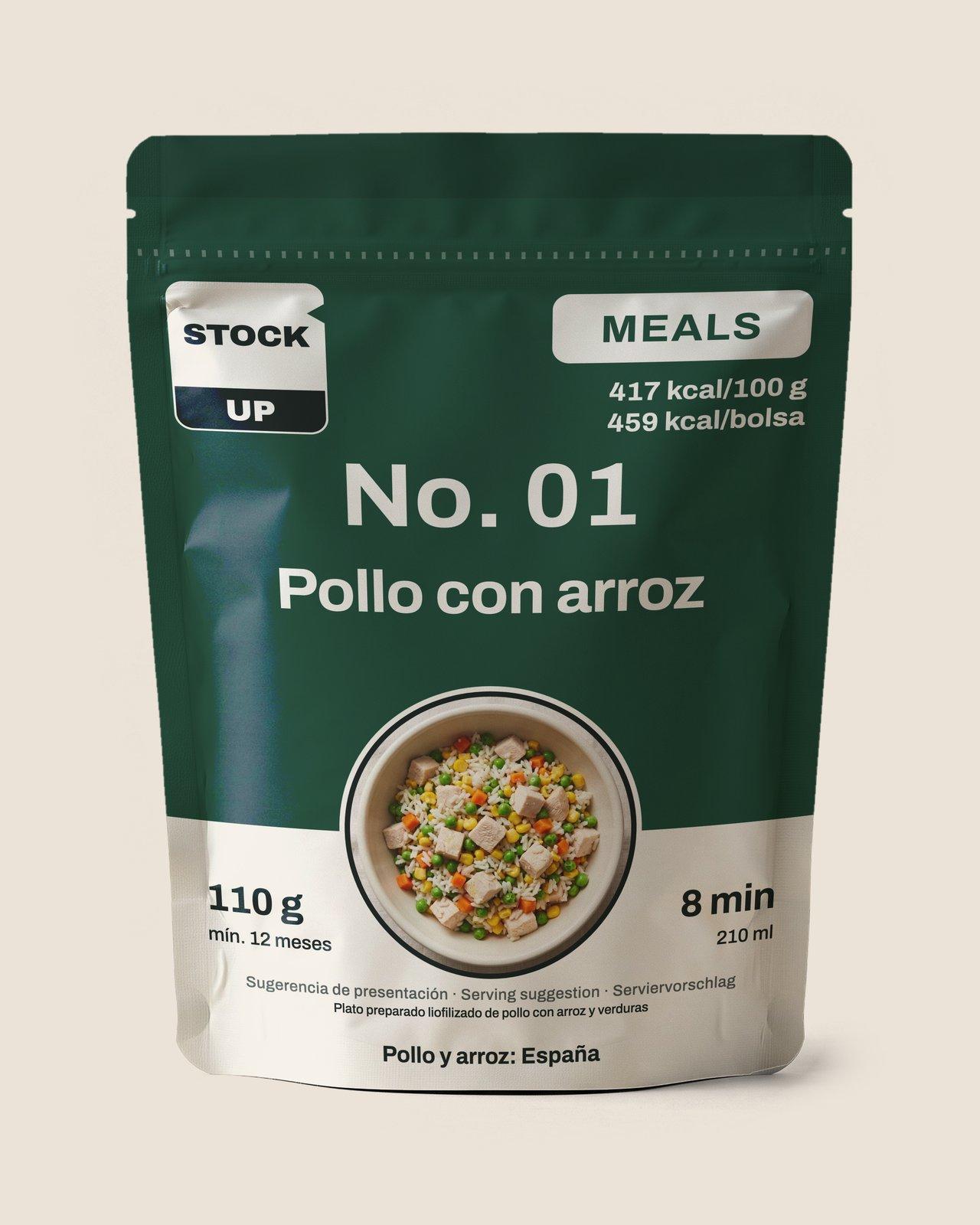
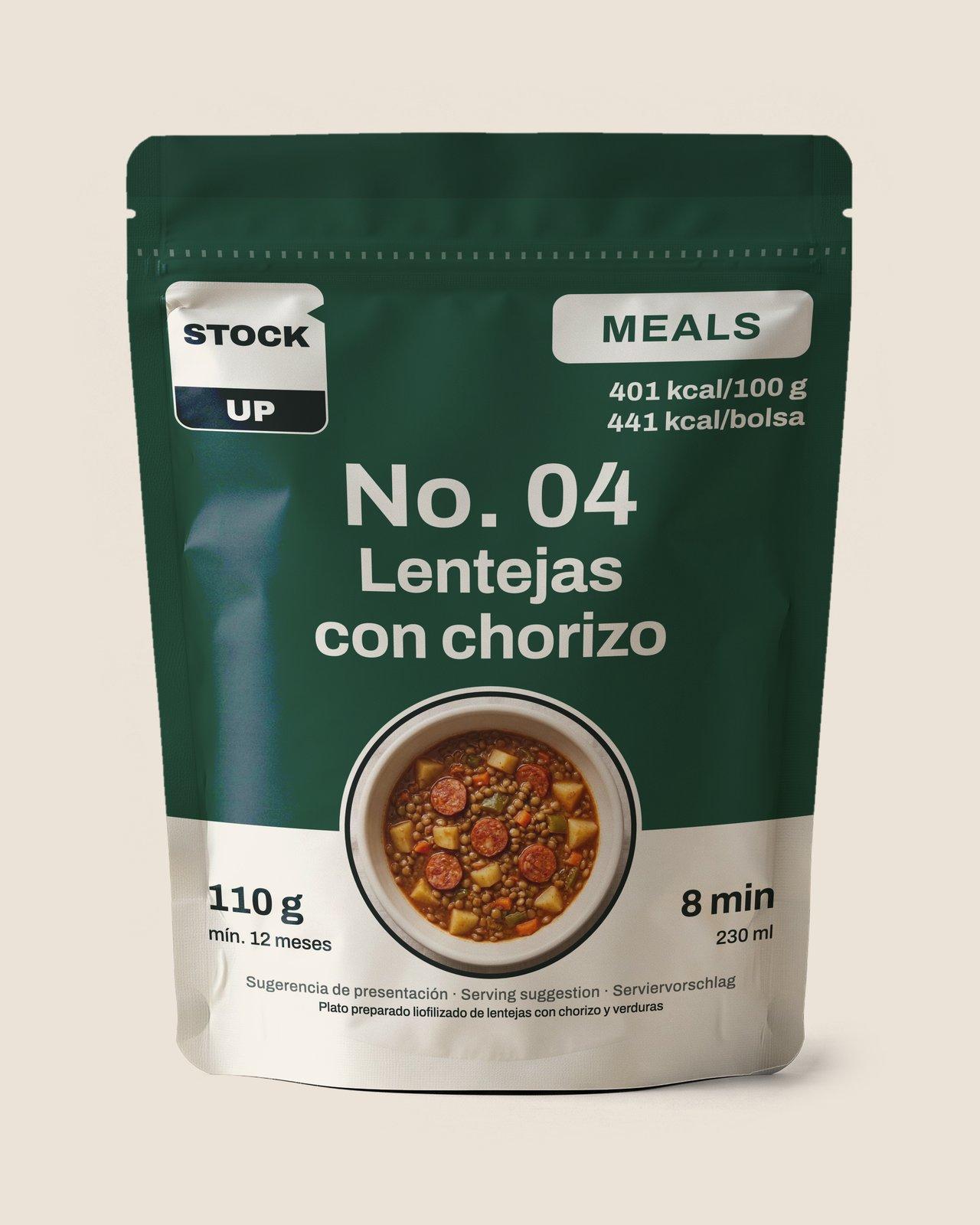
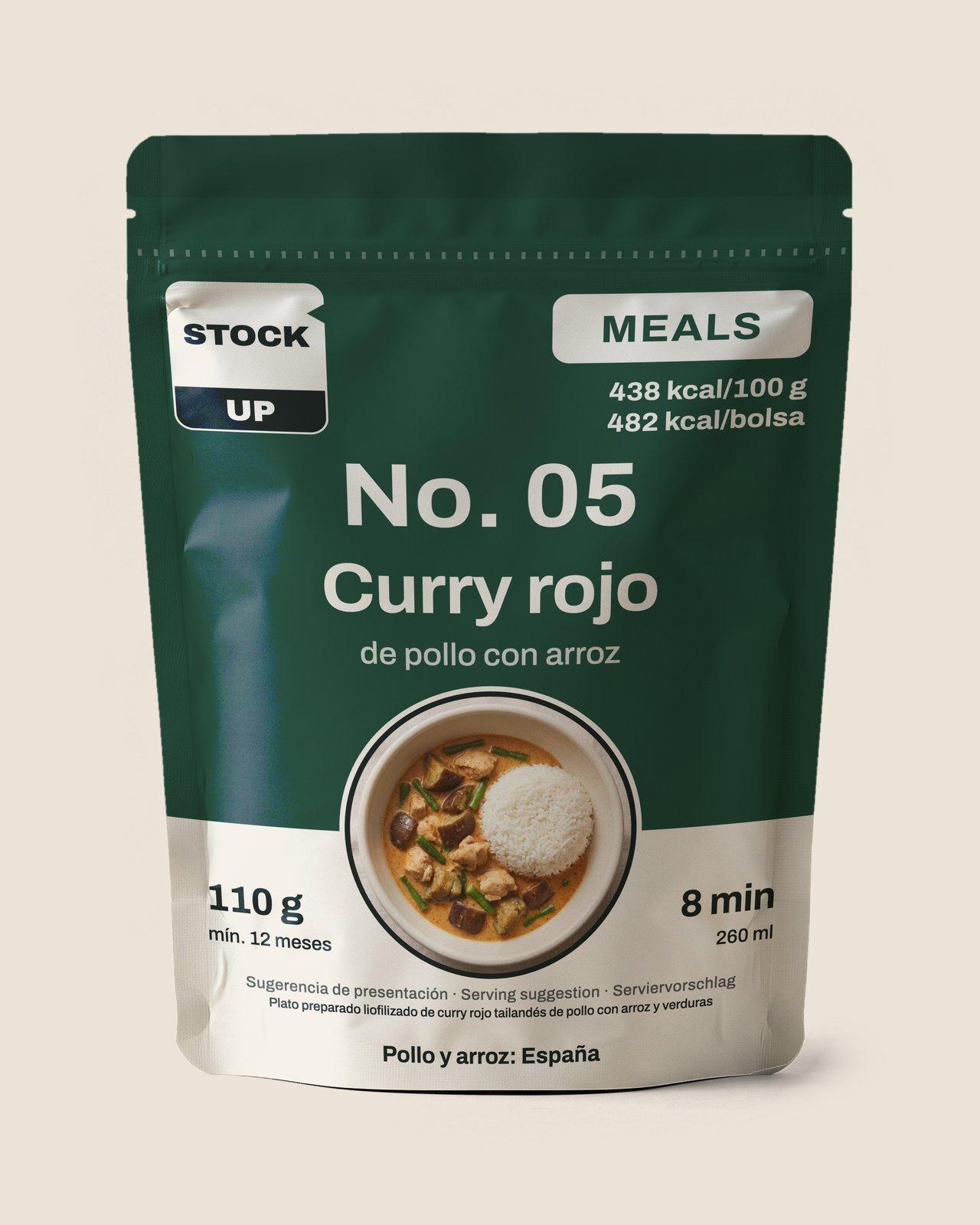
Our meals sit in the same rotation as the tins. A main such as Chicken & Rice or Lentils & Chorizo, or a breakfast such as Porridge & Fruit, carries its date on the pouch, counted from the day it’s sealed (the rule is in how long freeze-dried food keeps), and is eaten and replaced like anything else on the shelf. They don’t replace the list: two weeks of food for one person is the kilos above, and how much emergency food per person shows how a pouch counts in that sum. For Spain, three days of the same shelf priced line by line is in what a 72-hour kit costs in Spain.
From our range
Meals Discovery Pack
Sources
Accessed 10 November 2026
- Vorratstabelle (opens an external website)
- Bevorraten, aber richtig – Krisenfester Haushalt (opens an external website)
- Be ready for emergencies (opens an external website)
- Essen und Trinken bevorraten (opens an external website)
- Food Storage (opens an external website)
- So pflegen Sie Ihren Lebensmittelvorrat (opens an external website)
- Storing Canned Goods (opens an external website)
- Guía para las familias. Prevención y autoprotección ante riesgos en el entorno (opens an external website)
- Emergency Kit Checklist (opens an external website)
- Emergency kits (opens an external website)
- Shelf-Stable Food Safety (opens an external website)
- Fechas de caducidad y consumo preferente (opens an external website)
- Understanding food labelling: best before and use-by dates (opens an external website)
- Haltbarkeit von Lebensmitteln (opens an external website)
- So können Lebensmittel gelagert werden (opens an external website)
- Lebensmittel richtig lagern (opens an external website)
- Regulation (EU) No 1169/2011 on the provision of food information to consumers (opens an external website)
- Kluger Rat – Notvorrat (opens an external website)
Hear from us before the shop opens
Leave your email. After a quick confirmation you get a welcome, a couple of short notes about our food and one email the day ordering opens. Nothing else.