rationsPublished October 29, 2026
Provisioning a sailing weekend
Two days of food for one person in a cockpit locker, the 1,820 ml of tank water it takes, and how to stow it and cook it in a seaway.
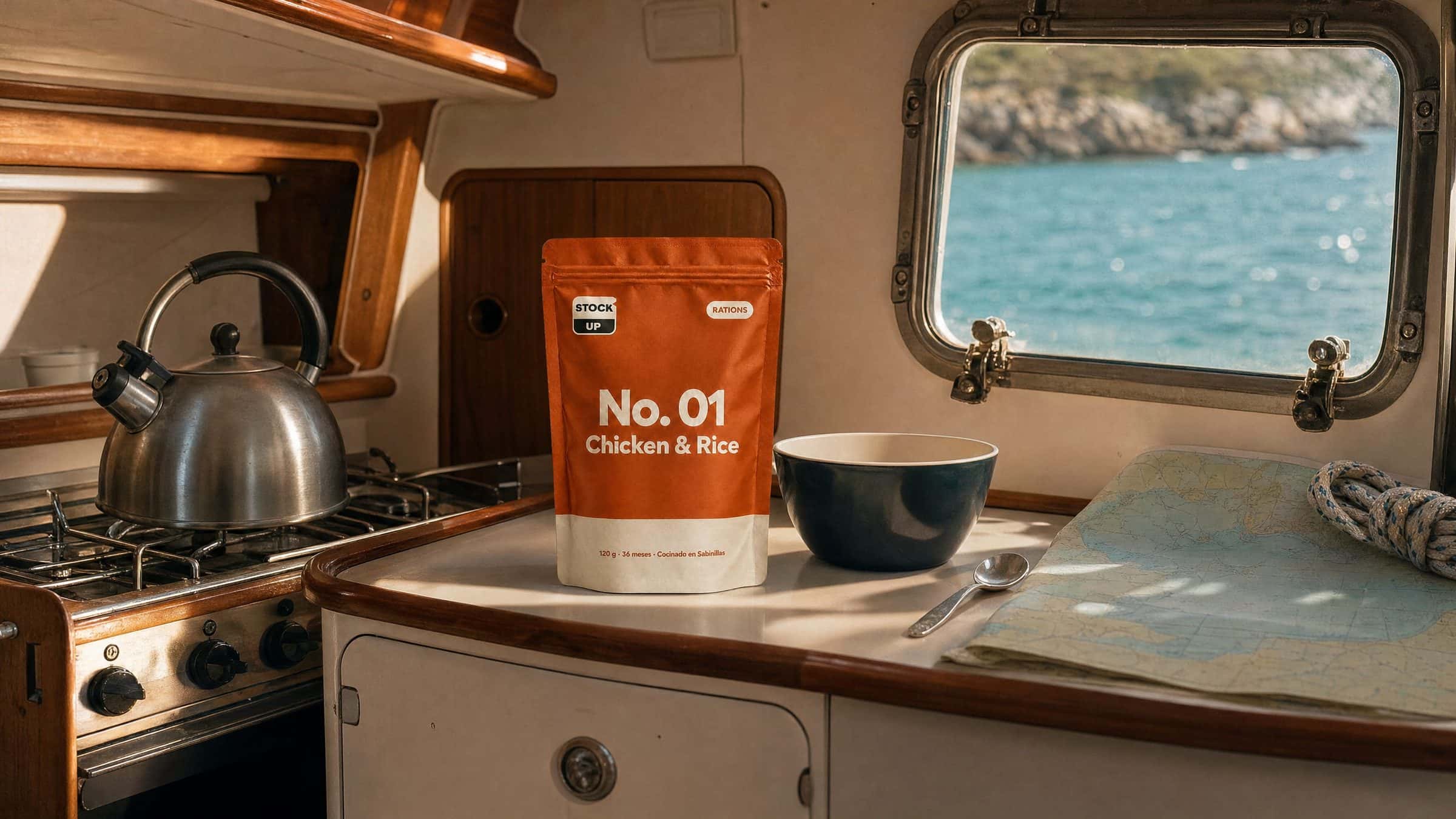
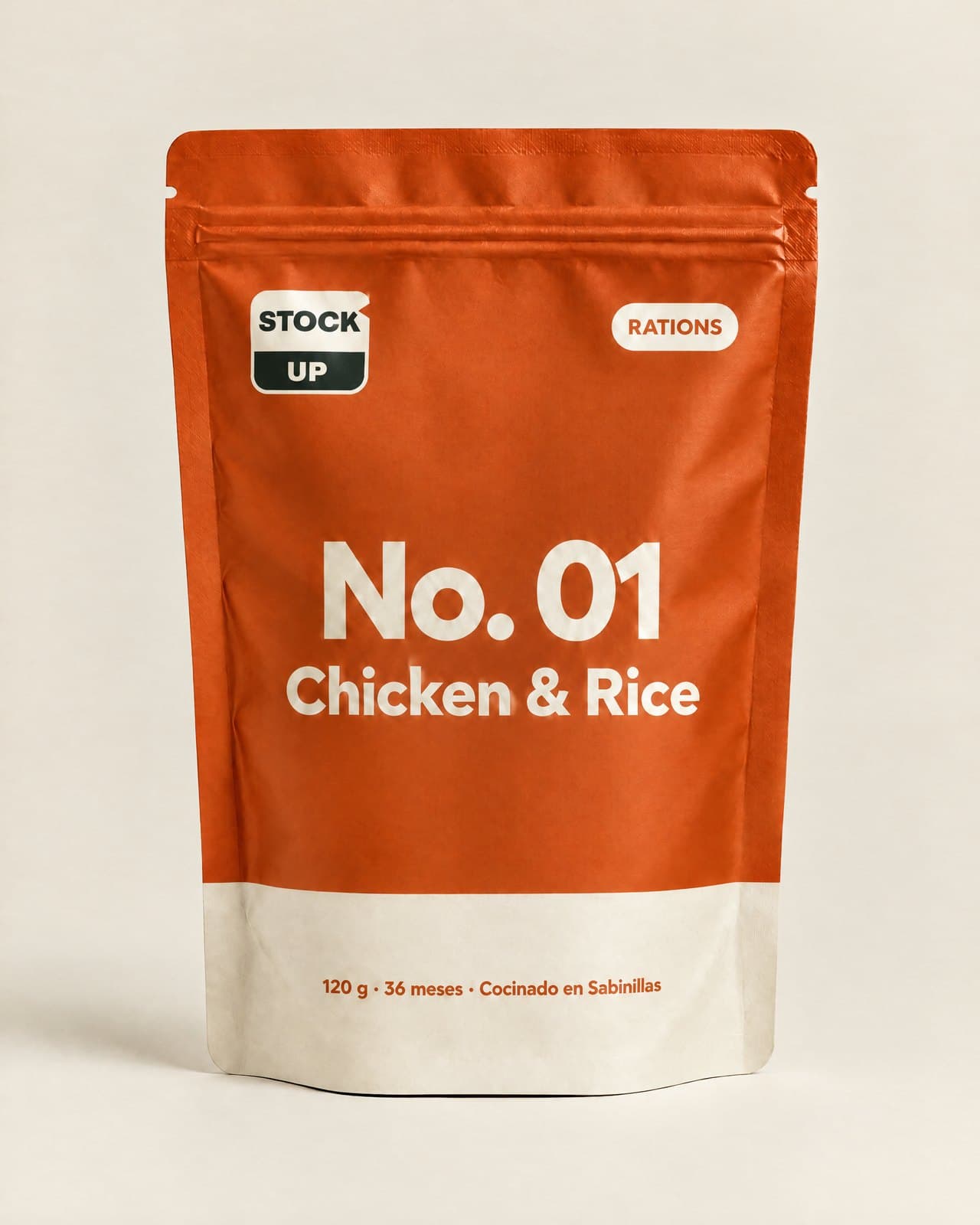
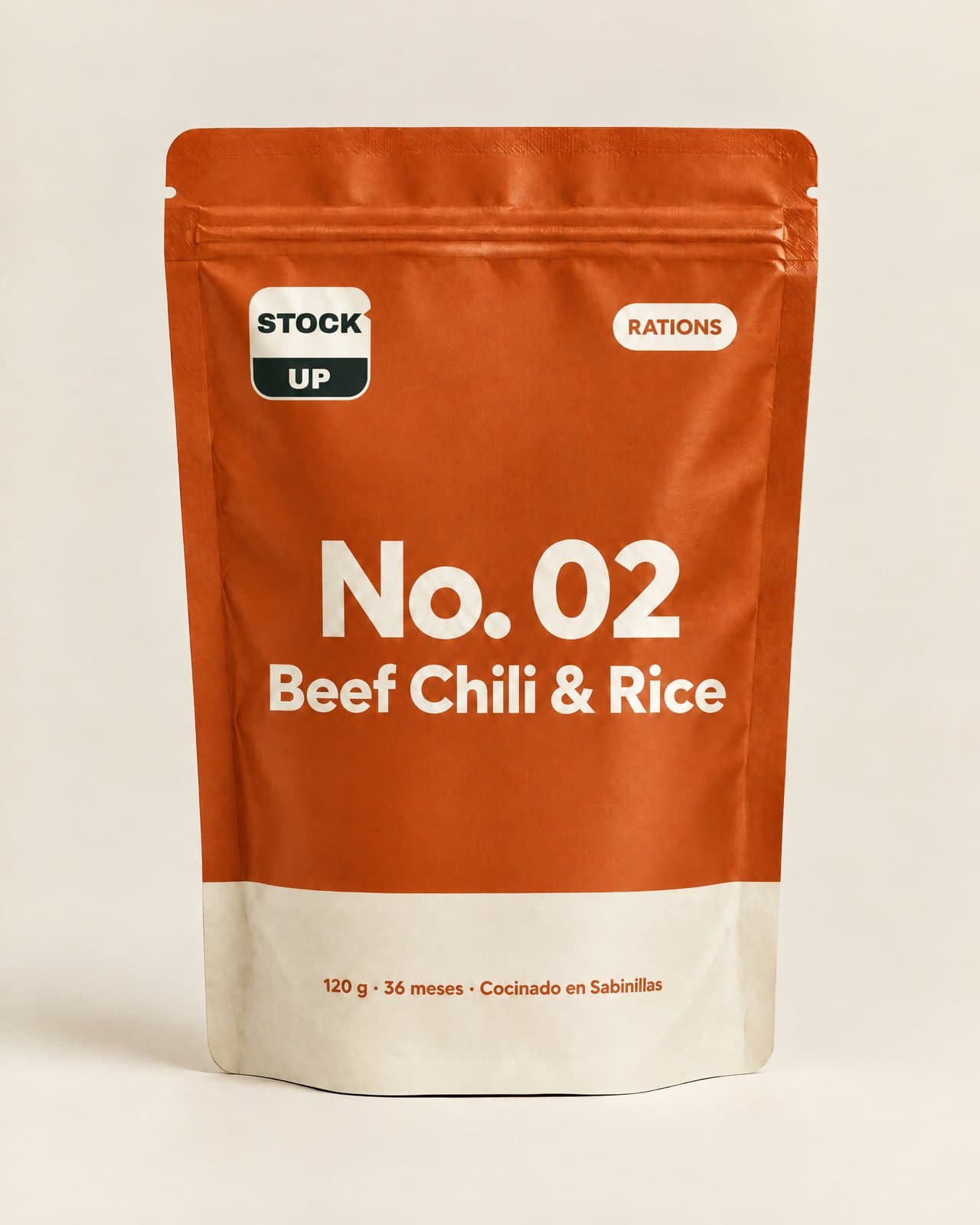
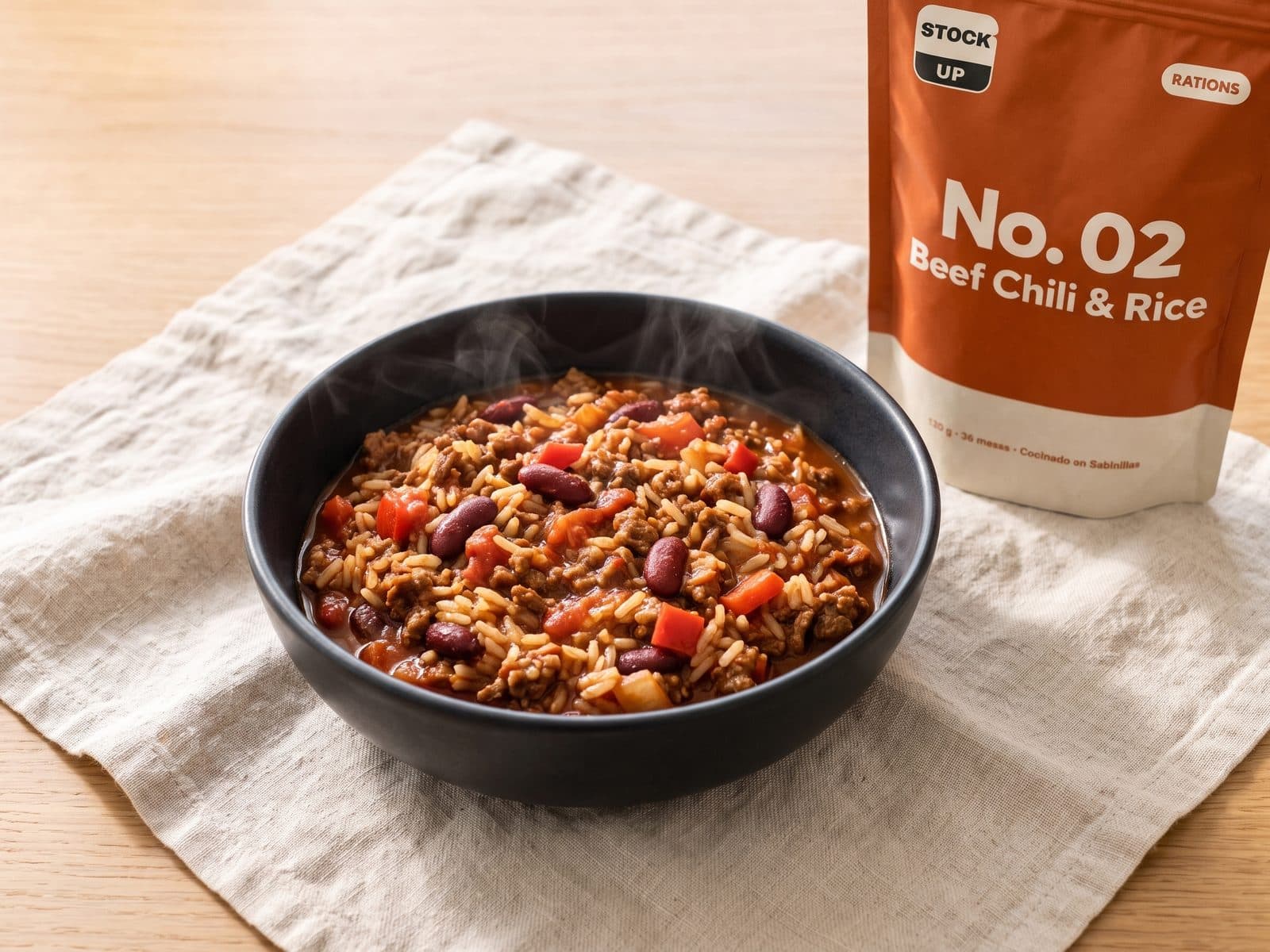
A boat provisioning list for one person over a sailing weekend fits in a cockpit locker: two porridges, four mains and 1,820 ml of tank water, hot or cold, to make them. Everything on it keeps without the galley fridge, and the night-watch meal is Rations No. 02 Beef Chili & Rice, 480 kcal in 120 g, ready eight minutes after the kettle boils, or in about 20 with cold water and no flame lit. The fresh food (bread, fruit, tomatoes and whatever cheese the port shop has) goes on top of the list and gets eaten first.
The list, item by item
This is the Sailing Weekend for €49, laid out by meal. Bought singly, the same six pouches cost €58.60.
| Pouch | Meal | Weight | Tank water |
|---|---|---|---|
| Porridge and fruit | Saturday breakfast | 90 g | 250 ml |
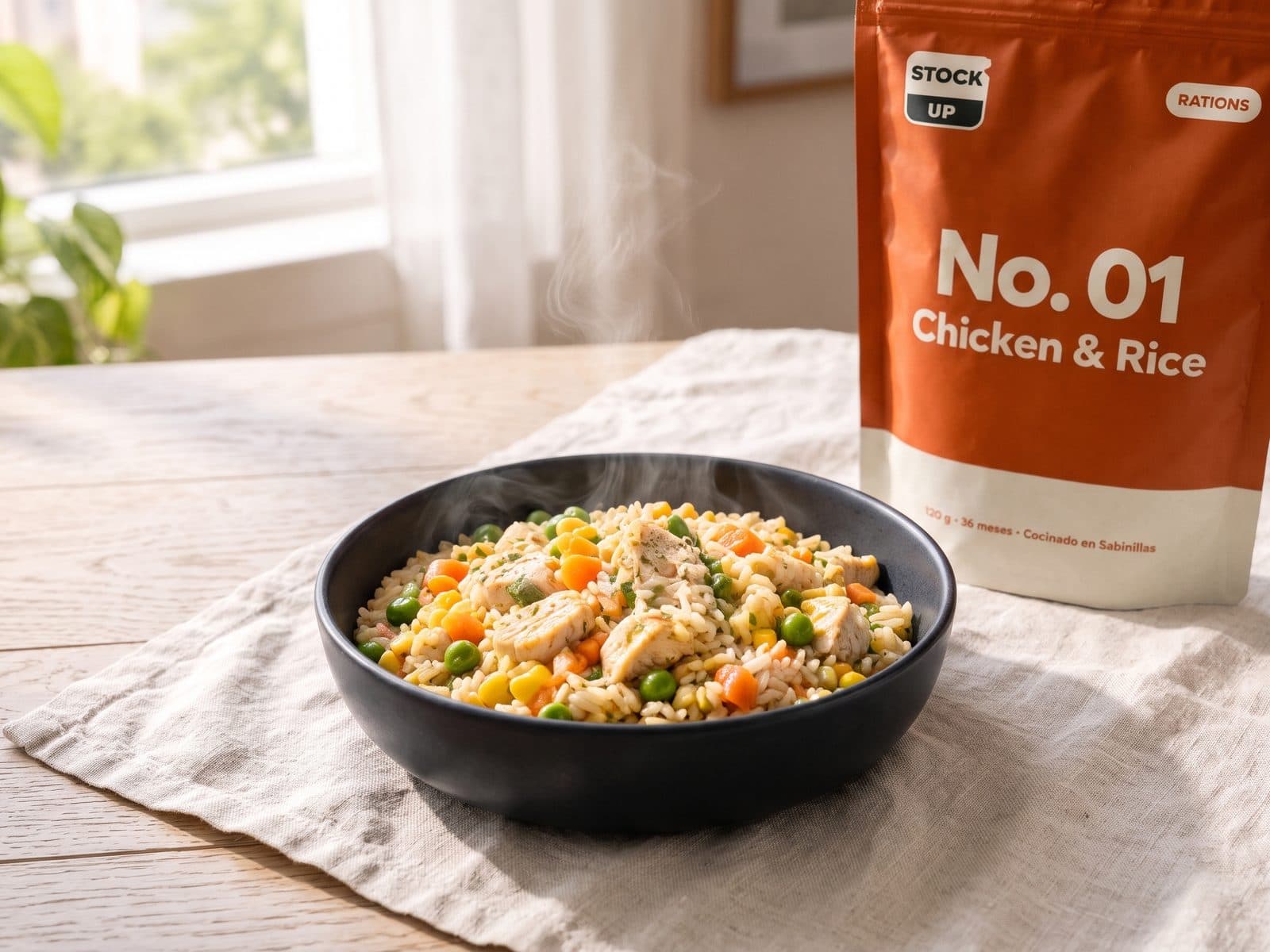
| Chicken and rice | Saturday lunch | 120 g | 330 ml |
| Beef chili and rice | Saturday dinner or the night watch | 120 g | 330 ml |
| Porridge and fruit | Sunday breakfast | 90 g | 250 ml |
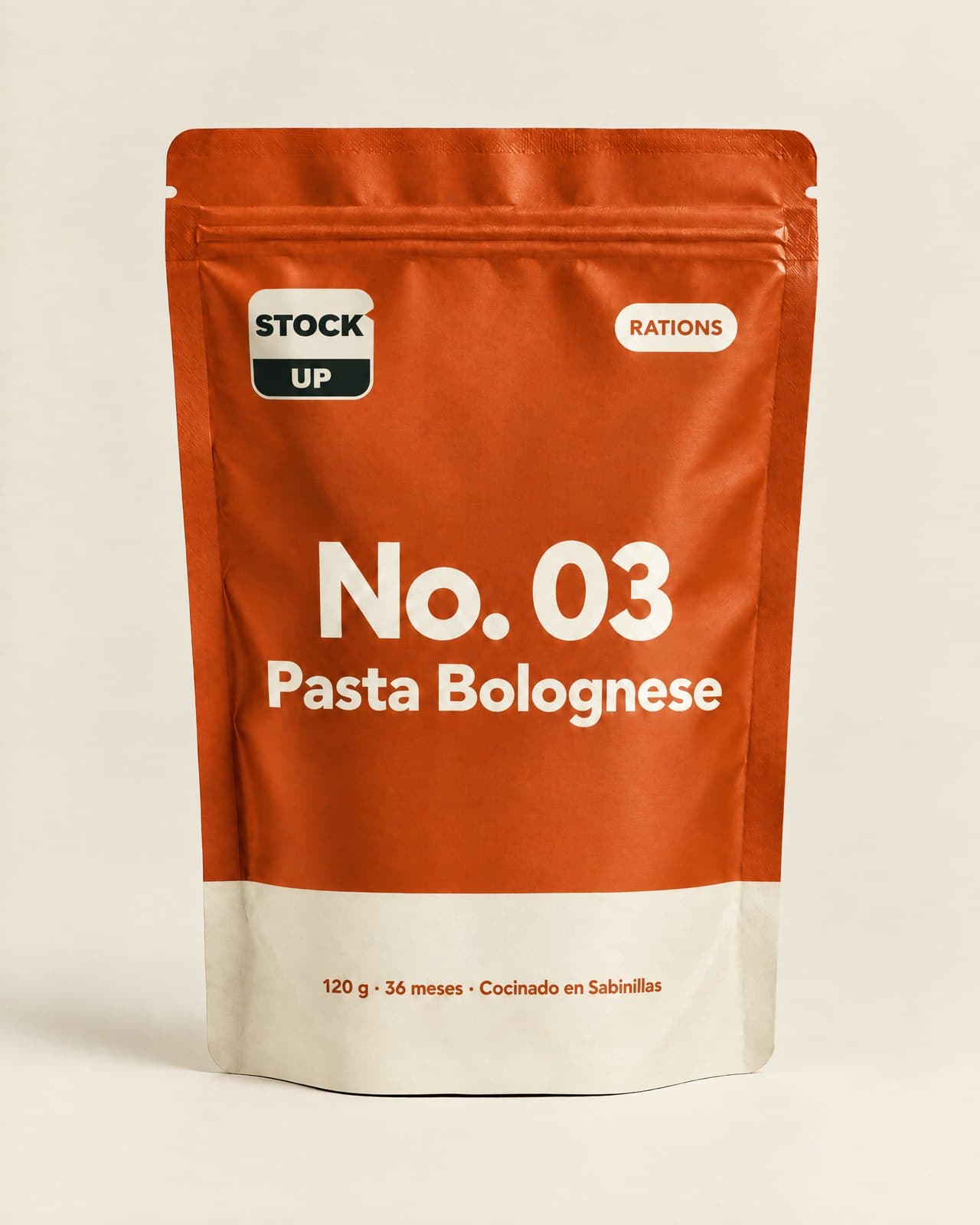
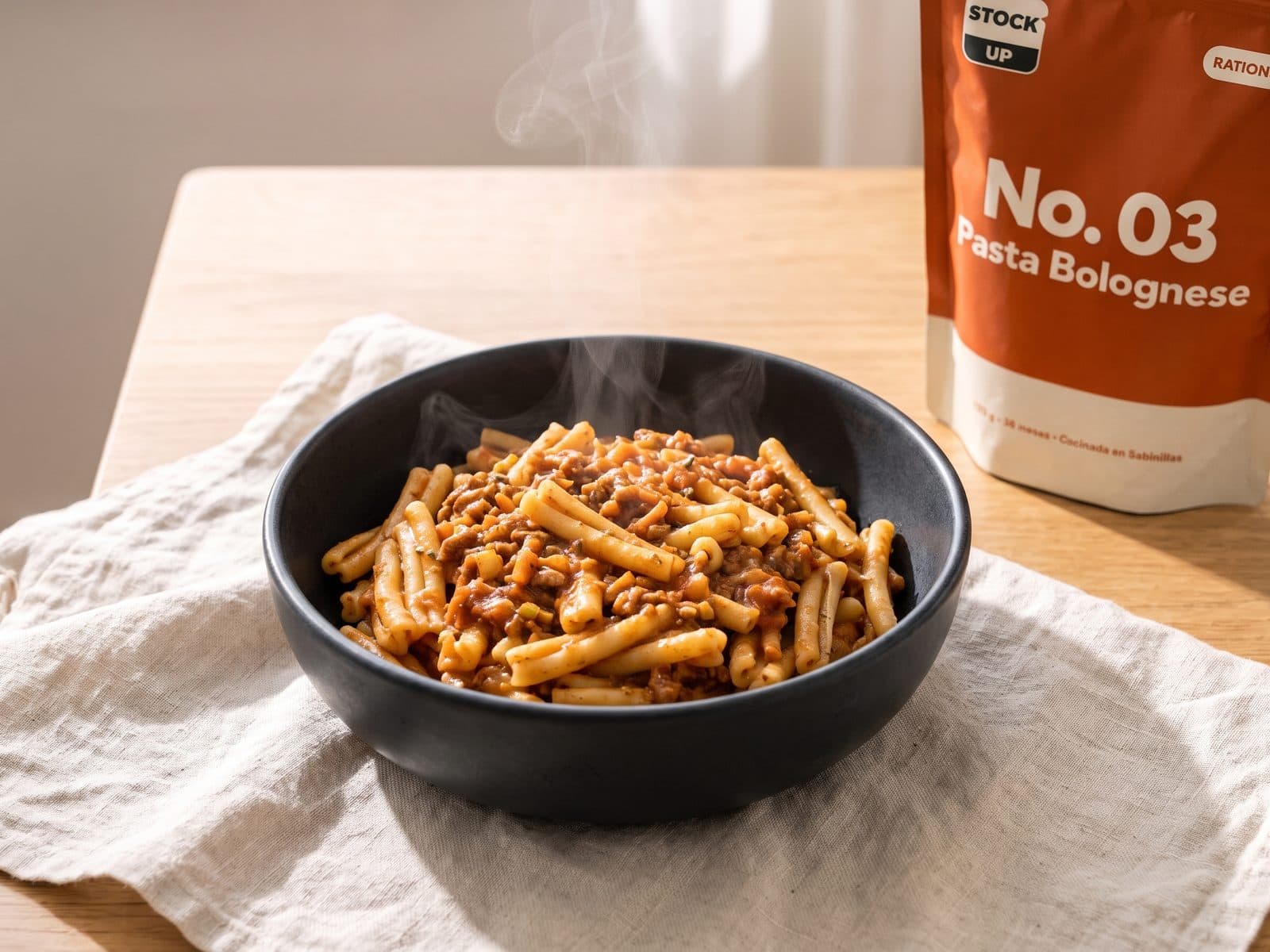
| Pasta bolognese | Sunday lunch | 120 g | 330 ml |
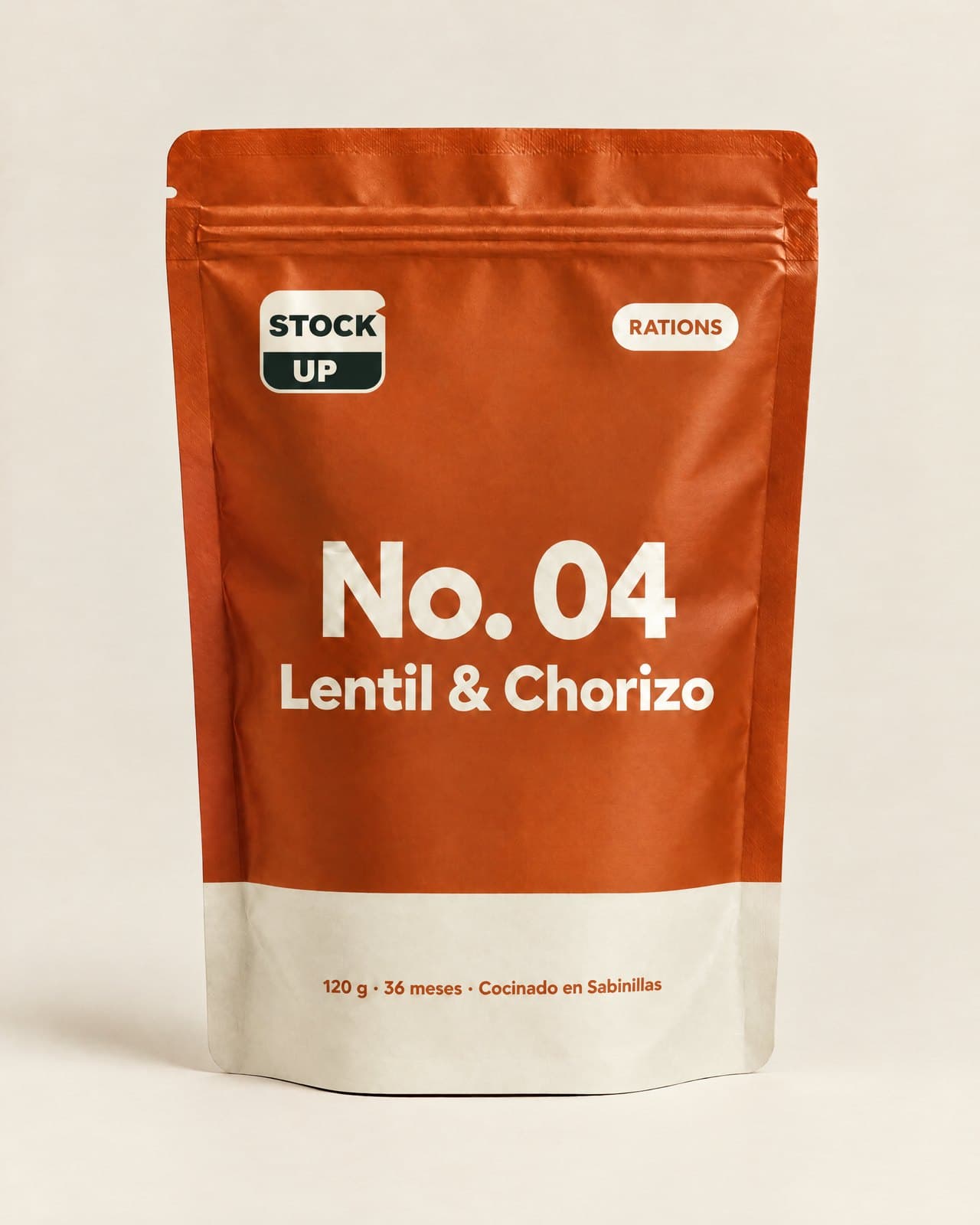
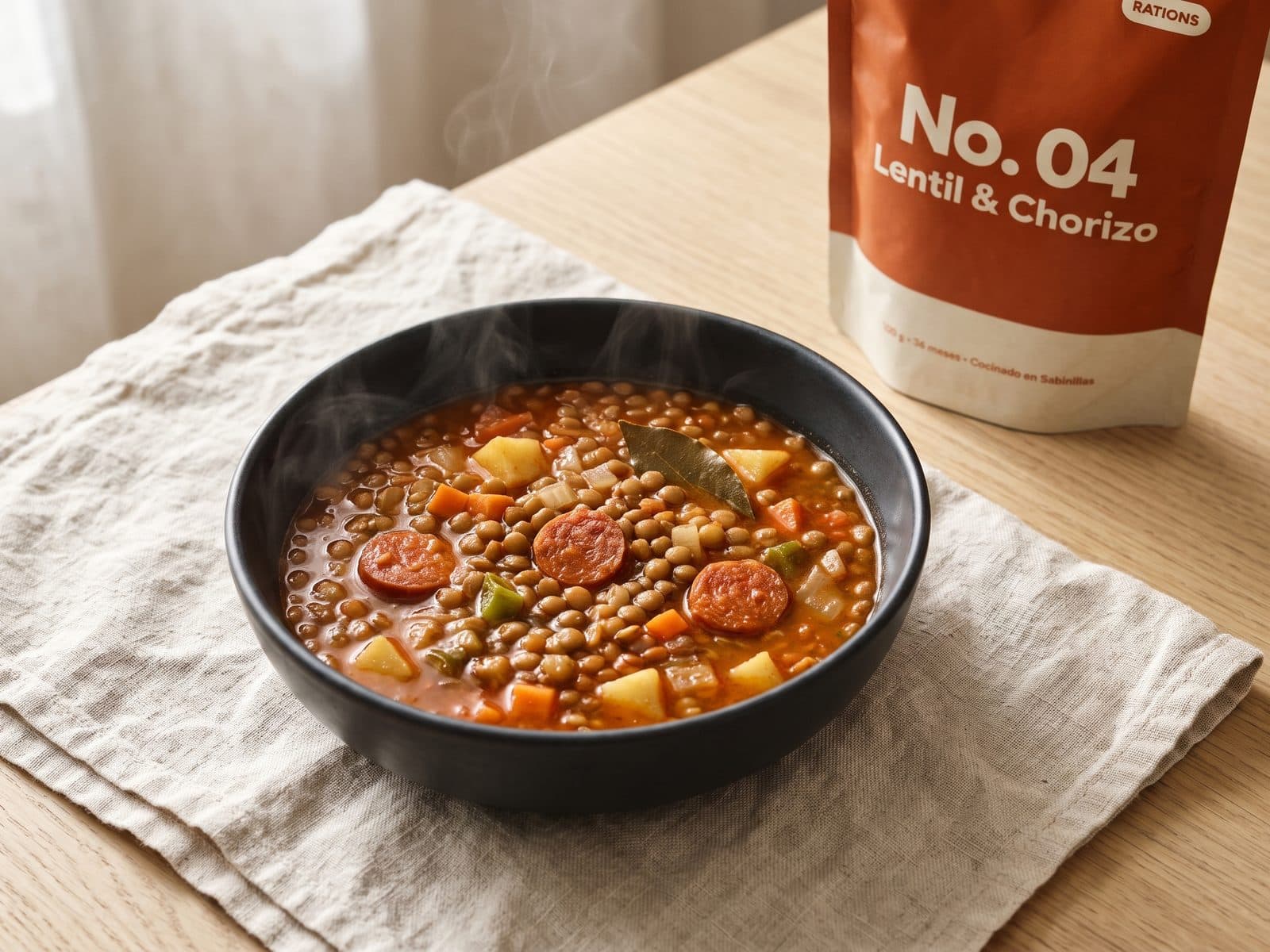
| Lentils and chorizo | Sunday dinner, or the next trip | 120 g | 330 ml |
| Total | Two days, one person | 660 g | 1,820 ml |
The six pouches add up to 2,640 kcal, about 1,320 a day before anything you buy ashore. That's deliberately a base. A day on deck with the sheets in your hands uses more, and the bread and fruit from port make up the difference.
If you're back early on Sunday, the last main stays in the locker for next time. Sealed, it keeps 36 months.
Tank water
On a weekend boat the tank serves the kettle, the washing-up and anyone who wants a shower, and every litre in a pan is a litre less for Sunday. The galley side is easy to count. Each main takes 330 ml and each porridge 250 ml, hot or cold, which comes to 1,820 ml for the whole weekend. That's the cooking water for one person, and drinking water comes on top, worked out for the crew and the heat.
A pasta lunch for two boils a litre or more of water and pours most of it down the sink. A pouch uses every millilitre it's given.
None of it is washing-up water. You eat from the pouch, so the only thing to rinse is a spoon.
Friday, in port
Friday evening is for dinner ashore, at Puerto de la Duquesa, Sotogrande, Estepona or wherever the boat lies. It's also the time to buy the fresh part of the list: a loaf, fruit that travels well (apples and oranges rather than peaches), tomatoes and a hard cheese that won't sweat in a warm cabin.
Fresh food goes first, on Saturday, while it's at its best. The pouches are the part of the list that can wait, so they go to the back of the locker and come forward as the fresh food runs out.
Saturday and Sunday on the plate
Saturday starts with Breakfast No. 01 Porridge & Fruit: oats with apple, banana and strawberry, 250 ml of water from the kettle and five minutes. It's the quickest pouch on board, so it suits a morning when the anchor has to come up early.
Lunch underway is the chicken and rice, 469 kcal and 45 g of protein in 120 g. The chili waits for the evening, or for the watch after midnight if you're on a passage. On Sunday the bolognese and the lentils with chorizo follow, and the lentils are the pouch to save if the forecast sends you home early. If the wind keeps everyone in the cockpit and away from the stove, the pouch takes cold water from a bottle instead, with no flame and about 20 minutes, and the bread and fruit from port go alongside.
The galley in a seaway
A big pan of water on a flame is a bad idea in a beam sea. A kettle with a lid and only the water you need is a better one.
- Heat the water in the kettle on the gimballed stove.
- Sit down. Open the pouch and take out the oxygen absorber.
- Wedge the pouch between your knees or in the galley sink, and pour.
- Stir to the bottom, zip it shut and wait eight minutes, or five for the porridge.
- Eat from the pouch with one hand. The other is for the boat.
A standing pouch is steady on a flat surface and less so on a heeling one, so keep a hand on it while it waits.
Cold water skips step 1 and the flame with it. Pour the same amount straight from a bottle or the tank, zip it shut and wait about 20 minutes. The time varies with the water and the recipe, and the meal comes out cooler and softer; eat it within a couple of hours.
On a night watch nobody wants to cook. Set the chili and a long spoon somewhere you can reach before your watch begins, and the warm pouch in the cockpit makes the hours after midnight easier to sit through.
Stowing it dry
The pouches need no cold, but they do want somewhere cool and dry, away from the engine and out of direct sun. A cockpit locker or a dry stowage space under a berth both work.
Pack them in a dry bag, because salt water and bilge water ruin labels. One bag for Saturday and one for Sunday saves anyone rummaging in the dark. If a bag of Sweets comes along for the cockpit, close its zip firmly after every handful: freeze-dried sweets take up damp sea air fast and lose their crunch.
Each pouch is packed only after its batch measured a water activity of 0.60 or lower, and that, with the oxygen absorber and the sealed pouch, is why the locker doesn't need to be cold.
Rubbish, and the crew
An empty pouch zips shut, so it doesn't drip or smell. Collect the empties in one bag and take them ashore in port, oxygen absorbers included. Nothing goes over the side.
The pack is for one person. A crew of four takes four packs, or mixes single Rations for the hungrier hands with a bag or two of sweets for the cockpit. If the weekend turns into three days, the 72 h Pack for €85 covers three days per person, with a bag of sweets each day. Planning the same food for a walk instead is covered in hiking food for the Sierra de las Nieves.
Before you cast off, count the pouches per person and per day, check the tank against the 1,820 ml, check the gas, and pack one long spoon each. Every main and the porridge are on the Rations page.