rationsPublished October 30, 2026
Cooking in a power cut: what to keep at home
When the socket goes, an induction hob, the kettle and the fridge go with it. What still cooks, which food to eat first and which food can wait.
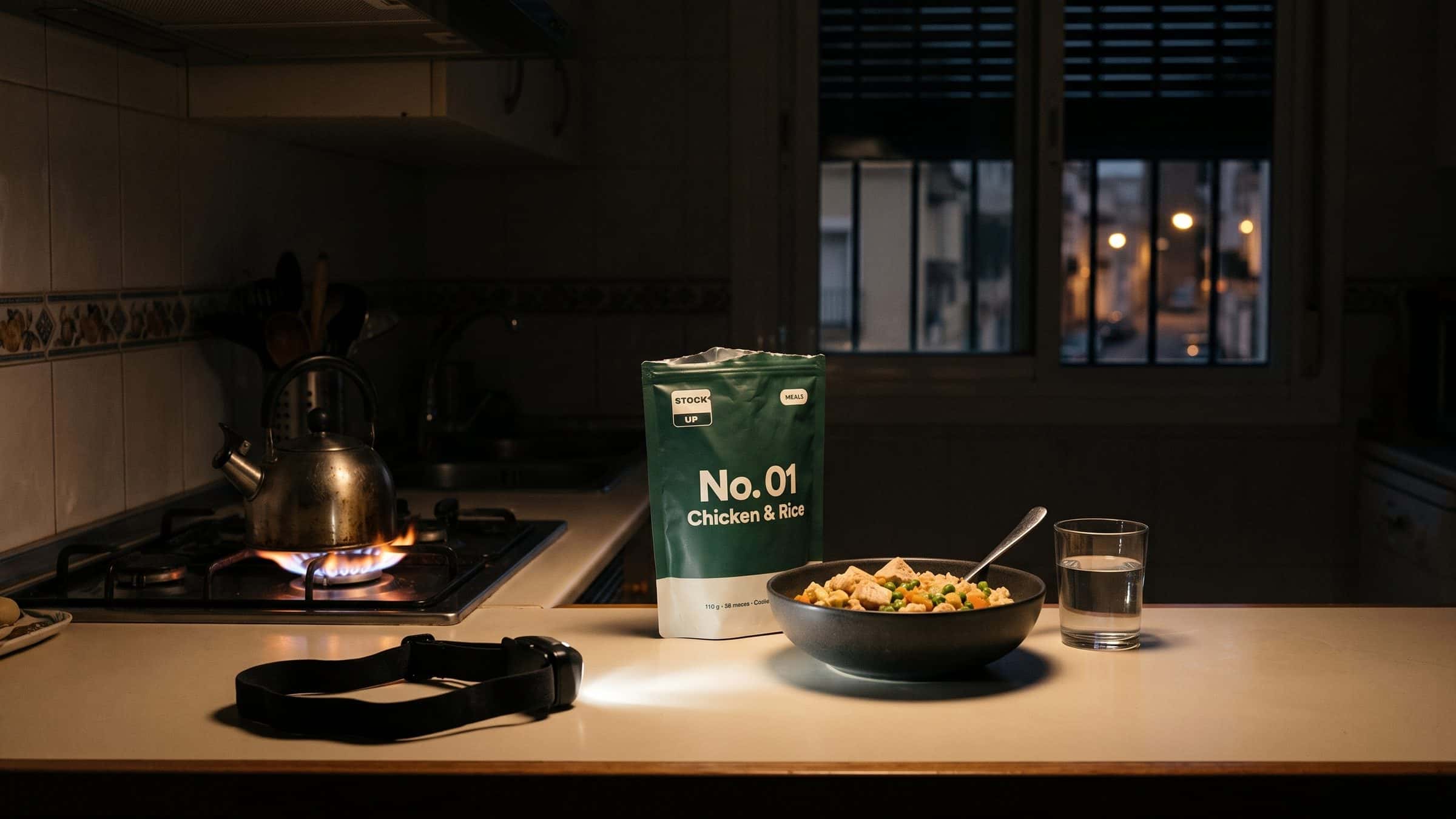
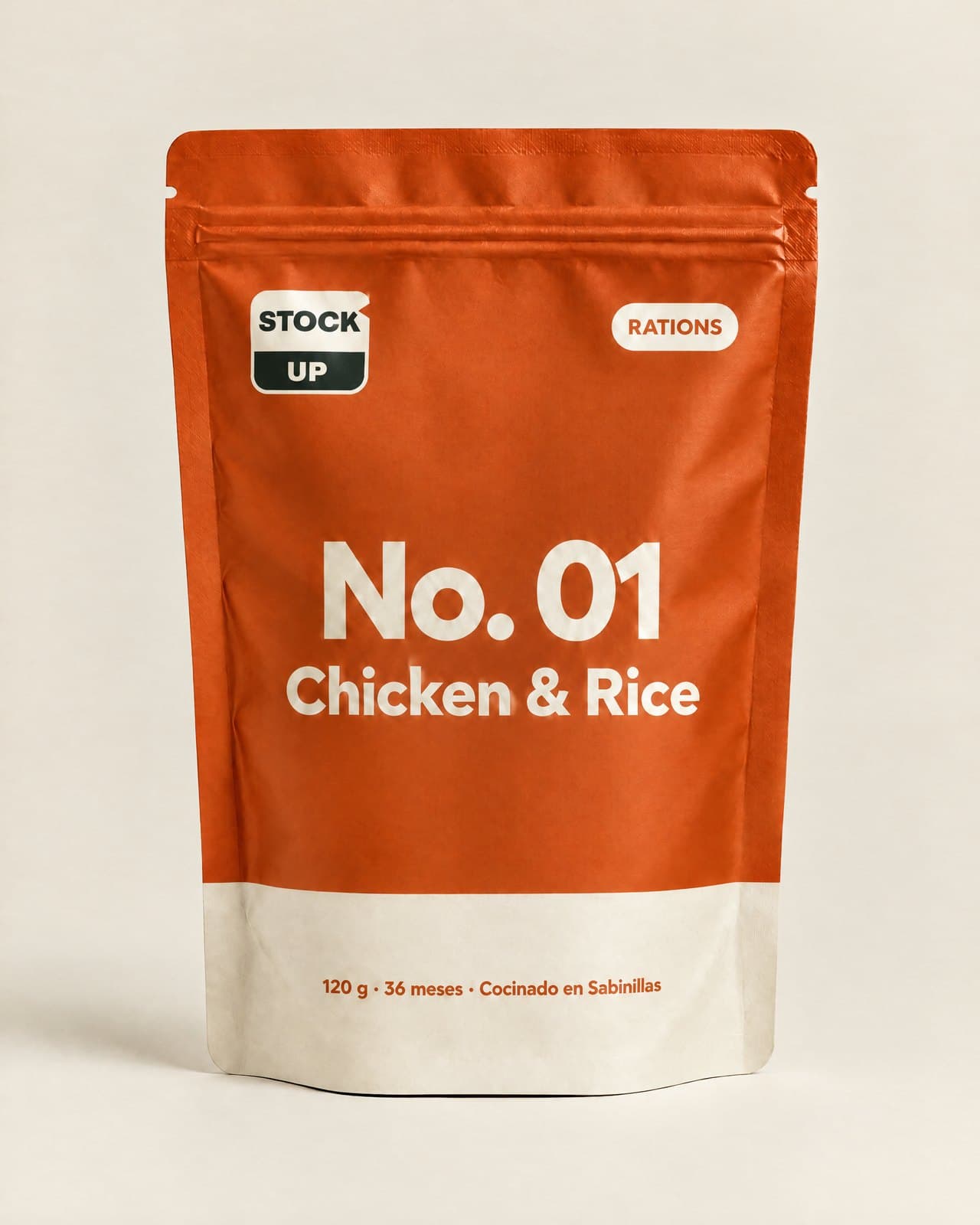
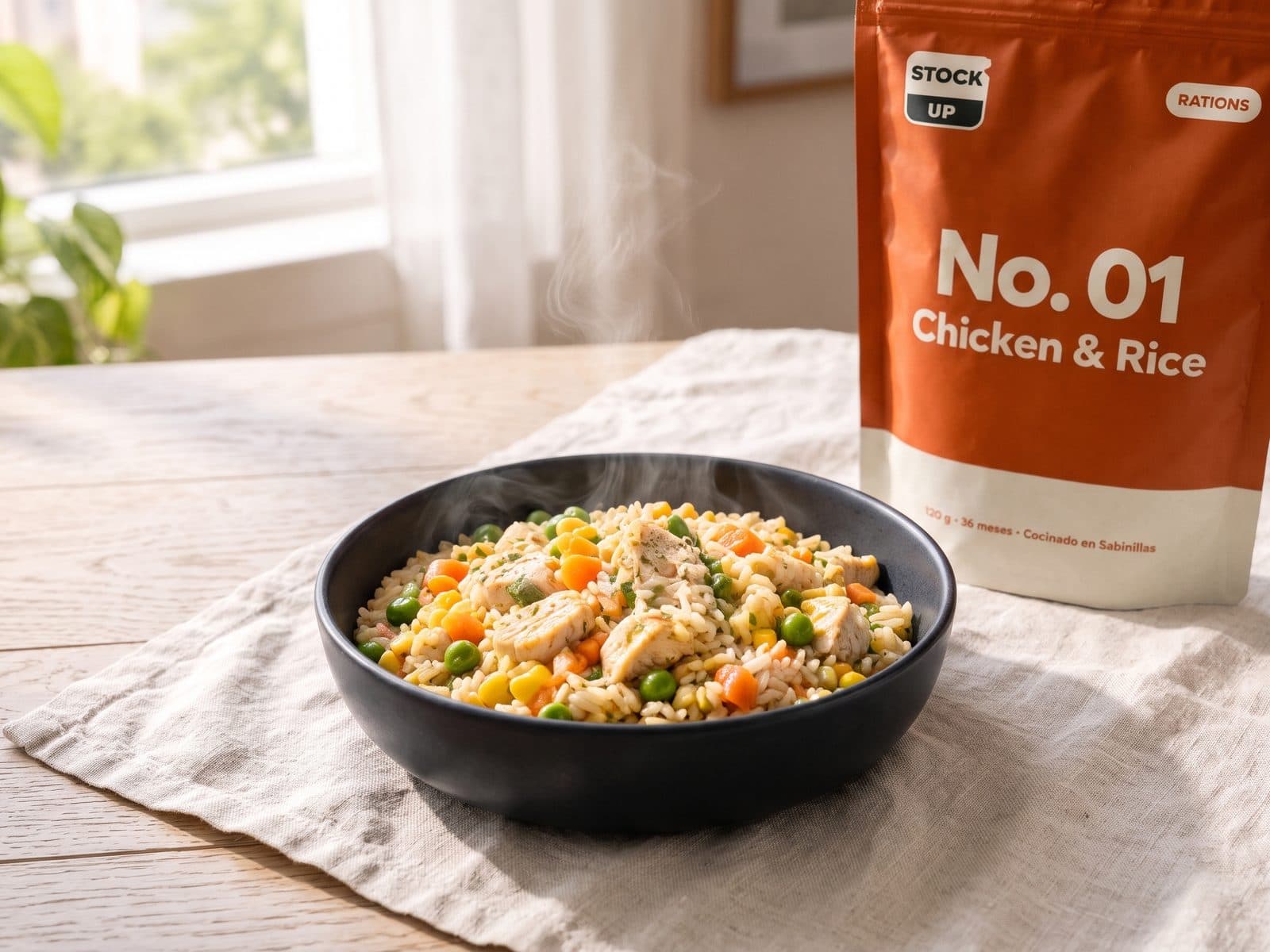
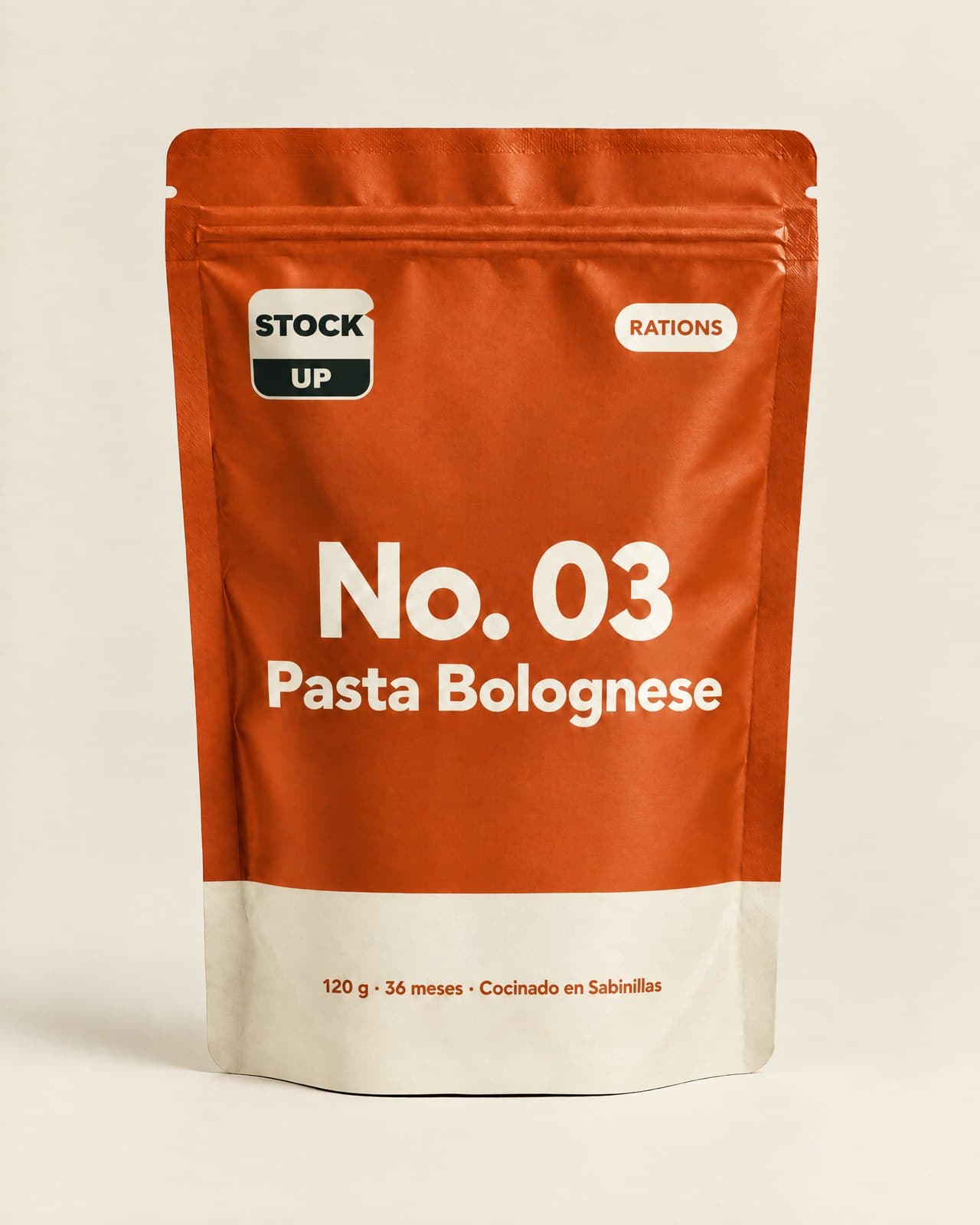
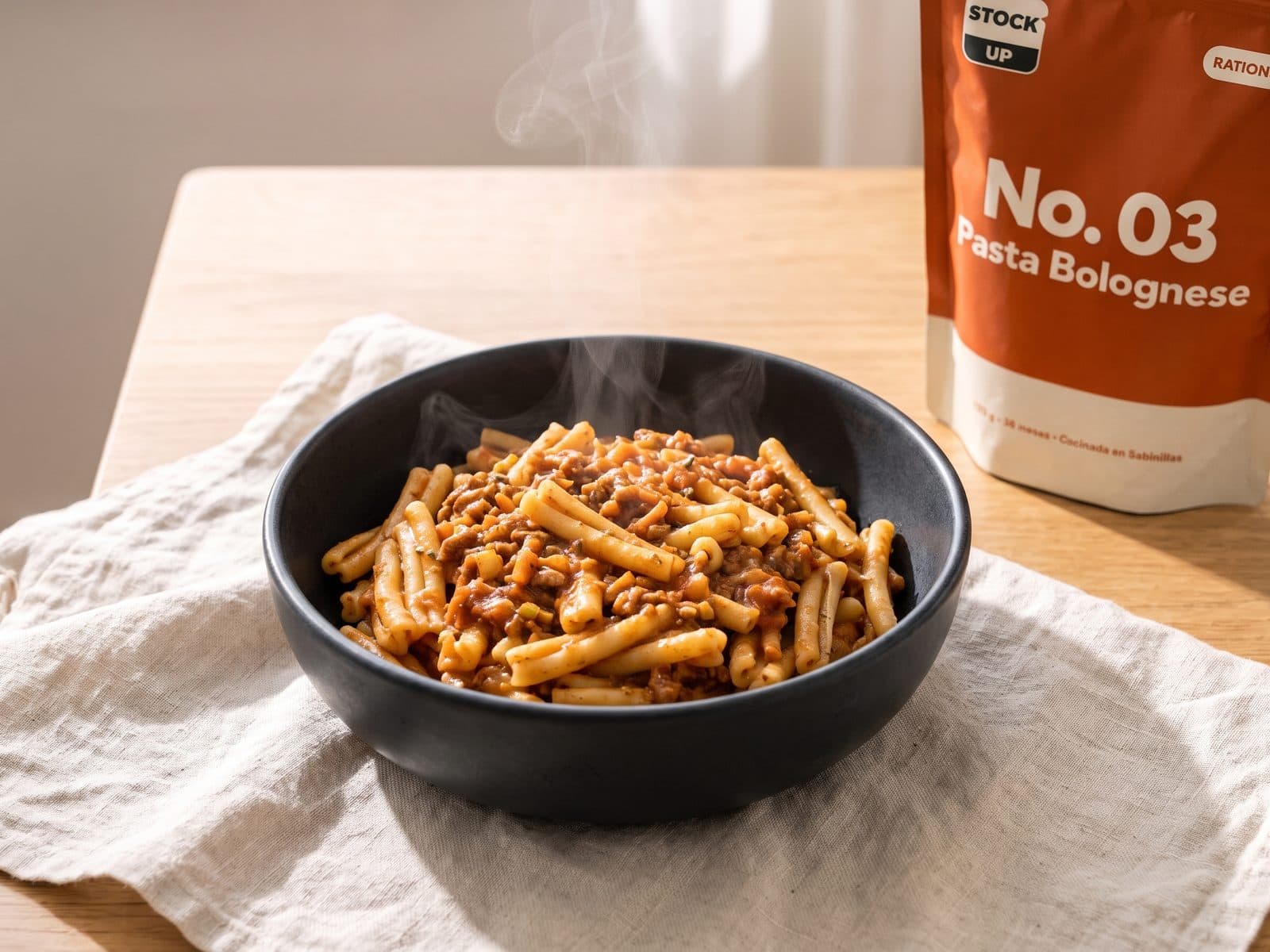
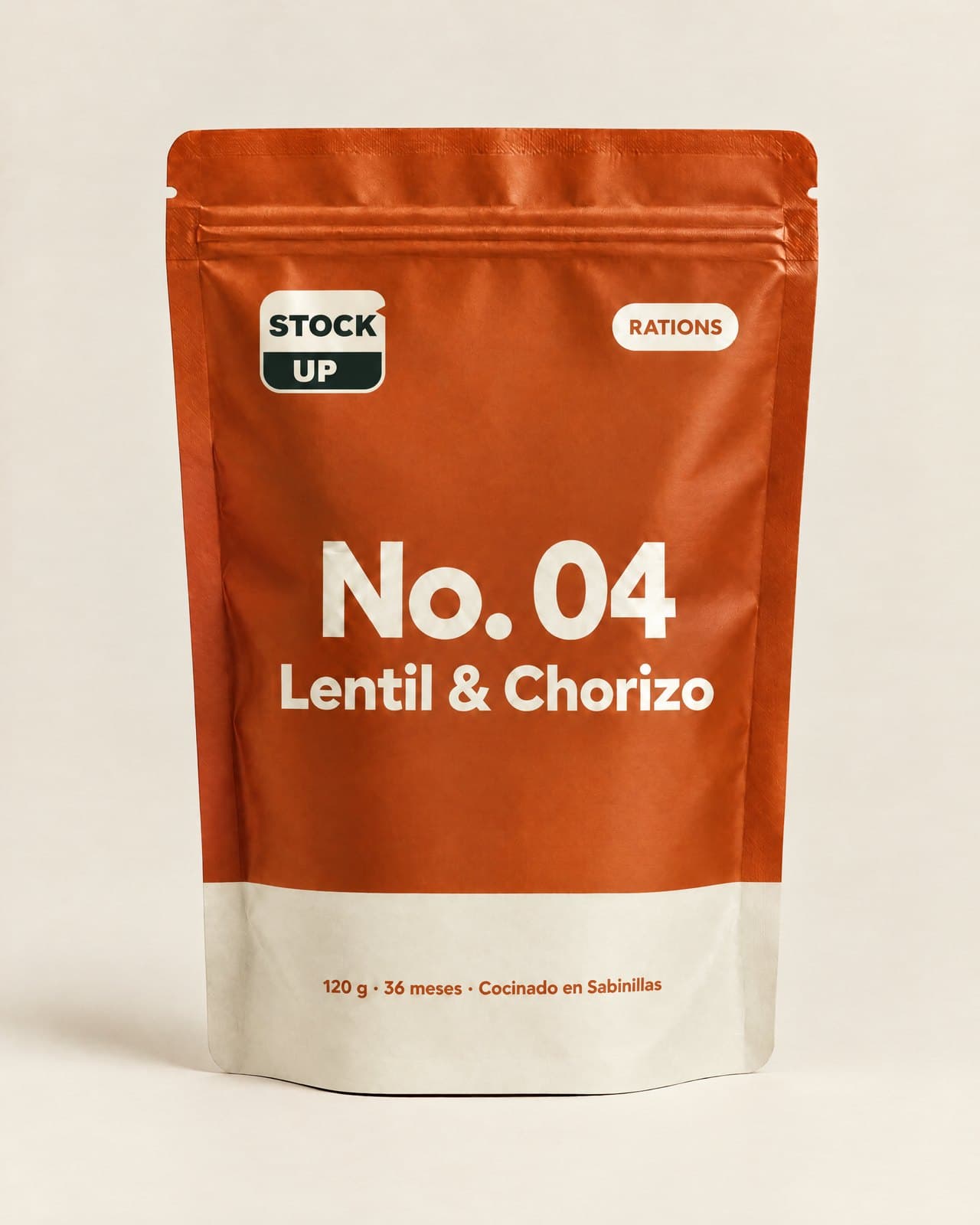
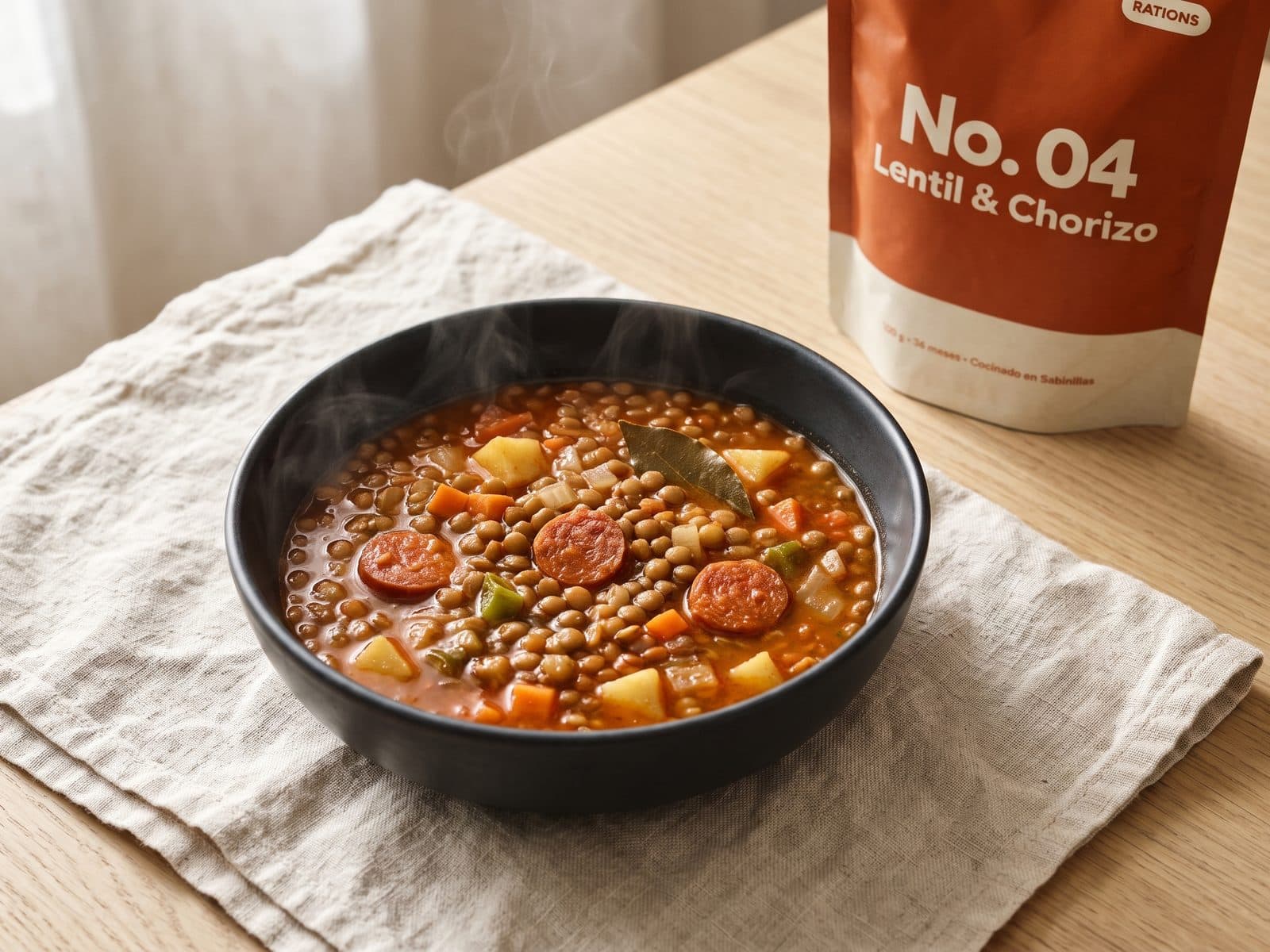
On 28 April 2025 the power went off across mainland Spain for most of a day, and every emergency food supply in the country met the same test: whether it could be eaten with the hob, the kettle and the microwave all dead. A gas flame turns a pouch such as Rations No. 01 Chicken & Rice into dinner with 330 ml of water and eight minutes. The same 330 ml cold from a bottle does it with no flame at all, in about 20 minutes. A cupboard full of pasta needs the gas either way.
What still makes heat
Start with what in the house can heat water once the socket is dead. Most of the modern kitchen can't.
| Heat source | In a power cut | What to know |
|---|---|---|
| Induction or ceramic hob | Off | Needs the socket for everything |
| Electric kettle, microwave, oven | Off | The same |
| Gas hob on a butane bottle or mains gas | Works | The electric spark won't fire, so light it with a lighter |
| Camping stove with a gas cartridge | Works | Use it by an open window, never in a closed room |
| Cold water from a bottle | Always there | Makes a pouch ready in about 20 minutes with no flame, cooler and softer |
If your flat already cooks on butane, you're covered as long as the bottle isn't empty. If it cooks on induction, a single-burner camping stove and two or three cartridges fit in a kitchen drawer and solve the whole problem.
Follow the stove maker's instructions, keep a window open while it burns and put it on a flat surface away from curtains. The safety rules on the box are the ones that count.
Eat the fridge first
A power cut sets the order of the meals for you. A fridge stays cold for a while with the door shut, and then it's just a cupboard. So the food that spoils fastest goes first:
- Fresh food from the fridge, opening the door as rarely as you can.
- Bread, fruit and anything else that keeps a day or two without cold.
- Tins and jars, many of which you can eat as they come.
- Freeze-dried pouches last, because sealed they keep 36 months and are in no hurry at all.
Water can go too. In a block of flats, the pumps that lift water to the upper floors run on electricity, so the taps on the top floors may slow or stop. Keep bottled water for cooking as well as for drinking.
That order is the point of an emergency food supply. It doesn't replace what you already have; it covers the days after the fridge and the bread have run out, when the shop on the corner may still be closed or unable to take a card.
Cooking a pouch on one burner
A camping stove has one burner, and the trick is to heat water once for several things. Hot, the pouches want water at 80–100 °C, so boil a full pan and share it out.
- Bring the water to the boil and take it off the flame.
- Open the pouch at the notch and take out the oxygen absorber. It isn't food.
- Pour in 330 ml for a main or 250 ml for a porridge, stir right to the bottom and zip the pouch shut.
- Wait eight minutes for a main and five for a porridge.
- Stir again and eat from the pouch, which stands on its base.
With no gas at all, use the same amounts of cold water from a bottle, stir, zip the pouch and wait about 20 minutes. The time varies with the water and the recipe. The meal comes out cool and softer, and it's cooked food, so eat it within a couple of hours.
There are no plates to wash, which matters on a day when the dishwasher is off and the water pressure may be low. A day of two mains and a porridge needs 910 ml of water, hot or cold, which is about one large pan. For two people, double it: 1,820 ml a day, one large pan heated twice.
Cook before dark if you can. A head torch leaves both hands free for the stove and the pouch, and in a long outage it's the one item in the kit that gets used at every meal. Keep the lighter in the same box as the stove, not in a drawer somewhere else in the flat.
Breakfast is the simplest pouch of the lot. Breakfast No. 01 Porridge & Fruit is oats with apple, banana and strawberry in 90 g, made with 250 ml of hot water in five minutes or cold water in about 20, and on a gas day it uses the same pan as the coffee.
Food that can wait
The foods that come through a power cut well share three properties: they need no cold, they need little or no cooking, and they keep long enough to forget about.
Tins pass all three and are cheap, and a tin of chickpeas or tuna eaten cold makes a good meal on day one. Dry pasta and rice keep for ages, but they need a pot, a lot of water and ten or more minutes of gas, which is exactly what's scarce. Freeze-dried meals need a little water, hot for a few minutes or cold for about 20 with no gas at all, and each batch is packed only once its water activity reads 0.60 or lower, which is what lets a cooked meal sit in a cupboard for three years.
The flip side of a long date is that the box gets forgotten. Keep everything in one box with the torch on top, because the torch is what you'll be looking for when the lights go. Write the earliest best-before date on the lid, check it once a year with the torch batteries, and eat anything close to its date on an ordinary weekday.
The box, packed once
The full list for three days, with drinking water, light, a radio, cash and medicines, is in what goes in a 72-hour kit. The food part of it comes ready-made as the 72 h Pack for €85: six mains, three porridges and three bags of sweets, about 1,490 kcal a day for one person. The sweets need no water at all, and when the gas runs out, the mains and porridges still work with cold water.
For a shorter outage, the Sailing Weekend at €49 holds four mains and two porridges, two days for one person, and it works in a kitchen cupboard as well as on a boat. Single pouches from the Rations range cost €10.90 a main and €7.50 a porridge. Sealed, the mains keep 36 months and come with the lot number and best-before date printed on the base.