Backpacking food by calorie density: kcal per 100 g and per ounce
Olive oil carries 884 kcal per 100 grams and dried figs 249, so the same day of food can weigh half a kilo or well over one. REI draws the line for trail food at 100 calories an ounce, and calls 125 even better.
By STOCKUP · Updated
In this guide (5)
The yardstick: kcal per 100 g, or per ounce
Calorie density is the energy in a fixed weight of food: kcal per 100 g on most of the world’s labels, calories per ounce on American gear lists. REI, the US outdoor co-op, draws the line like this on its ultralight planning page: “at least 100 calories per ounce—125 calories or more per ounce is even better”.1
- Per 100 g: REI’s floor of 100 calories per ounce1
- 353kcal
- Per 100 g: REI’s better line of 125 per ounce1
- 441kcal
How much of it you need depends on the day. REI puts a backpacking day at about 2,500 to 4,500 calories a person, which it reckons as about 0.7 to 1.1 kg (1½ to 2½ lb) of food;2 its ultralight page aims for 0.7 to 0.9 kg (1½ to 2 lb) for the same calories.1 REI’s own example of the spread: 16 km (10 miles) of hard walking with 1,200 m (4,000 ft) of climbing burns far more than a few flat miles.2 France’s mountaineering federation puts a summer day in the hills at 4,000 kcal, for a walker of 65–70 kg carrying 5–8 kg.3
Thirty foods, densest first
Every figure in these tables comes from one database, USDA FoodData Central, and the ounce column is the same figure divided by 3.527. Keep to one database when you build your own list: the national tables can disagree by a quarter on the same food. Dried dates come out at 282 kcal per 100 g in the USDA’s figures and 356 in Germany’s.45
| kcal per 100 g | kcal per ounce | Note | |
|---|---|---|---|
| Olive oil | 884 | 251 | Needs a bottle that doesn’t leak |
| Macadamia nuts | 718 | 204 | Dry roasted, unsalted |
| Walnuts | 654 | 185 | English walnuts |
| Peanut butter | 598 | 170 | Smooth, unsalted |
| Peanuts | 587 | 166 | Dry roasted, unsalted |
| Almonds | 579 | 164 | Plain |
Fats and nuts, per USDA FoodData Central; kcal per ounce worked out from the 100 g figure4
Olive oil
- kcal per 100 g
- 884
- kcal per ounce
- 251
- Note
- Needs a bottle that doesn’t leak
Macadamia nuts
- kcal per 100 g
- 718
- kcal per ounce
- 204
- Note
- Dry roasted, unsalted
Walnuts
- kcal per 100 g
- 654
- kcal per ounce
- 185
- Note
- English walnuts
Peanut butter
- kcal per 100 g
- 598
- kcal per ounce
- 170
- Note
- Smooth, unsalted
Peanuts
- kcal per 100 g
- 587
- kcal per ounce
- 166
- Note
- Dry roasted, unsalted
Almonds
- kcal per 100 g
- 579
- kcal per ounce
- 164
- Note
- Plain
Every one of them clears REI’s better line with room to spare, and none needs water or a stove. Oil is the extreme: a spoonful over dinner adds more energy for its weight than anything else on these pages.
| kcal per 100 g | kcal per ounce | Note | |
|---|---|---|---|
| Instant noodles (ramen) | 440 | 125 | The dry block; needs water |
| White rice, instant | 380 | 108 | Needs water |
| Rolled oats | 379 | 107 | Needs water |
| Couscous | 376 | 107 | Needs water |
| Instant mashed potato flakes | 354 | 100 | Needs water |
| Flour tortilla | 297 | 84 | Eaten as it is; a third of it is water |
Grains and instant starches, dry weight, per USDA FoodData Central4
Instant noodles (ramen)
- kcal per 100 g
- 440
- kcal per ounce
- 125
- Note
- The dry block; needs water
White rice, instant
- kcal per 100 g
- 380
- kcal per ounce
- 108
- Note
- Needs water
Rolled oats
- kcal per 100 g
- 379
- kcal per ounce
- 107
- Note
- Needs water
Couscous
- kcal per 100 g
- 376
- kcal per ounce
- 107
- Note
- Needs water
Instant mashed potato flakes
- kcal per 100 g
- 354
- kcal per ounce
- 100
- Note
- Needs water
Flour tortilla
- kcal per 100 g
- 297
- kcal per ounce
- 84
- Note
- Eaten as it is; a third of it is water
Dry noodles sit exactly on the 125 line. Oats, couscous, instant rice and potato flakes land at 100–108 kcal per ounce: over REI’s floor, under its better line, and every one of them needs water before you can eat it.
| kcal per 100 g | kcal per ounce | Note | |
|---|---|---|---|
| Banana chips | 519 | 147 | Fried in oil |
| Apple, low-moisture | 346 | 98 | Very dry: 3 g of water in 100 g |
| Mango, dried | 319 | 90 | Sweetened |
| Raisins | 299 | 85 | 15 g of water in 100 g |
| Dates | 282 | 80 | 21 g of water in 100 g |
| Figs, dried | 249 | 71 | 30 g of water in 100 g |
Dried fruit, per USDA FoodData Central4
Banana chips
- kcal per 100 g
- 519
- kcal per ounce
- 147
- Note
- Fried in oil
Apple, low-moisture
- kcal per 100 g
- 346
- kcal per ounce
- 98
- Note
- Very dry: 3 g of water in 100 g
Mango, dried
- kcal per 100 g
- 319
- kcal per ounce
- 90
- Note
- Sweetened
Raisins
- kcal per 100 g
- 299
- kcal per ounce
- 85
- Note
- 15 g of water in 100 g
Dates
- kcal per 100 g
- 282
- kcal per ounce
- 80
- Note
- 21 g of water in 100 g
Figs, dried
- kcal per 100 g
- 249
- kcal per ounce
- 71
- Note
- 30 g of water in 100 g
Only the fried banana chips clear the line. REI’s own list of dense trail foods includes dried mango and apples;1 on the USDA’s figures both fall short of its floor, at 90 and 98 kcal per ounce: the mango because it still holds 17 g of water in 100 g, the apple because fruit has almost no fat to lift the figure. That low-moisture apple, with 3 g of water in 100 g, is the nearest the USDA tables come to freeze-dried fruit.
| kcal per 100 g | kcal per ounce | Note | |
|---|---|---|---|
| Beef jerky | 410 | 116 | 23 g of water in 100 g |
| Salami, dry | 407 | 115 | Pork |
| Cheddar | 403 | 114 | 37 g of water in 100 g |
| Parmesan | 392 | 111 | Hard |
| Sardines in oil | 208 | 59 | Drained; the oil is extra |
| Tuna in oil | 198 | 56 | Drained; the oil is extra |
Cheese, cured meat and fish, per USDA FoodData Central4
Beef jerky
- kcal per 100 g
- 410
- kcal per ounce
- 116
- Note
- 23 g of water in 100 g
Salami, dry
- kcal per 100 g
- 407
- kcal per ounce
- 115
- Note
- Pork
Cheddar
- kcal per 100 g
- 403
- kcal per ounce
- 114
- Note
- 37 g of water in 100 g
Parmesan
- kcal per 100 g
- 392
- kcal per ounce
- 111
- Note
- Hard
Sardines in oil
- kcal per 100 g
- 208
- kcal per ounce
- 59
- Note
- Drained; the oil is extra
Tuna in oil
- kcal per 100 g
- 198
- kcal per ounce
- 56
- Note
- Drained; the oil is extra
Hard cheese, salami and jerky sit together at about 400. Fish in oil drops to half that, because 60% of it is water, and the figures are for the drained fish: the oil in the tin or pouch adds energy and weight on top.
| kcal per 100 g | kcal per ounce | Note | |
|---|---|---|---|
| Dark chocolate, 70–85% | 598 | 170 | Melts in heat |
| Milk chocolate | 535 | 152 | Melts in heat |
| Whole milk powder | 496 | 141 | Needs water |
| Trail mix with chocolate chips | 484 | 137 | Salted nuts and seeds |
| Granola bar, hard | 471 | 134 | Plain |
| Gummy sweets | 396 | 112 | Gumdrops |
Sweets, bars and milk powder, per USDA FoodData Central4
Dark chocolate, 70–85%
- kcal per 100 g
- 598
- kcal per ounce
- 170
- Note
- Melts in heat
Milk chocolate
- kcal per 100 g
- 535
- kcal per ounce
- 152
- Note
- Melts in heat
Whole milk powder
- kcal per 100 g
- 496
- kcal per ounce
- 141
- Note
- Needs water
Trail mix with chocolate chips
- kcal per 100 g
- 484
- kcal per ounce
- 137
- Note
- Salted nuts and seeds
Granola bar, hard
- kcal per 100 g
- 471
- kcal per ounce
- 134
- Note
- Plain
Gummy sweets
- kcal per 100 g
- 396
- kcal per ounce
- 112
- Note
- Gumdrops
Grams a day: the sum
Divide the day’s kcal by what 100 g of your food carries, and multiply by 100. Packaging comes on top of every figure here.
A worked day from the tables: 100 g of oats for breakfast, 125 g of couscous and a 100 g block of noodles for the two hot meals, 100 g each of peanut butter, cheddar, dark chocolate and dried mango, and 75 g of salami. That is 800 g (1.8 lb) and about 3,510 kcal, or 439 kcal per 100 g: just under REI’s better line.4 Five days of it come to 4 kg (8.8 lb) before packaging. Swap the mango for macadamias and the day crosses the line, at 489; swap the noodles for a tortilla and it falls to 421.
What density leaves out: water, a stove, heat
The number is a weight figure and nothing more. It says what a gram carries, not whether a week of it is a menu you’ll want to eat, and it says nothing about protein, salt or fibre; what drying does to those is in what freeze-drying does to nutrients.
Water. Every starch in the second table and the milk powder need water on top of their own weight, and a litre of water weighs a kilo. Count that water as part of the load, unless there’s a stream on the way that you can treat.
A stove, or time. Noodles and couscous soften in cold water; pasta takes hours. The times, and whose they are, are in cold soaking.
Heat. Both chocolates melt, and so does the trail mix that carries chips. In summer the last table is the one to rethink.
For a full trip plan with water stops and resupplies, food for a multi-day hike takes the same sum over three, five and seven days.
Our meals, by the same measure
A cooked meal with the water taken out carries about what the dry starches carry, and it needs its water back. Per 100 g as sold, Chicken & Rice carries 417 kcal, Porridge & Fruit 379 kcal, and a bag of Cherimoya 364 kcal, eaten dry as it comes.
| Pouch | Energy per 100 g | Net weight | Energy | Water |
|---|---|---|---|---|
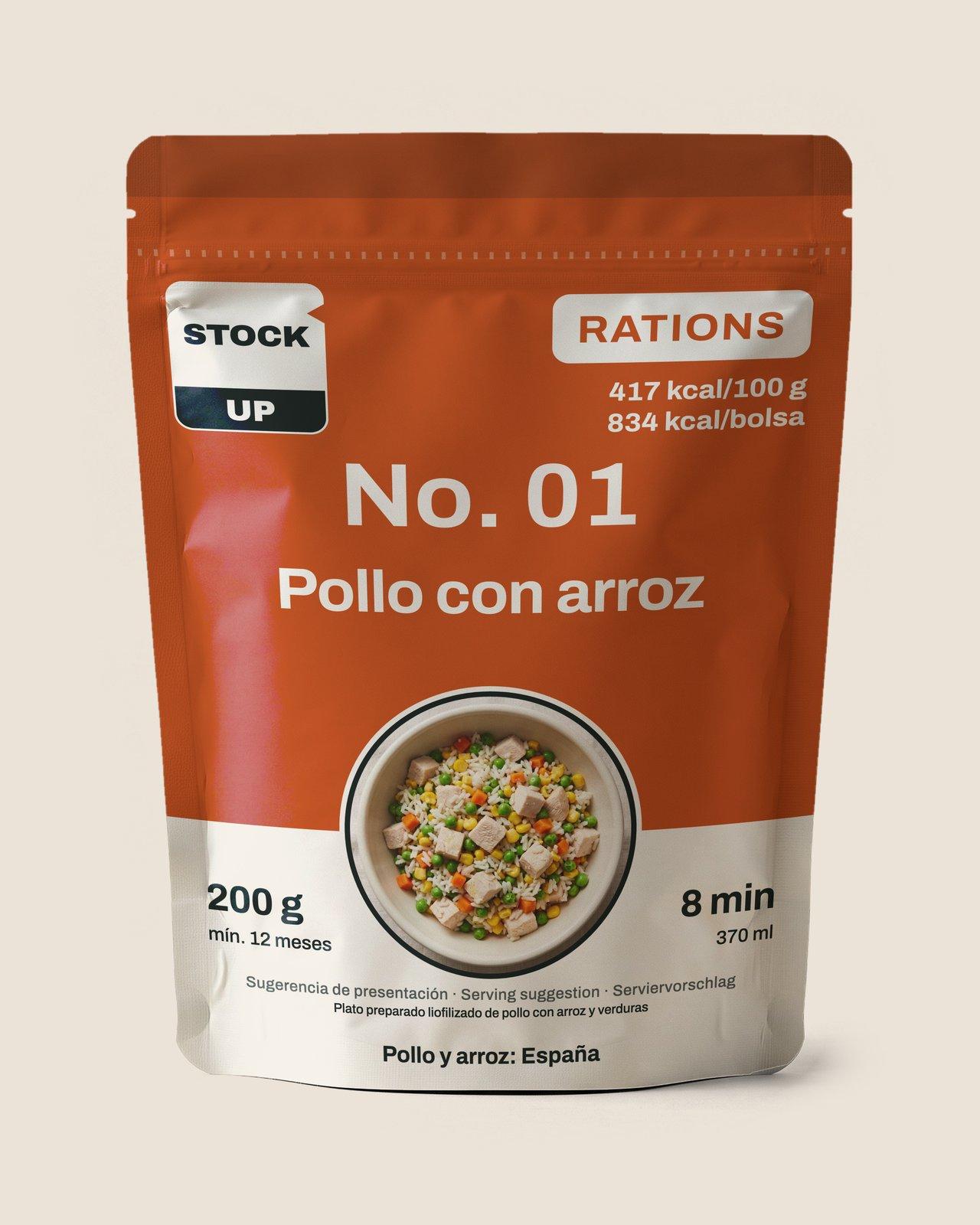 Chicken & RiceLarge | 417 kcal | 200 g | 834 kcal | 370 ml |
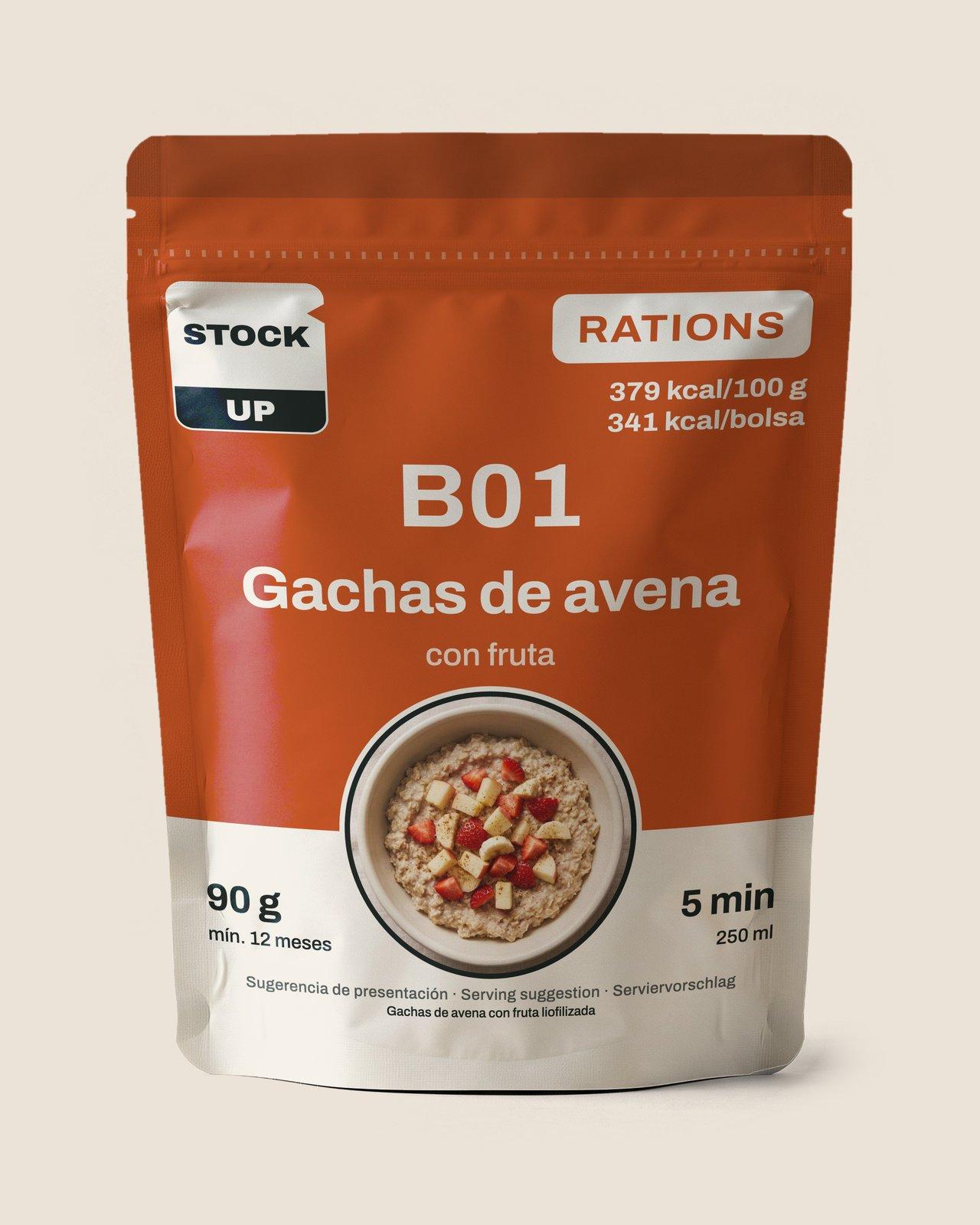 Porridge & Fruit | 379 kcal | 90 g | 341 kcal | 250 ml |
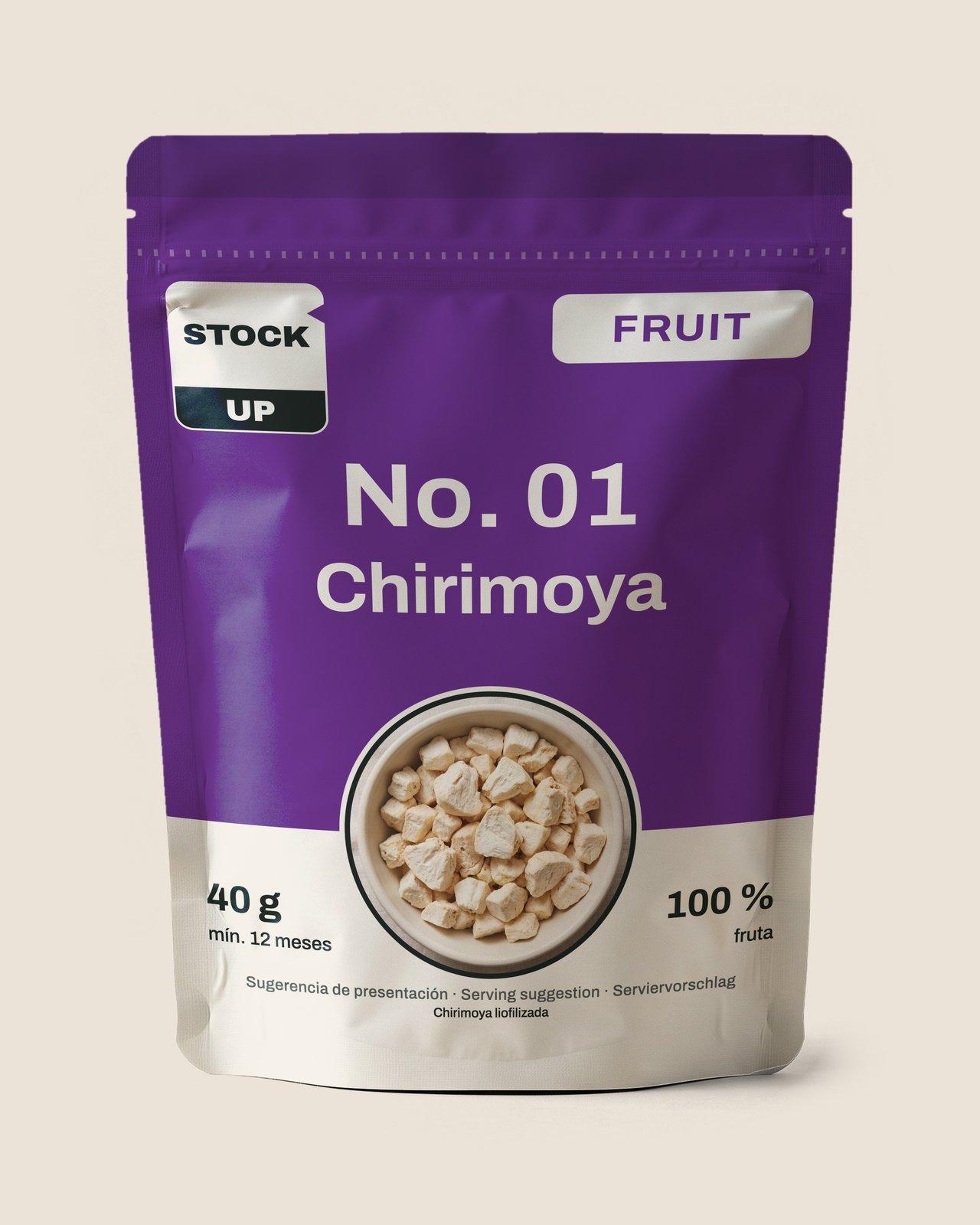 Cherimoya | 364 kcal | 40 g | 145 kcal | Eaten dry |
Three of ours, on the same measure as the tables
- Chicken & RiceLarge
- Energy per 100 g
- 417 kcal
- Net weight
- 200 g
- Energy
- 834 kcal
- Water
- 370 ml
- Porridge & Fruit
- Energy per 100 g
- 379 kcal
- Net weight
- 90 g
- Energy
- 341 kcal
- Water
- 250 ml
- Cherimoya
- Energy per 100 g
- 364 kcal
- Net weight
- 40 g
- Energy
- 145 kcal
- Water
- Eaten dry
What a pouch buys you is a whole cooked dish in one weight, not a higher number. On a day built from the tables above, a main and a breakfast take the place of the couscous, oats and noodles, and the nuts, cheese and chocolate stay in the snack bag where they lift the average. If you’d rather assemble the day yourself from shop food, a 24-hour ration from the supermarket does it with a shopping list.
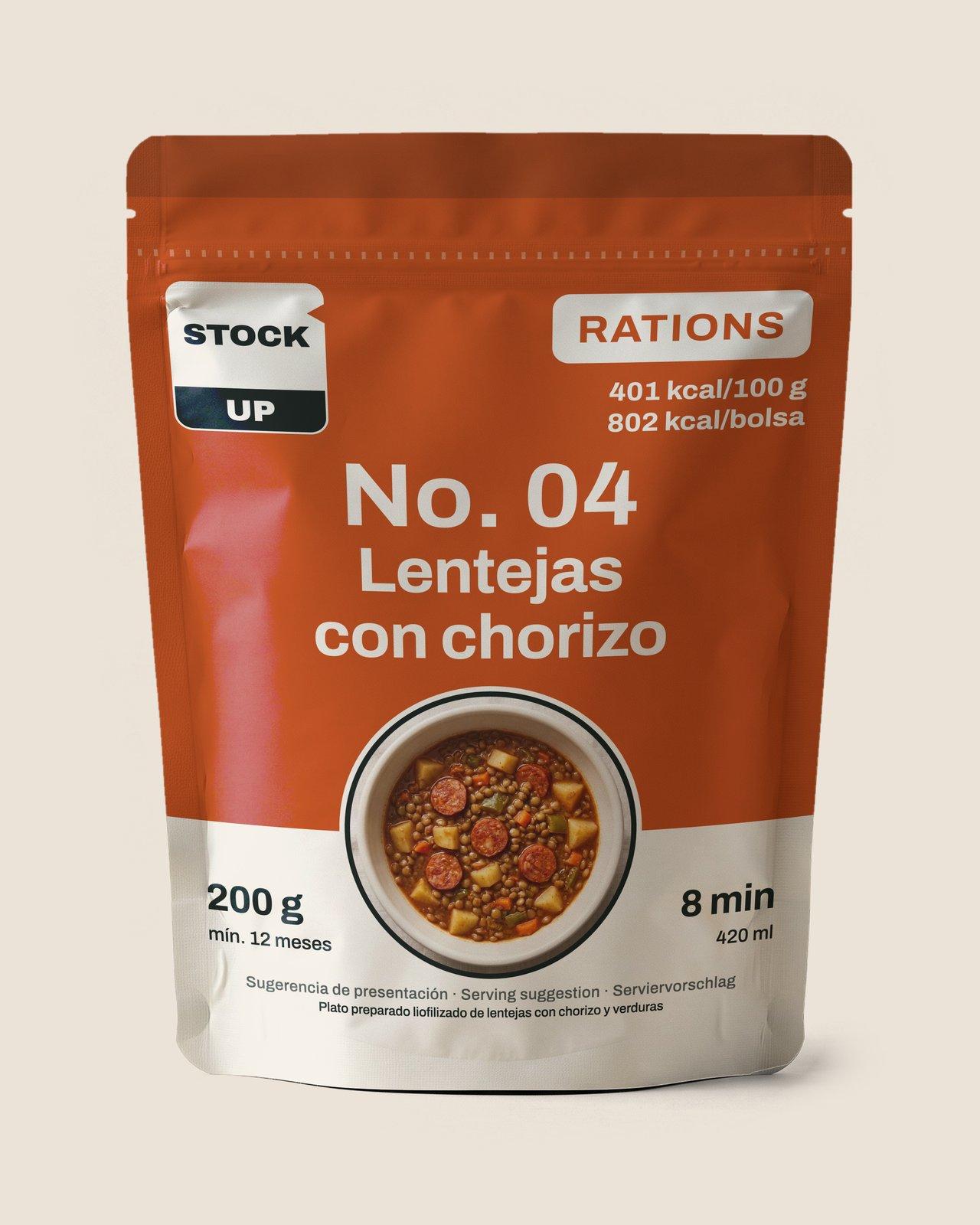
From our range
One-Day Ration
Sources
Accessed 10 November 2026
- Meal Planning for Ultralight Backpacking (opens an external website)
- Backpacking Food Ideas & Meal Planning (opens an external website)
- Eléments de diététique, l’alimentation en randonnée (opens an external website)
- SR Legacy food data, April 2018 release (opens an external website)
- Dattel getrocknet (opens an external website)
Hear from us before the shop opens
Leave your email. After a quick confirmation you get a welcome, a couple of short notes about our food and one email the day ordering opens. Nothing else.