Freeze-dried fruit: how it differs from dried fruit
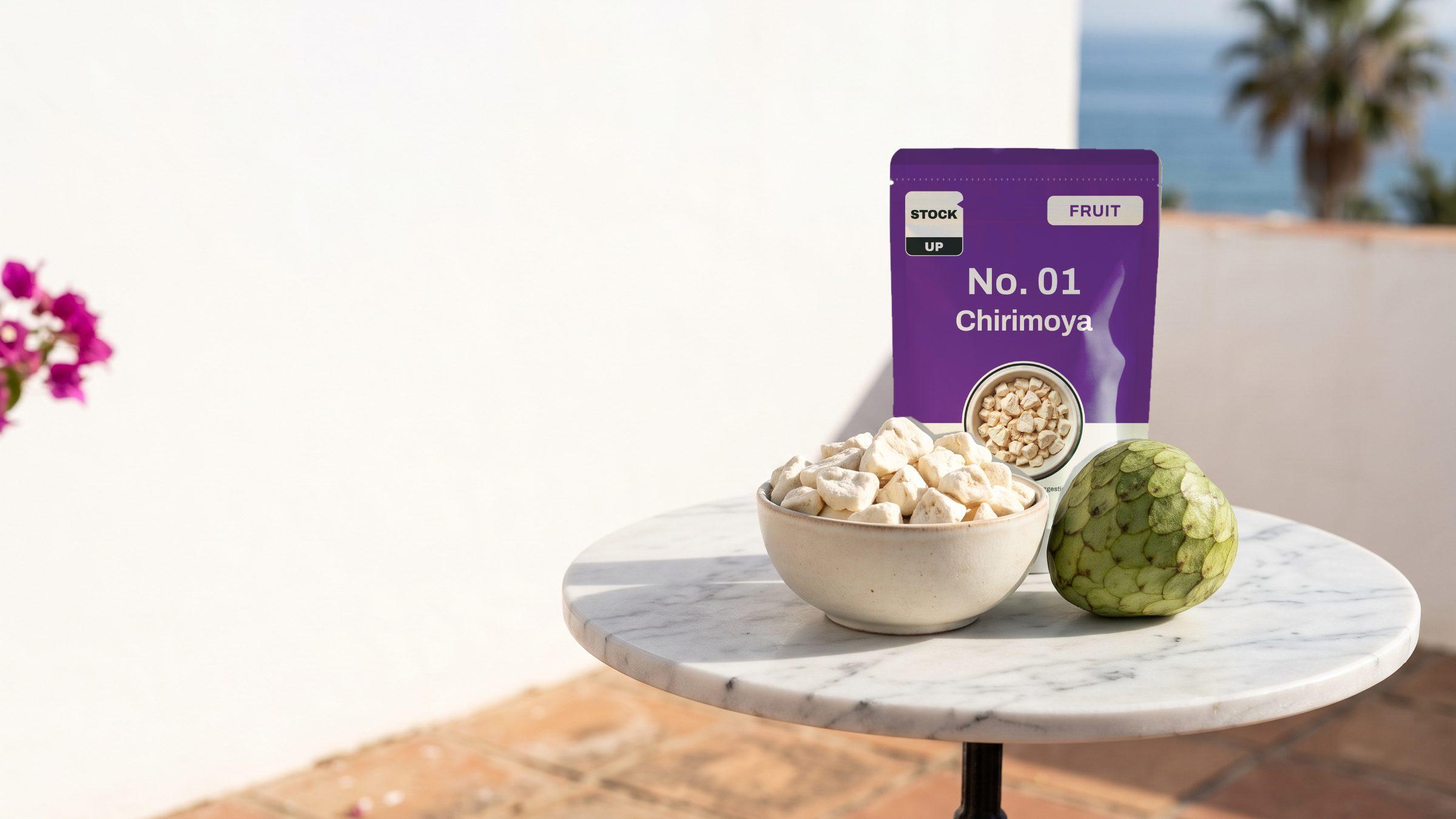
A cherimoya is three-quarters water. Draw the water off under vacuum and what’s left is pale, light and crisp enough to snap, with every gram of the fruit’s own sugar still in it.
By STOCKUP · Updated
In this guide (5)
Fruit, minus the water
The fruit is frozen, then the ice is drawn off as vapour under vacuum, the stages set out in the difference between freeze-dried and dehydrated. It isn’t a cold process from start to finish: the last stage warms the fruit to dry out the water that never froze, and for fruit that may mean 60–70 °C.1 Ordinary dried fruit goes the other way, into warm air, and stops while a fifth to a third of its weight is still water.25 That difference is the whole texture: dried fruit bends and chews, freeze-dried fruit snaps.
The shape survives too. Ice holds the structure in place while it leaves, so the fruit barely shrinks (sliced strawberries lost 2% of their volume in one study) and comes out porous, light for its size.3
How much fresh fruit goes into a bag
Take nearly all the water out of a fruit that’s three-quarters water and the weight falls by a factor of four or five. In cherimoya dried to 3% water, every gram in the bag stands for 4.2–4.7 g of fresh flesh, depending on whether you take the Spanish food composition database’s water figure or the USDA’s.45 A bag of 40 g is therefore about 170–190 g of flesh. Only 60% of a cherimoya is edible once the skin and the big black seeds are off,6 so the bag started as roughly 280–315 g of whole fruit. If you’d rather buy the fresh one, cherimoya season and how to eat it says when Spain has them and how to open one.
Apple is wetter still, so a bag of Apple & Cinnamon the same size holds about 270 g of flesh, some 320 g of apples as bought. Strawberries are wetter again: Germany’s consumer advice centres put it at about 1 kg of fresh strawberries for 100 g freeze-dried,8 which makes a bag of Strawberries roughly 400 g of fruit off the stalk. Each of our bags says on its ingredient list how much fresh fruit went into 100 g of it, and that is the figure to trust over any of the above: every point of water left in the fruit moves these sums by about 1%.
More sugar per 100 g than dried fruit
No sugar is added; the sugars in the bag are the fruit’s own. But they’re concentrated with everything else. Fresh cherimoya has 12.9 g of sugars per 100 g and fresh apple 10 g.5 Dried to 3% water, that comes to about 61 g per 100 g for cherimoya and 68–74 g for apple. Ordinary dried figs have 47.9 g and dried apple 57.2 g, because they keep about 30% water.5
So gram for gram, freeze-dried fruit is more sugar-dense than dried fruit. A bag holds what the fresh fruit held, no more and no less; it just takes a few seconds to eat what would have taken a plate and a knife.
The official advice is about dried fruit. The NHS counts 30 g of dried fruit as one of your 5 A Day and wants it eaten at mealtimes rather than between them, for the sake of your teeth.9 AESAN, Spain’s food safety agency, says to snack on fresh fruit rather than dried.10 The NHS’s 30 g is written for fruit that still holds a fifth to a third of its water, so it doesn’t carry over to a freeze-dried bag, and we don’t count ours towards anything.
Freeze-dried, dried or fried
The three get shelved together and have little in common beyond the fruit.
| Freeze-dried | Dried | Fruit crisps | |
|---|---|---|---|
| How the water goes | Drawn off as vapour from ice, under vacuum1 | Evaporates into warm air, about 60 °C in a home dehydrator7 | Fried (banana chips)5 |
| Water left | Under 5%1 | About 20% at home;2 30% in USDA’s dried figs5 | 4.3%5 |
| Sugars | About 61 g, cherimoya (calculated) | 47.9 g figs, 57.2 g apple5 | 35.3 g5 |
| Fat | Almost none, as in the fresh fruit (0.68 g in fresh cherimoya)5 | No figure | 33.6 g5 |
| VerdictTake it for | Crunch and the lightest bag; €70–200 a kilo in German shops8 | Chewing, baking and a lower price | A fried snack, a third of it fat |
Freeze-dried fruit, dried fruit and fried fruit crisps, per 100 g
How the water goes
Water left
Sugars
Fat
VerdictTake it for
- Freeze-dried
- Crunch and the lightest bag; €70–200 a kilo in German shops8
- Dried
- Chewing, baking and a lower price
- Fruit crisps
- A fried snack, a third of it fat
Dried fruit may be sulphured to hold its colour, and above 10 mg/kg the label has to say so; in a Bavarian survey of 48 samples, three were.11 Ours is fruit and nothing else; the apple bag adds cinnamon.
Eat it dry, and keep it dry
Nothing needs adding. Three ways it gets eaten:
- Dry, from the bag, with a meal, and a glass of water beside it, since it brings very little of its own.12
- Over yoghurt or porridge, at the last moment, before the milk gets at it. Freeze-dried apple, strawberry and banana are already in our Porridge & Fruit breakfast, where the water brings them back.
- Crushed, as a dusting over a pudding, or folded into a cake batter, which how to use freeze-dried fruit takes further.
Freeze-dried fruit takes up moisture quickly, and an airtight bag is what keeps it crisp.8 The sugars pull water out of the air, and the water softens the structure until it sags.3 If the fruit has gone soft, damp got in.
| Pouch | Net weight | Price | Keeps for |
|---|---|---|---|
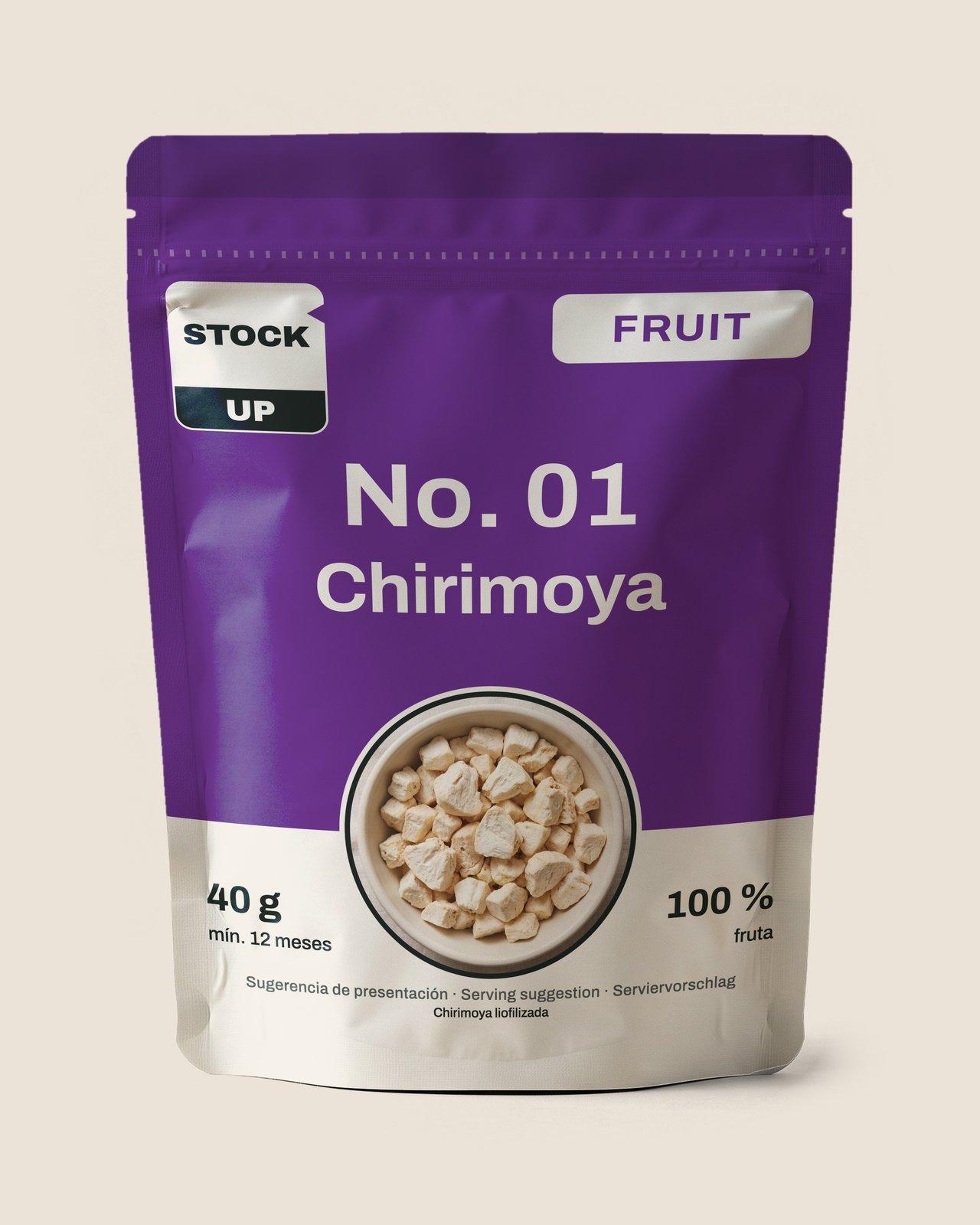 Cherimoya | 40 g | €5.50€137.50/kg | at least 12 months |
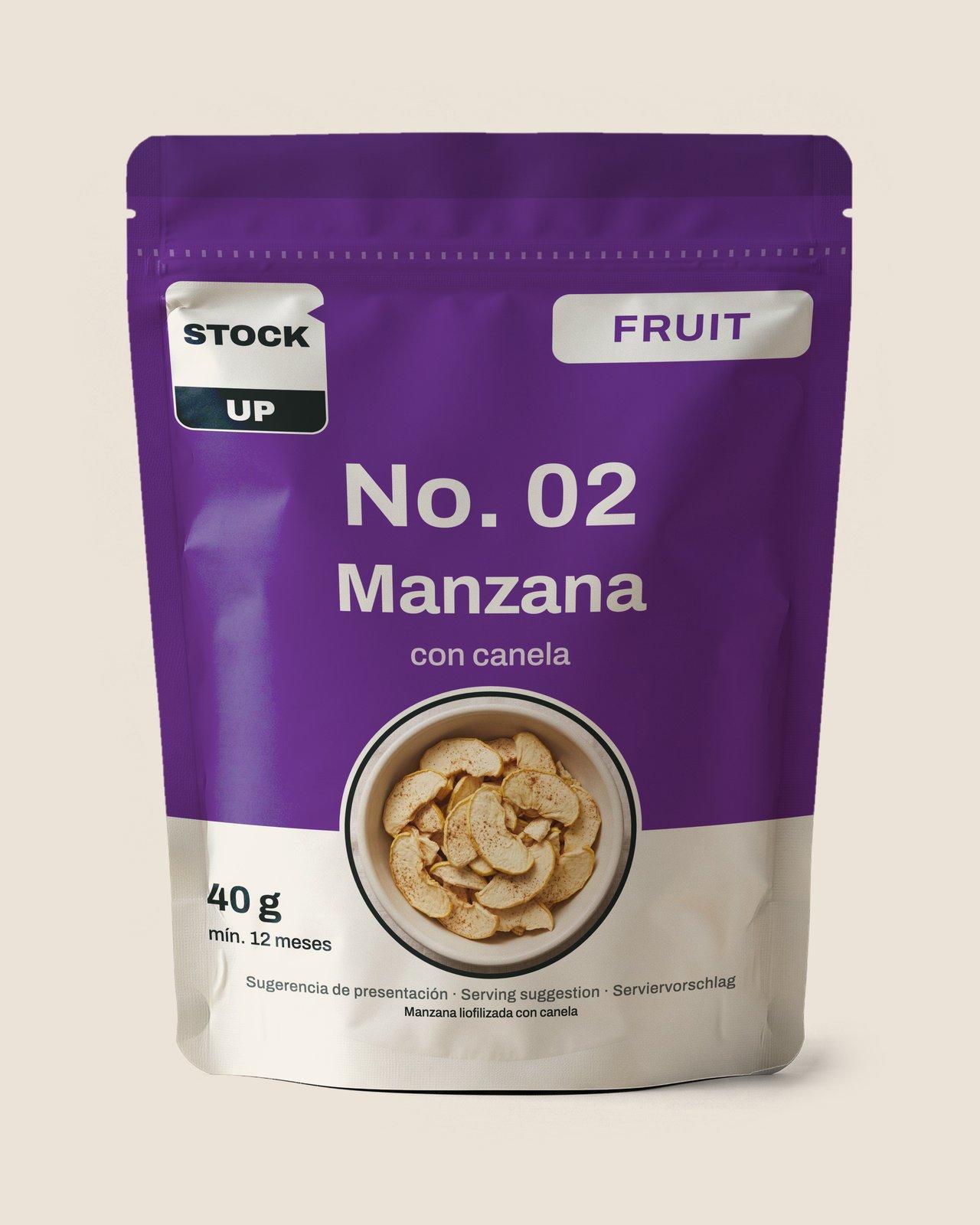 Apple & Cinnamon | 40 g | €4.95€123.75/kg | at least 12 months |
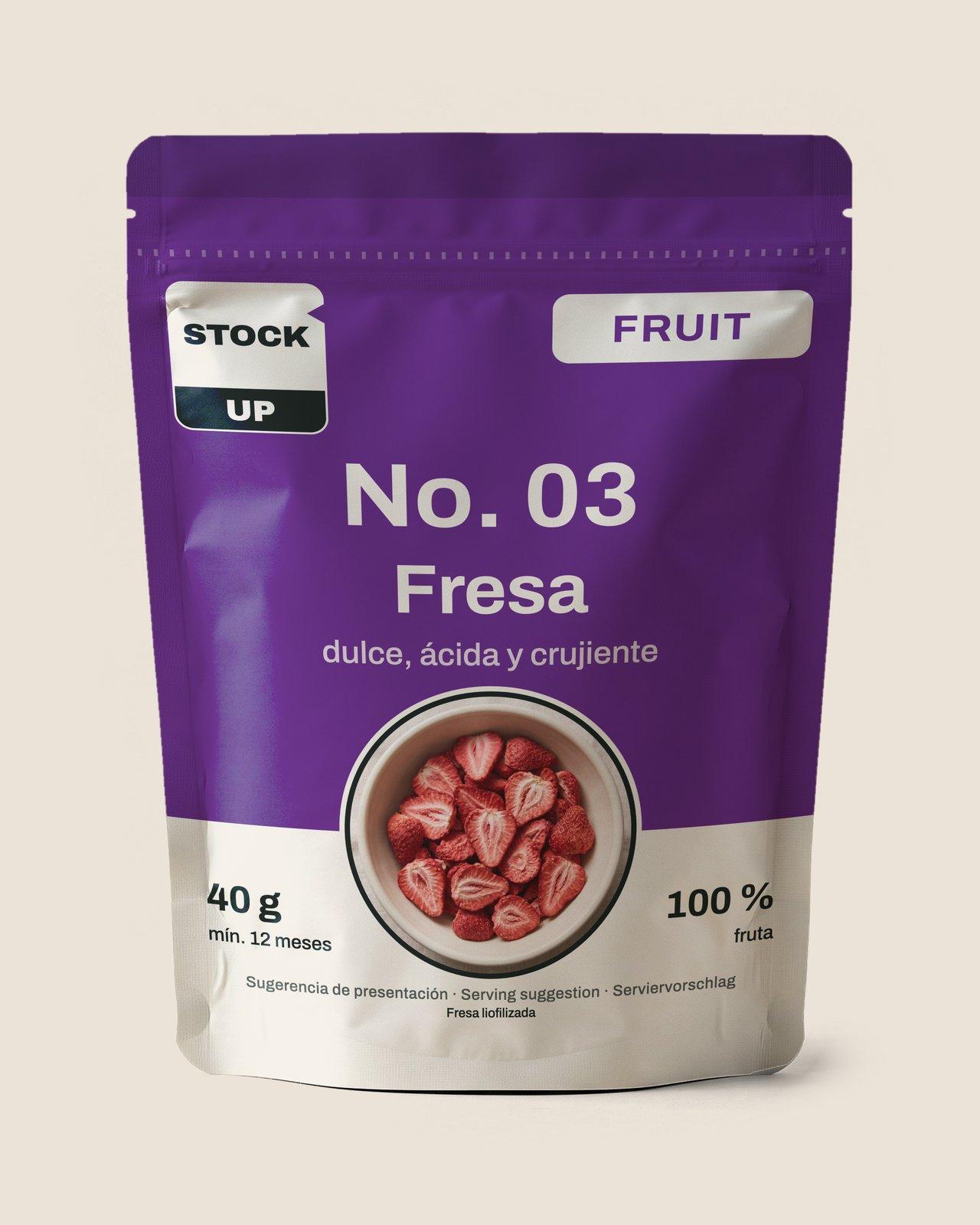 Strawberries | 40 g | €6.90€172.50/kg | at least 12 months |
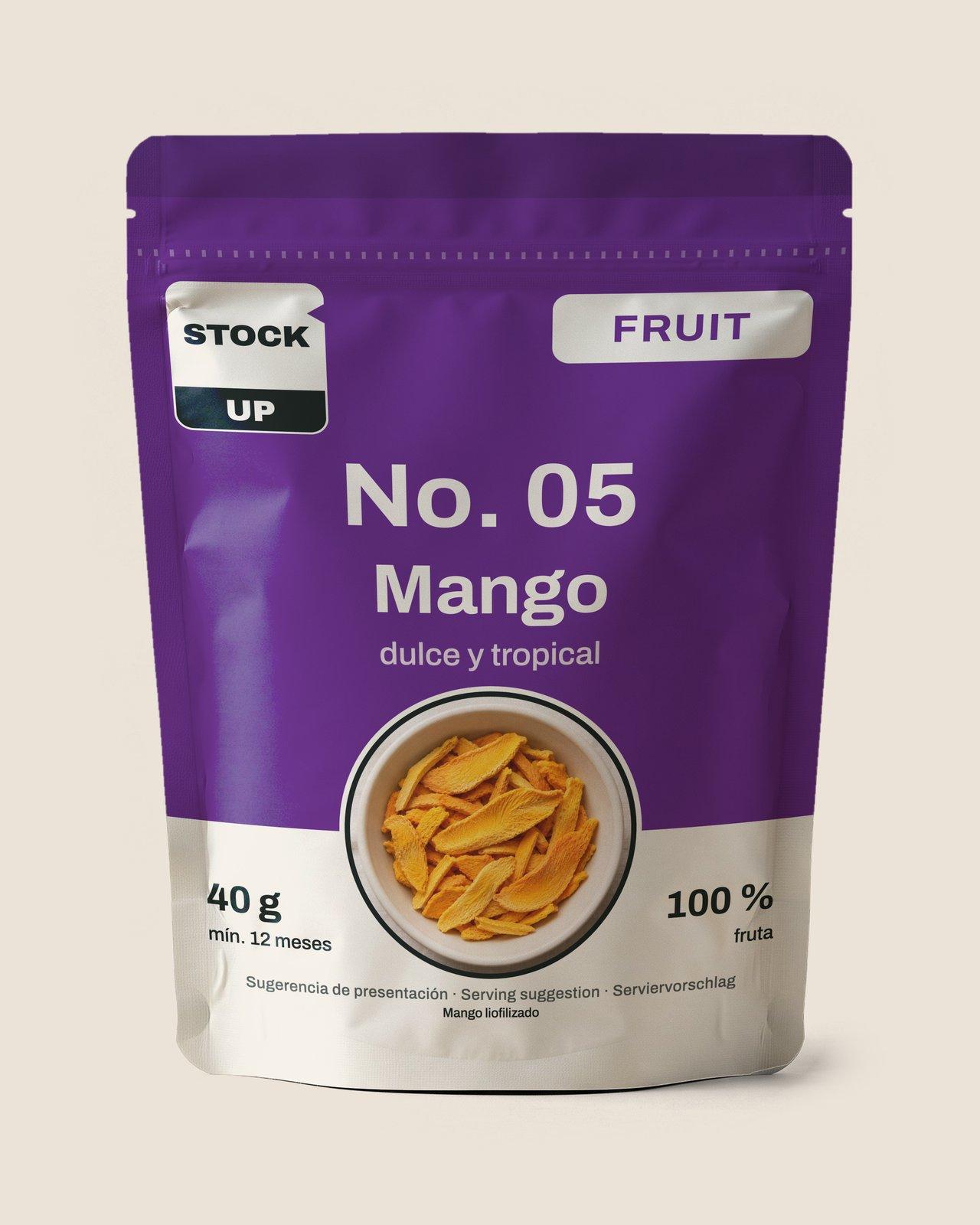 Mango | 40 g | €5.50€137.50/kg | at least 12 months |
Four of our fruits: cherimoya, apple and cinnamon, strawberries and mango
- Cherimoya
- Net weight
- 40 g
- Price
- €5.50€137.50/kg
- Keeps for
- at least 12 months
- Apple & Cinnamon
- Net weight
- 40 g
- Price
- €4.95€123.75/kg
- Keeps for
- at least 12 months
- Strawberries
- Net weight
- 40 g
- Price
- €6.90€172.50/kg
- Keeps for
- at least 12 months
- Mango
- Net weight
- 40 g
- Price
- €5.50€137.50/kg
- Keeps for
- at least 12 months
Close the zip after every handful and finish an opened bag within 7 days. What the date on a sealed bag means is in how long freeze-dried food keeps, and the same damp is what softens freeze-dried sweets.
From our range
Strawberries
Sources
Accessed 10 November 2026
- The freeze-drying of foods: the characteristic of the process course and the effect of its parameters on the physical properties of food materials (opens an external website)
- Packaging and storing dried foods (opens an external website)
- Freeze-drying of plant-based foods (opens an external website)
- Chirimoya; Manzana (opens an external website)
- Cherimoya, raw; apples, raw; figs, dried; apples, dried; banana chips (opens an external website)
- Chirimoya (opens an external website)
- Food dehydrators (opens an external website)
- Gefriergetrocknete Früchte: Wie gesund sind Erdbeerchips, Bananen oder Mangos? (opens an external website)
- 5 A Day: what counts? (opens an external website)
- Informe del Comité Científico de la AESAN sobre recomendaciones dietéticas sostenibles y recomendaciones de actividad física para la población española (opens an external website)
- Sulfit und Schwefeldioxid in Trockenfrüchten – Untersuchungsergebnisse 2018 (opens an external website)
- Can I freeze-dry that? A practical guide to safe and effective freeze-drying (opens an external website)
Hear from us before the shop opens
Leave your email. After a quick confirmation you get a welcome, a couple of short notes about our food and one email the day ordering opens. Nothing else.