sweetsPublished October 28, 2026
What freeze-dried sweets are
What happens to a gummy in a vacuum, why sour keys crack and marshmallows melt, which sweets come through the vacuum well and what the bag has to say.
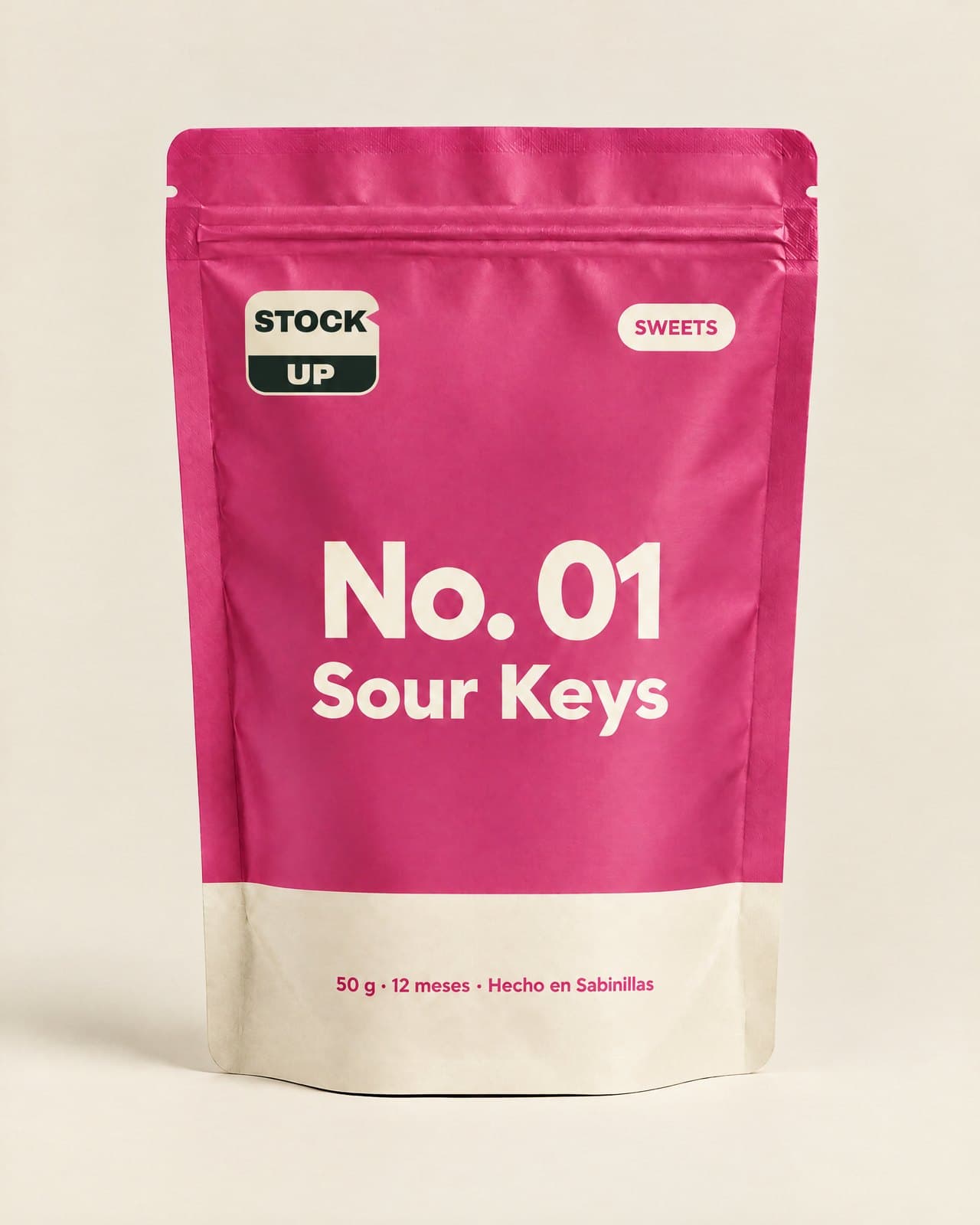
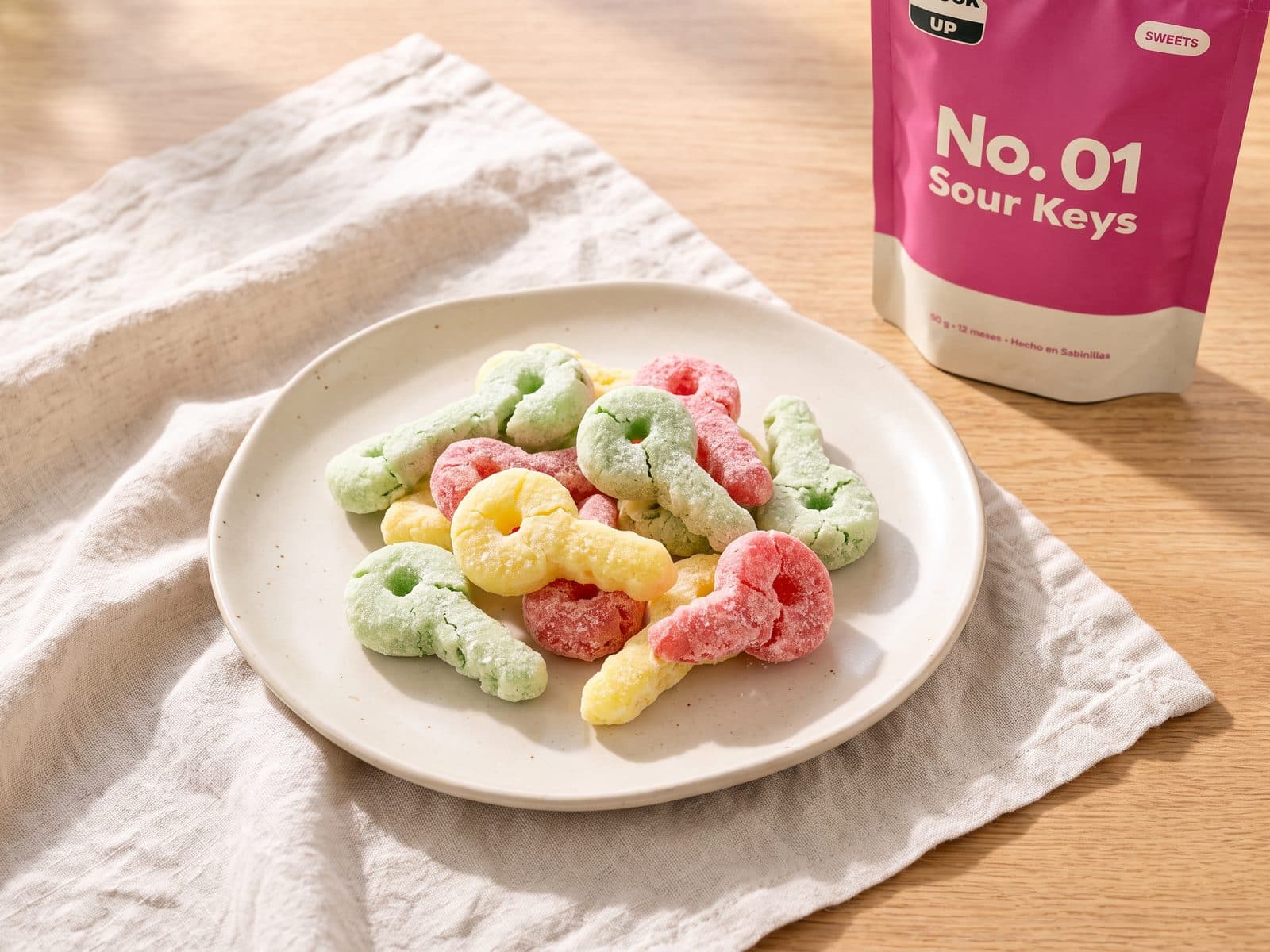
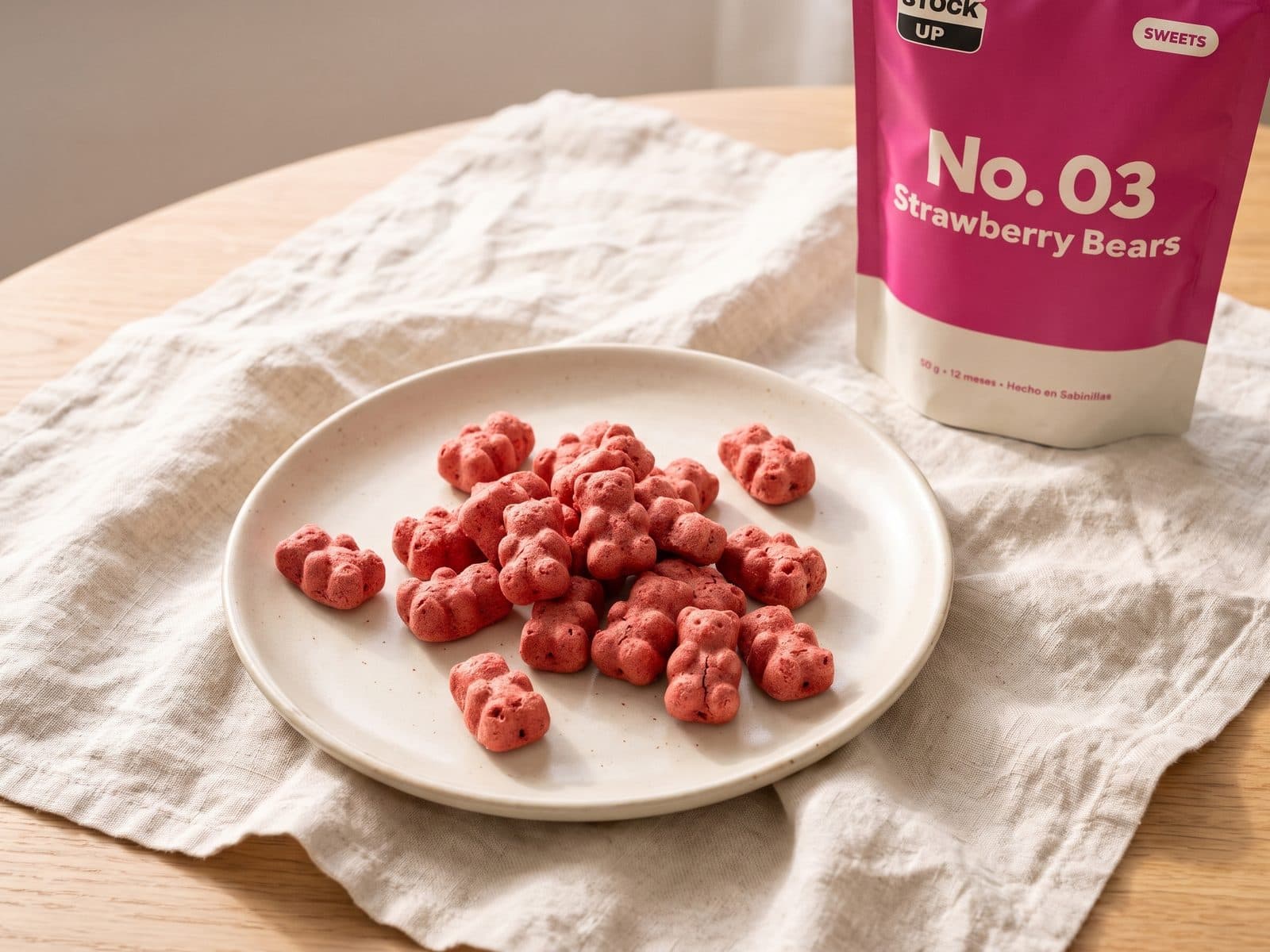
Freeze-dried sweets are gummies, chews and marshmallows that have spent a few hours in a vacuum chamber, and a 50 g bag of them looks fuller than 50 g of the originals because every piece has puffed up. Nothing is added in the process. Water leaves, the shape grows and sets, and a sweet that used to pull at your teeth now cracks. The one to start with is Sweets No. 01 Sour Keys, because the change is easiest to feel in a sour key.
What puffs
Every gummy holds a little water and some air trapped while it was made. Put it under vacuum and the pressure around it drops far below the pressure inside. The trapped air and vapour expand, and the soft sweet stretches outwards like a small balloon.
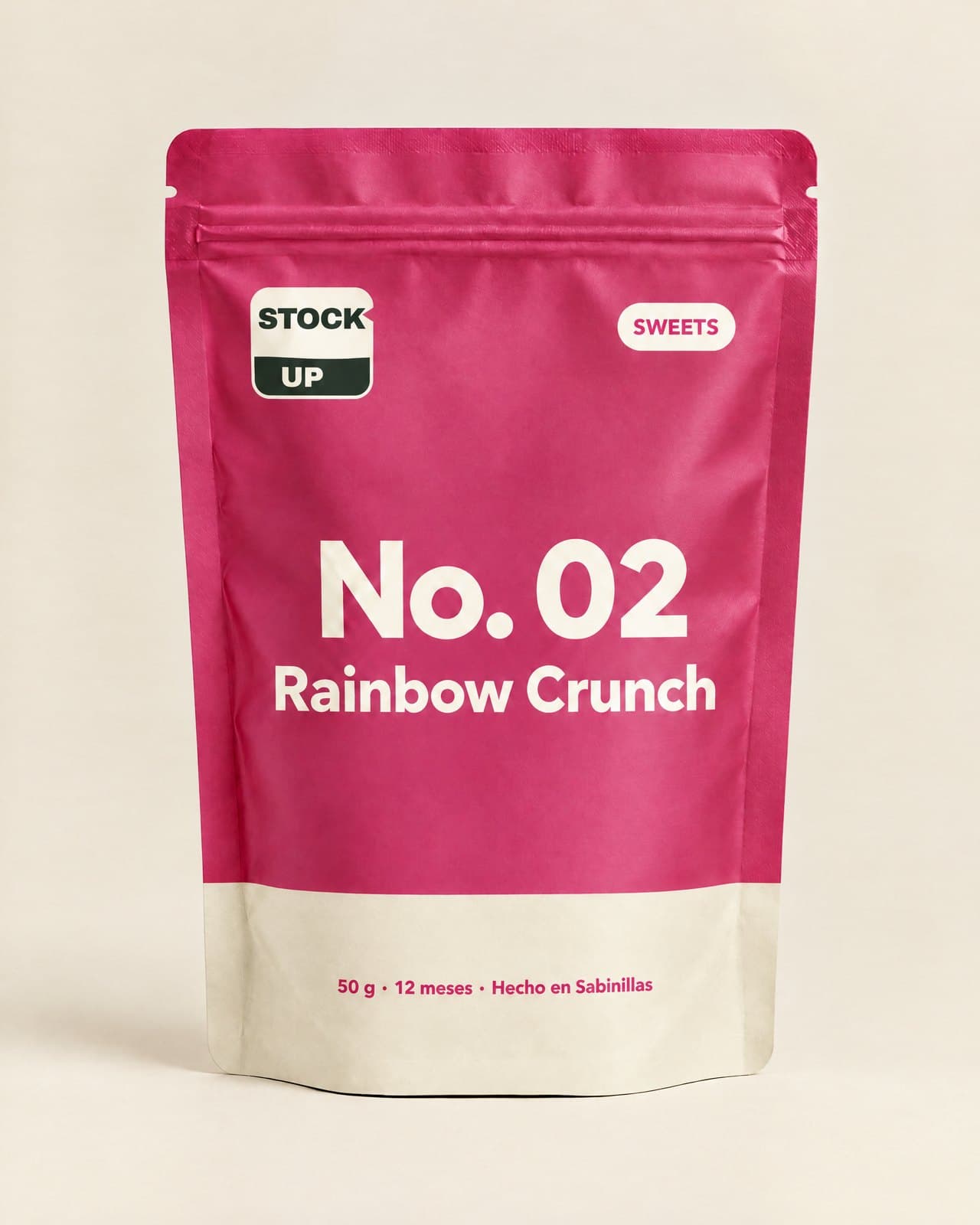
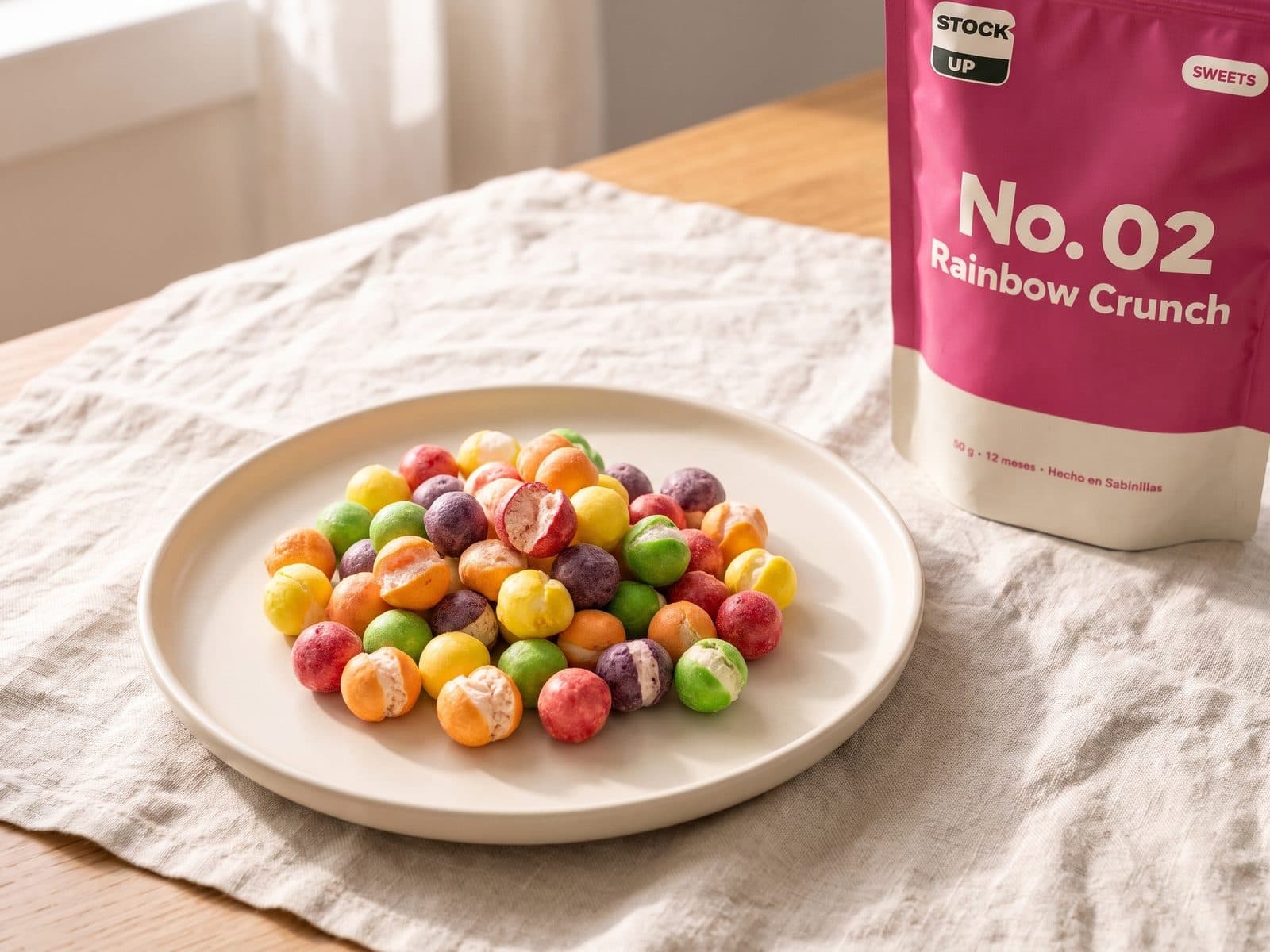
The puffing happens early in the run, while the sweet is still soft enough to stretch. As the water leaves, the stretched sweet stiffens and keeps its new size. That's why a bear comes out of the vacuum larger than it went in, and why the bag looks generous for its weight. The pieces with the most air and the softest chew grow the most. Our Sweets No. 02 Rainbow Crunch, chewy fruit sweets, change most of the six: they balloon and split open along the sides.
What cracks
A gummy chews because its water keeps the gelatine and sugar flexible. Take the water out and the same structure turns brittle. What used to bend now snaps.
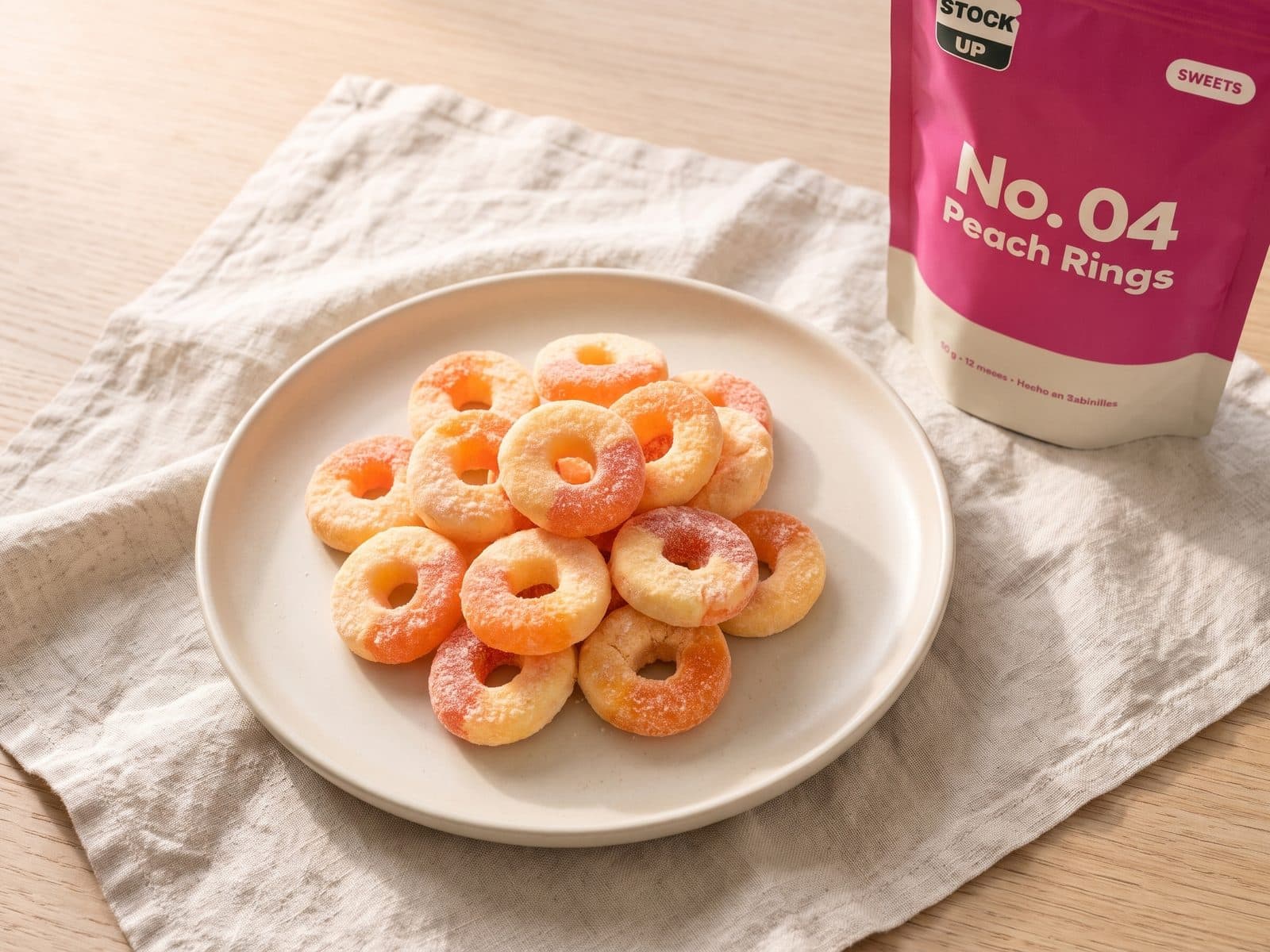
Inside, a puffed sweet is a dry, open foam with thin walls. Bite it and the walls give way all at once, which is the crack you hear. The sour sugar on the outside of a sour key isn't part of that foam, so it stays where it was and hits the tongue first. Peach rings keep their sugar coating the same way, over a ring that has turned crisp all the way through.
Because there's no water left to dilute anything, flavour and acid reach you in a smaller, denser hit. A freeze-dried sour key tastes sharper than a soft one. The amount of sugar and acid is the same; there's just nothing in the way.
What melts
Thin, dry walls dissolve fast once saliva reaches them. That's the melt: a few seconds after the crack, the foam goes soft and disappears.
Marshmallow shows it best. It's mostly trapped air to begin with, so freeze-drying sets it into a crisp foam that crunches like a wafer and melts almost at once. A 30 g bag of marshmallows is full to the zip. Strawberry bears melt a little more slowly and leave the strawberry flavour behind.
The six, side by side
| No. | Sweet | Bag | kcal per bag | Sugars per bag | What it does |
|---|---|---|---|---|---|
| 01 | Sour Keys | 50 g | 180 | 29 g | Puffs, cracks, sour coating stays |
| 02 | Rainbow Crunch | 50 g | 200 | 38 g | Balloons and splits, shatters |
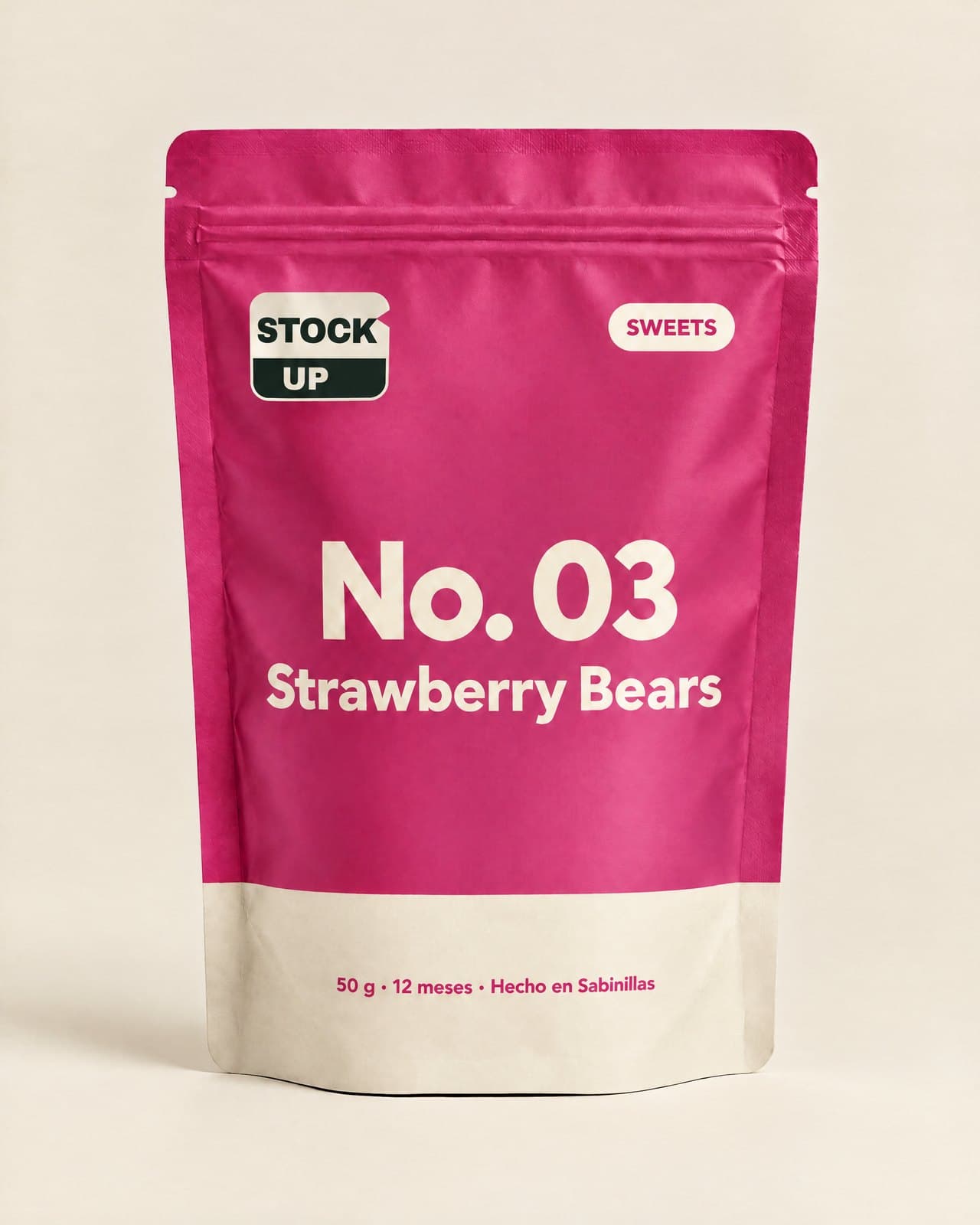
| 03 | Strawberry Bears | 50 g | 173 | 24 g | Keeps its shape, fine crunch |
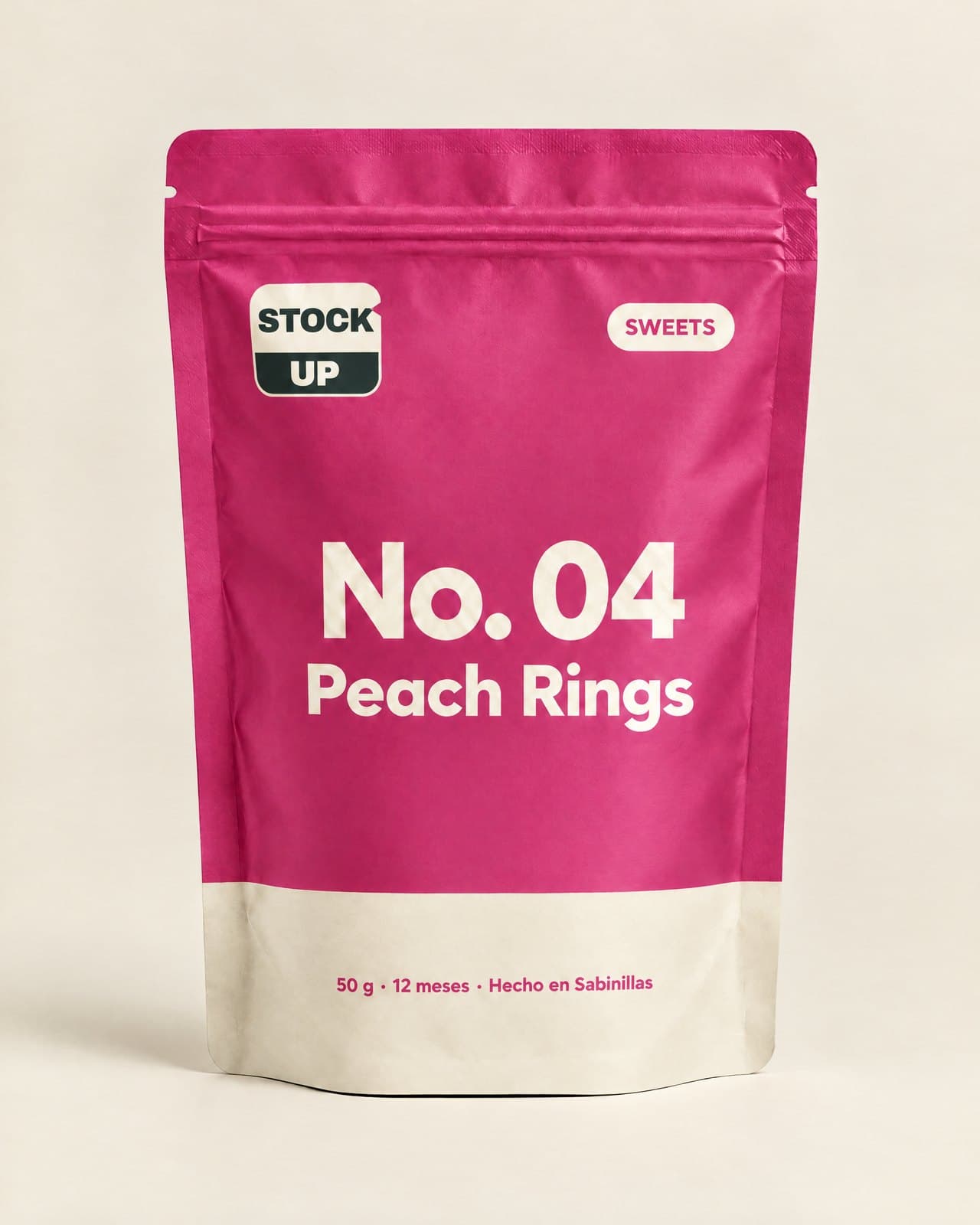
| 04 | Peach Rings | 50 g | 178 | 30 g | Sugar stays on, crisp right through |
| 05 | Cola Bottles | 50 g | 173 | 23 g | Thin shell, airy middle |
| 06 | Marshmallows | 30 g | 101 | 18 g | Crisp foam, melts at once |
The sugar column is there on purpose. Freeze-drying takes out water, not sugar, so a 50 g bag holds the sugar of 50 g of sweets, even though it looks like more. Count it as you would any bag of sweets.
Ways to eat them
Straight from the bag is the usual way, and they take no water. A few peach rings on a bowl of yoghurt soften at the edges within a couple of minutes and keep their crunch in the middle. Marshmallows dropped on hot chocolate go soft in seconds, so add them just before you drink. Cola bottles are dry to the touch, which makes them a tidy passenger snack on a long drive.
In the 72 h Pack, a bag of sweets closes each of the three days: Sour Keys on the first, Strawberry Bears on the second and Peach Rings on the third. They're the one part of that box that needs no stove and no water.
Which sweets don't work
Fat behaves differently from water in a vacuum. Chocolate and sweets with a lot of fat in them barely change, or come out greasy and odd. Boiled sweets have little air inside and almost no water to lose, so there's nothing to puff.
The sweets that change are the ones made mostly of sugar, gelatine or starch, and a little water: gummies, chews, sour belts and keys, and marshmallows.
The bag and its label
A freeze-dried sweet is a dry sugar sponge, and it pulls water back out of the air. Sealed, our bags keep 12 months. Once open, close the zip after every handful and finish the bag within seven days. On the coast, where the air is damp, an open bag softens faster than you'd expect. A softened sweet hasn't gone off; it has taken on moisture and lost its crunch.
Before buying any freeze-dried sweet, check five things on the label:
- The legal name says freeze-dried. The treatment has to be part of the name.
- The ingredients and allergens copy the original sweet's declaration, with the treatment added. Our sweets go on sale only once that full list is on their product page.
- A list as long as the original's. If the freeze-dried version lists fewer ingredients than the sweet it came from, something has been left off.
- The colour warning. A sweet containing E102, E104, E110, E122, E124 or E129 has to carry the line that it may affect activity and attention in children.
- The lot and best-before date, printed on the bag.
Every batch, sweets included, is packed only after its water activity measures 0.60 or lower.
Stock Up sweets
Stock Up freeze-dries its sweets to the same release rule as the meals, and they carry our own generic names, never the original maker's. Their bag says "Made" rather than "Cooked", because sweets aren't cooked.
Every bag costs €4.95. The Tasting Pack at €12.90 holds Sour Keys, Rainbow Crunch and Strawberry Bears, against €14.85 bought singly. The Party Pack at €24.90 holds one of each of the six. All six are on the Sweets page.